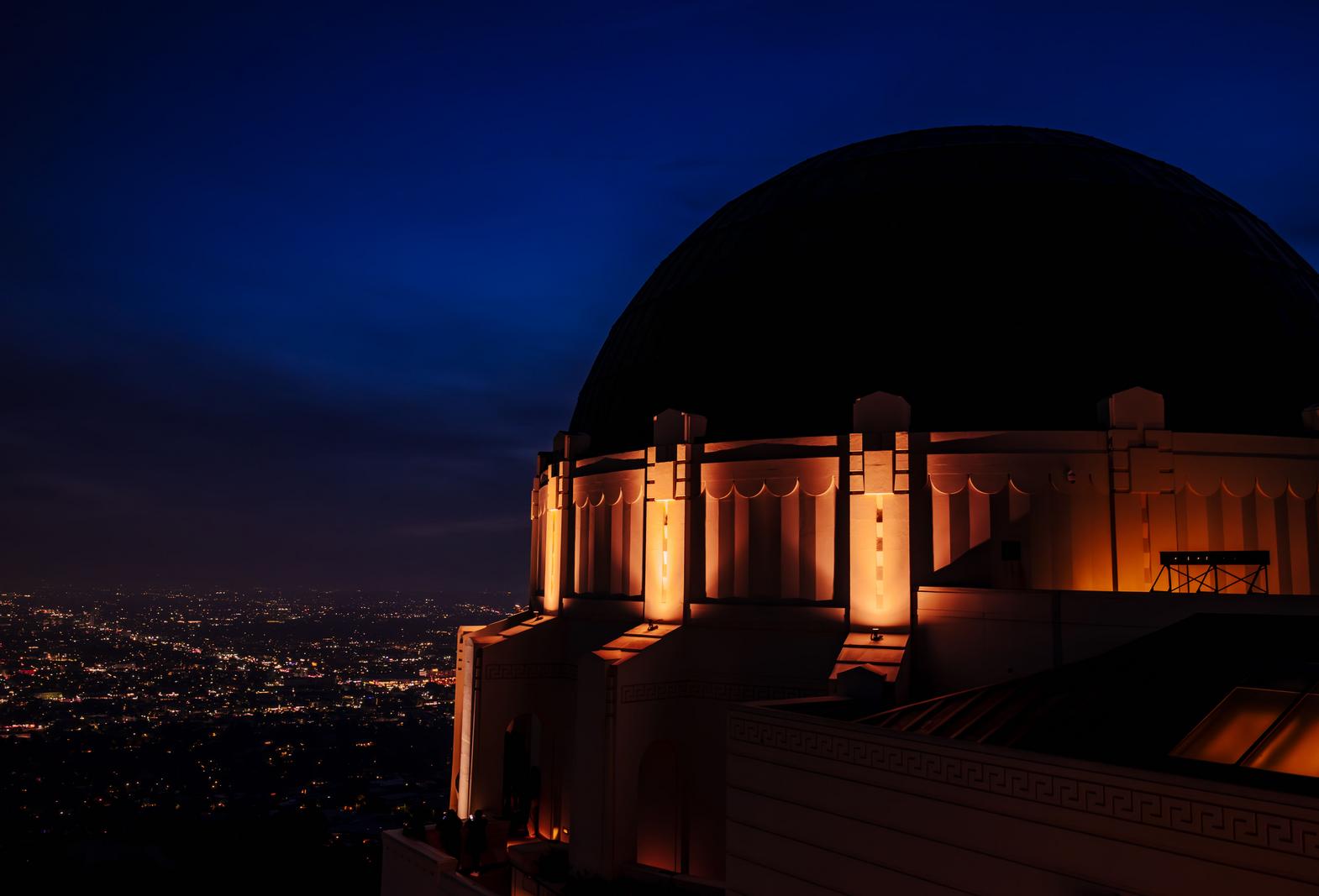
A strong blue-hour study with rich colour contrast and confident control of the building’s lines.
Thanks, Ecem — here’s the straight talk you asked for. This reads primarily as architectural night photography with a travel flavour: the warmly lit façade against the deep blue sky is the clear hook. Technically you’ve handled the exposure and white balance well, letting the city sparkle without blowing the façade. Where it stumbles is framing: the dome is cropped off at the top and there are small, bright bits on the right that nibble at the edge of attention. Ask yourself: were you aiming to showcase the whole observatory dome, or a tighter study of the illuminated columns? Deciding that earlier would have simplified a few choices in camera and in post.
TECHNICAL EXECUTION ★★★★
Clean file with well-managed noise for a night scene; the sky is smooth and the city lights are crisp. White balance feels natural — the cool sky and warm architectural lighting sit comfortably together. Highlights on the columns are intact, though the upper dome slips into near-black, suggesting underexposure there or limited dynamic range. Verticals are controlled and don’t show obvious keystoning, which is key for this subject. If you want more texture on the dome, a bracketed series on a tripod or an exposure lifted carefully in post would help without pushing noise.
COMPOSITION ★★★
The right-hand placement of the building gives a pleasing balance with the city on the left, and the repeating lit columns create rhythm. However, the dome is cut by the top edge, which makes the frame feel cramped and slightly accidental. The small railing/structure near the right edge and the bright roof triangles bottom-right pull the eye away from the main subject. Either step back or go wider to include the full dome, or commit to a tighter crop on the lit arcade and remove the distractions. A cleaner edge treatment would immediately raise the sense of intent.
LIGHTING ★★★★
Good timing: blue hour gives you saturated sky and working city lights while the façade glows. The side lighting carves the columns nicely and adds depth. The only drawback is how quickly the light falls off on the dome, leaving it as a big, detail-less mass. Ten minutes earlier in the evening, or a bracket to blend a softer exposure for the dome, would reveal form without losing the mood.
STORY ★★★
The frame communicates place and scale — a lit landmark watching over a sprawling city — which is a solid baseline. Tiny figures on the lower terrace hint at human presence but are too small to contribute meaningfully. There’s atmosphere, but not a moment; it’s a handsome record rather than a scene with tension or interaction. Consider whether a person pausing in the light on the terrace, or a low cloud band rolling in, would give you a moment worth waiting for.
IMPACT ★★★
The warm–cool colour contrast and clean geometry have immediate visual appeal. Still, this is a familiar view and the cropped dome plus edge distractions hold it back from being memorable. With a more decisive framing and a touch more detail in the dome, this could step up a level. Right now it lands as a good, polished postcard rather than a signature image.
CONSTRUCTIVE NEXT STEPS
✓ Reframe to either include the full dome (step back or use a slightly wider focal length) or crop tighter to focus on the illuminated columns; avoid cutting the dome at the top edge.
✓ Shoot on a tripod 10–15 minutes earlier in blue hour and bracket ±1–2 stops; blend or lift shadows selectively to recover gentle detail in the dome while keeping the façade’s glow natural.
✓ In post, clone/heal the small railing near the right edge and consider cropping out or darkening the bright roof panels bottom-right to reduce pull from the subject.
✓ If you want story as well as structure, wait for a single person to step into the terrace light and hold the frame until their gesture feels expressive — that small human scale can transform the scene.
AI Version 1.22