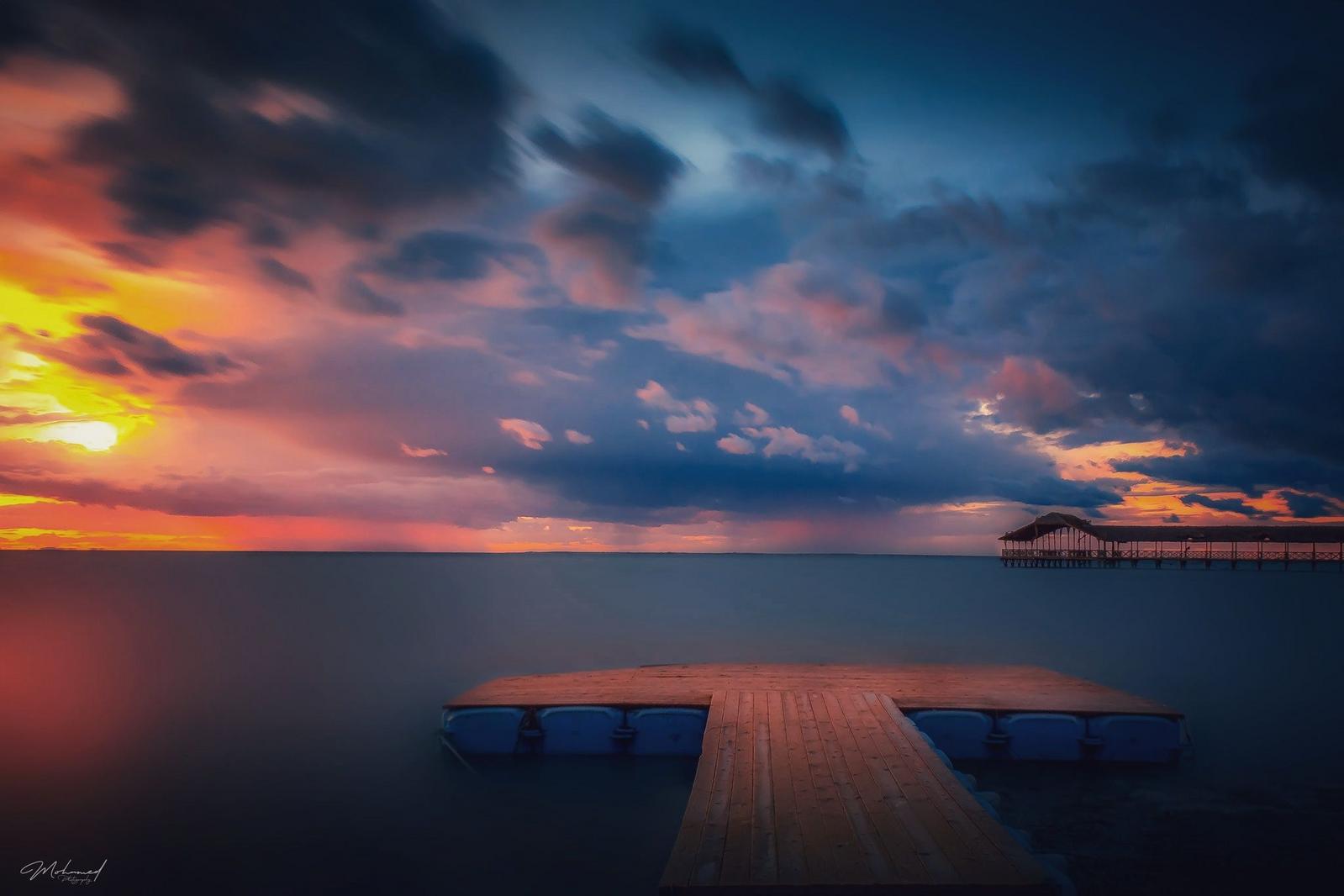
A striking sunset seascape with a strong lead-in from the jetty, but processing and framing are holding it back.
Thanks for asking, Mohamed. This looks like a long‑exposure seascape aiming to combine a dramatic sky with a calm, glassy sea. The wooden T‑shaped jetty in the foreground is your strongest element, and the pier on the right gives a useful counter‑weight. Overall it’s a landscape, and you’ve timed it for rich colour and mood. My short answer: the scene has promise, but the colour and contrast feel pushed too far and the sun clipped at the left edge weakens the composition. What story did you want the viewer to feel here — serenity, approaching storm, or something else?
TECHNICAL EXECUTION ★★
There’s likely a long exposure smoothing the water nicely, and the frame appears clean and free of visible noise. However, the highlight around the sun is blown and sits right on the edge of the frame, which draws the eye out of the picture. Colour looks heavily saturated with a magenta/blue push in the clouds that reads more “processed” than natural. Contrast is strong enough that the water becomes a near‑featureless block, losing tonal detail. Dialling back saturation and protecting highlights would lift the technical quality considerably.
COMPOSITION ★★★
The central jetty is a good lead‑in and gives the viewer somewhere to stand. The distant pier on the right balances that mass, but the very bright sun cropped on the far left edge pulls attention away and creates an exit point. The horizon sits roughly mid‑frame, which flattens the scene; lowering it to give more sky or raising it to emphasise the water would add intent. There’s also a lot of empty mid‑water; a person on the jetty or a boat in the distance could add scale and a focal moment. A tighter crop from the left to exclude the blown sun would also strengthen the flow.
LIGHTING ★★★
You’ve shot at a good time of day with interesting cloud structure and warm light raking across the jetty. The issue is headroom: the sun area is overexposed and the rest of the scene feels pushed to match it, producing a slightly unreal colour palette. The long exposure subdued texture in both water and clouds, which reduces the way the light plays across the scene. Consider blending exposures or using a graduated ND to hold highlight detail while keeping the foreground rich and readable.
STORY ★★
Beyond “beautiful sunset,” not much happens. The jetty invites the viewer in, but there’s no gesture or event to lock in a moment — no fisherman packing up, no couple at the pier, no weather change captured mid‑burst. Landscape can still carry story through weather and scale, but here the smooth water and heavy processing mute that sense of time and place. What small human element or weather cue could you wait for to make this a moment rather than a view?
IMPACT ★★★
The bold colours and clean geometry do grab attention at first glance. With that said, it edges toward the familiar “dramatic sunset” look, which limits memorability. Taming the colour, refining the framing, and introducing a clearer moment would elevate it from pretty to compelling. Also, the visible signature in the bottom left distracts at web sizes and reduces the professional feel.
CONSTRUCTIVE NEXT STEPS
✓ Reprocess with restraint: reduce overall saturation/vibrance by ~20–30%, cool the magenta cast in the clouds, and pull highlights down; use a selective mask to recover detail around the sun if possible.
✓ On location, protect highlights with −0.7 to −1 EV or use a 2–3 stop soft graduated ND; alternatively bracket 3 frames (−2/0/+2) for a gentle blend that preserves realism.
✓ Recompose to avoid the sun touching the left edge and commit to a horizon on a third; consider a vertical frame using the jetty as a strong path, or include a small human element on the jetty/pier to give scale and a moment.
✓ Remove or minimise the watermark and any small distractions near the jetty edges; keep the presentation clean so attention stays on the photograph.
AI Version 1.22