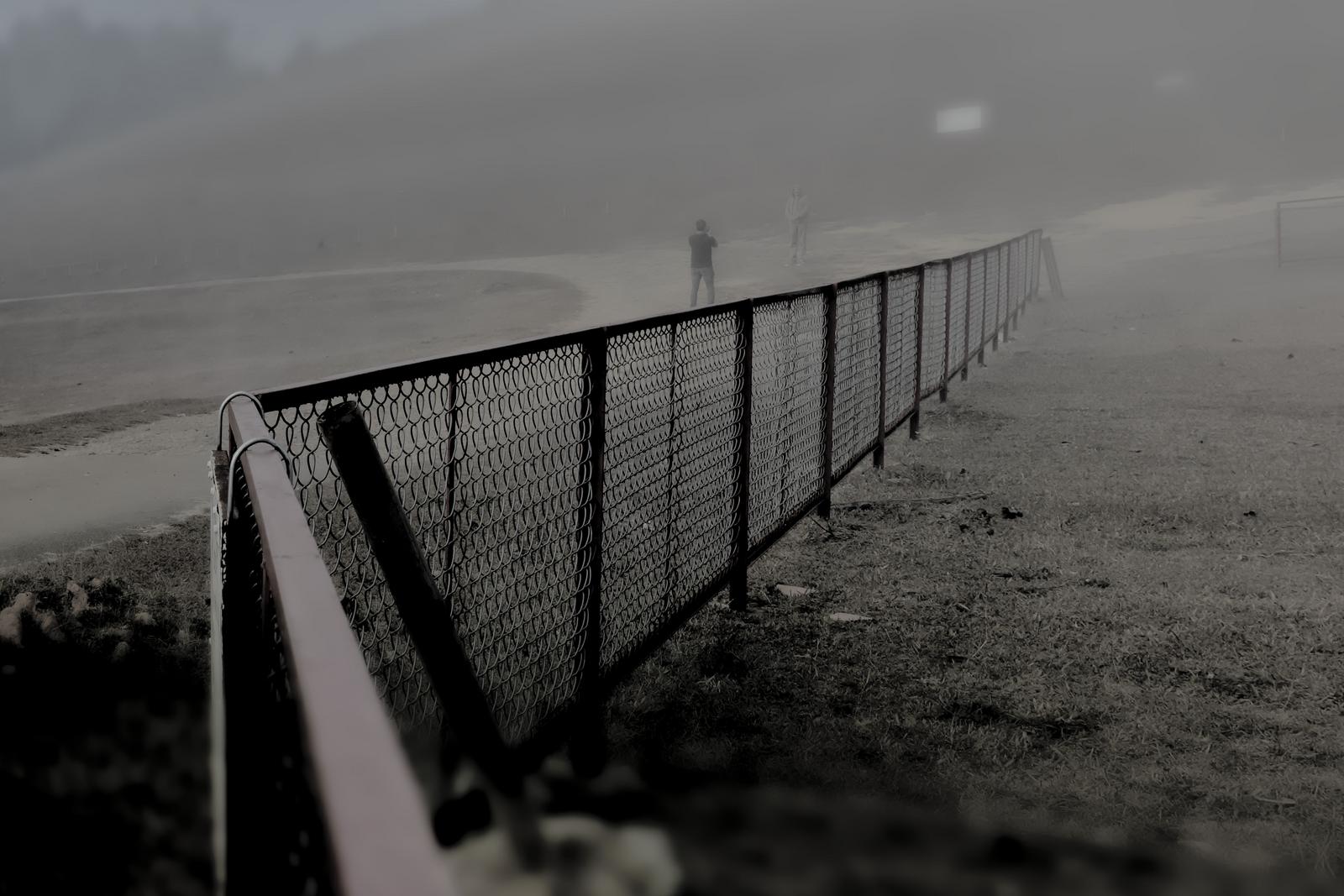
A strong lead-in through the fog, but the light feels underused.
Thanks Rajesh. Fog is its own light source — it softens contrast and scatters everything — so you don’t “add” light so much as place yourself to use it. Right now the scene is evenly grey; the fence draws beautifully into the distance, but the fog isn’t being lit in a way that gives shape or glow. For foggy scenes, aim for backlight or side‑light: position so the low sun is off to the side or behind your subjects, and the mist will light up with halos and visible depth. Meter a little brighter than the camera wants (+0.7 to +1.3 EV) so the fog reads luminous rather than dull. This picture sits between landscape and street — the geometry is strong, and the two figures hint at a story — so small lighting and timing choices could lift it a lot. What feeling did you want from the figures at the end of the fence — solitude, connection, or mystery?
TECHNICAL EXECUTION ★★★
The file looks clean and the foreground fence is acceptably sharp; the softness further back is natural fog, not focus error. Exposure is on the safe side but a touch under, which leaves the fog grey rather than bright and airy. White balance skews cool, which works for mood but also flattens the midtones; a gentle warm shift could separate ground from sky. I notice a bright, blown signboard in the upper right and some dark blocking in the lower left; both pull the eye and suggest the tonal range isn’t fully optimised. Editing is restrained — no heavy dehaze or crunchy contrast — which suits the subject.
COMPOSITION ★★★★
The diagonal chain‑link fence is your best asset; it’s a clear leading line that carries us directly to the two people in the haze. The near corner provides depth, and the receding posts create rhythm. Two distractions weaken the design: the glowing rectangle near the top right and the extra fence frame on the far right edge — both catch the eye away from the figures. Consider a slightly tighter crop from the right to remove the stray frame and from the top to tame the bright sign. Bringing the two figures a touch closer together (or waiting until they interact) would give that strong line a better destination.
LIGHTING ★★★
The light is flat overcast — perfectly usable, but it doesn’t add shape. With fog, direction matters: backlight would rim the fence and the figures and reveal the thickness of the mist; side‑light would etch texture into the ground. As captured, the scene lacks a luminous core, which is why the grey tones feel heavy. A brighter exposure and a position that lets any hidden sun skim along the fence would transform the mood without artificial light. In post, gentle local contrast on the fence and a slight lift in the midtones can emulate some of that separation while keeping the softness of the day.
STORY ★★★
The suggestion of two people in the distance gives the photo a quiet, lonely mood, and the fence acts like a path towards them. However, the moment is passive — no gesture or interaction to hold us once we arrive at the end of the line. If you had waited for them to meet, wave, or cross paths, the scene would gain a clear beat. The bright sign and secondary fence dilute the narrative by introducing unrelated elements. What exact moment were you hoping for at the end of that line, and how long did you stay to let it happen?
IMPACT ★★★
The atmosphere is appealing and the geometry is confident, so the frame reads quickly and cleanly. Still, the flat light and lack of a decisive moment keep it from being memorable. Remove a couple of distractions and give the fog some glow and the image would step up a level. Right now it’s a solid study of mood rather than a striking scene you can’t forget.
CONSTRUCTIVE NEXT STEPS
✓ On foggy mornings, work for backlight: stand so the low sun is behind the figures or skimming along the fence; start around sunrise and expose at +0.7 to +1.3 EV to keep the fog bright and luminous while watching the histogram for clipping.
✓ Refine the frame: crop the far right to remove the extra fence section and clone or burn down the bright signboard in the upper right; this keeps the eye on the figures at the end of your leading line.
✓ Post‑processing: lift midtones by ~0.3–0.5 stops, add a subtle local contrast mask to the fence only, and apply a light dehaze (5–10) to the mid‑distance; avoid global contrast that kills the soft atmosphere.
✓ Wait for a moment: stay until the two people connect or separate clearly; a simple gesture (a wave, someone turning, crossing the path) will give your strong geometry a purpose.
AI Version 2.0