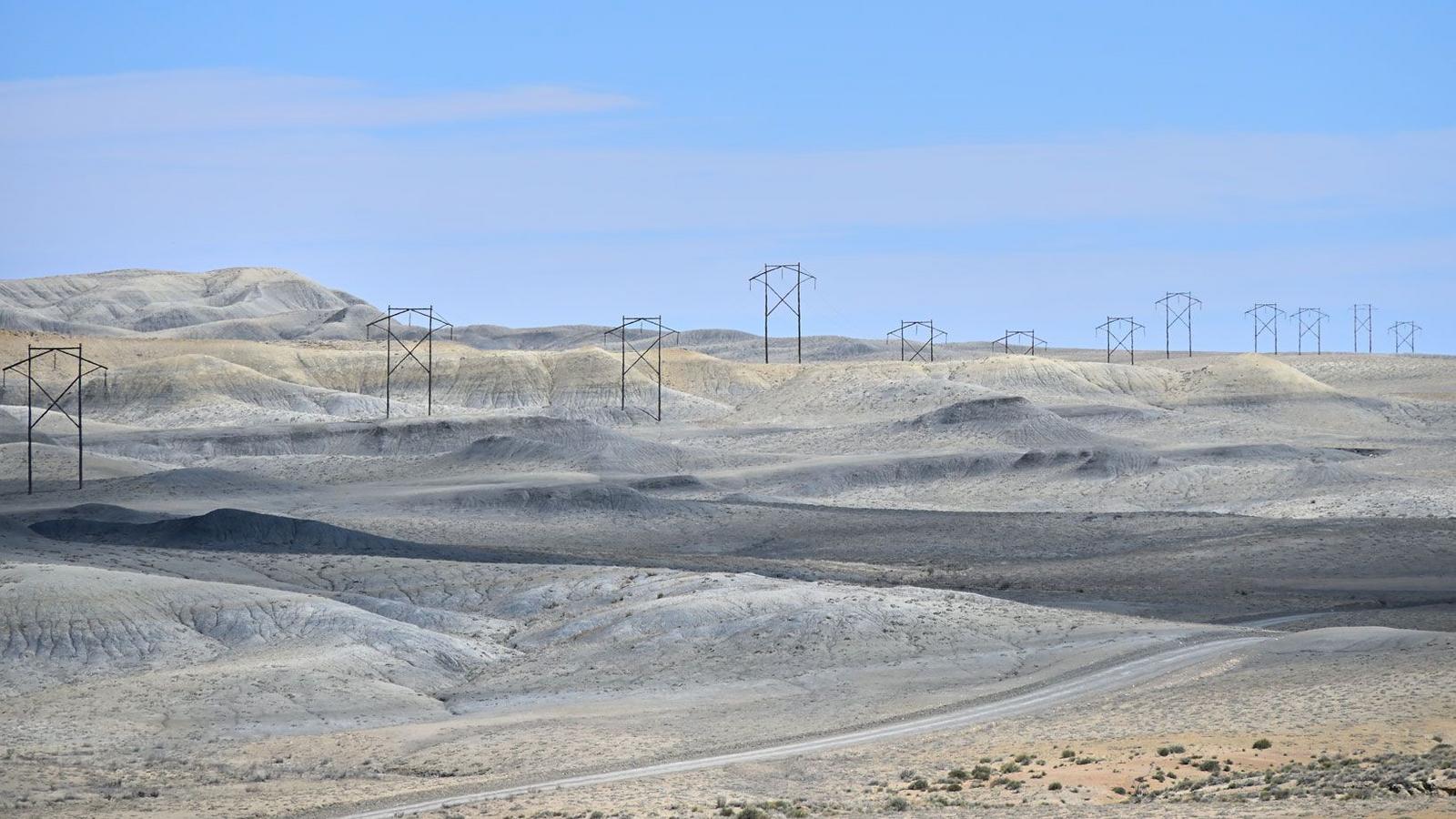
A quiet, otherworldly badland cut by an endless march of pylons.
You’ve seen the right idea here, Luca: the repetition of pylons stepping across pale, eroded hills does feel alien. This sits firmly in landscape, with a hint of documentary because of the human infrastructure. The rhythm of the towers and the layered terrain are the strongest qualities; they create a measured, minimalist scene. Your comment about alternating light and shadow is visible, though the light is fairly gentle, which softens the punch. What would happen if one pylon became a clear anchor, with the rest receding—would that strengthen the “endless” feeling you’re chasing?
TECHNICAL EXECUTION ★★★★
The file looks clean and natural, with restrained colour and no heavy-handed processing. Detail across the ridges holds up well, and there’s no obvious clipping in the sky or crushed shadows in the foreground gullies. At full view the image seems a touch low in micro‑contrast, likely from heat haze or distance; it’s not fatal but it mutes the texture. A modest dehaze or midtone contrast boost would help the strata read more decisively. To reach five stars I’d want tack‑sharp detail front to back (tripod, base ISO, around f/8–f/11, and if windy, a slightly faster shutter) plus a touch more local contrast to separate the pylons from the land.
COMPOSITION ★★★
The repeating pylons along the upper third establish a clear motif, and the low, rolling layers give the frame calm structure. However, there’s no single anchor; all towers are similar size, so the eye wanders rather than lands. The road in the bottom right introduces a line but exits the frame before it leads anywhere meaningful, and the generous foreground and sky dilute the pattern’s strength. Consider a tighter, panoramic crop to concentrate on the ridge with the pylons, or step closer/longer to place one larger tower on a third and let the rest cascade away. A lower viewpoint could also lift the pylons against clean sky, preventing their heads from merging with tonal ridges.
LIGHTING ★★
The light is serviceable but flat—likely mid‑day with thin cloud—so the hills read as soft mounds rather than sculpted forms. You mention the alternation of light and shadow; it’s there, but timid, and doesn’t carve the shapes or emphasise the pylons’ geometry. Early or late side‑light would rake across those gullies, draw texture into the badlands, and create brighter highlights on the pylon edges for separation. Weather could help too: stacked clouds or passing shadows would add drama without touching saturation.
STORY ★★★
The theme of human infrastructure threading through a barren landscape comes across, and the sheer number of towers hints at scale and persistence. Still, the frame feels descriptive more than decisive—nothing specific is happening that deepens the idea. A single dominant pylon, a maintenance truck on the road, or a fleeting band of sunlight hitting just one ridge could provide that extra beat of meaning. What small element could you wait for or include to move this from “a place” to “a moment in that place”?
IMPACT ★★★
The muted palette and repeating forms have a steady pull, and the “another planet” impression is believable. Yet the absence of a strong focal anchor and the flat light keep it from being unforgettable. With more deliberate framing and bolder light, this concept could become striking—minimal, graphic, and tense. A refined crop and tonal shaping would also sharpen the first read.
CONSTRUCTIVE NEXT STEPS
✓ Return in cross‑light (golden hour or under passing cloud) to carve the ridges and put a bright edge on the pylons; shoot at base ISO on a tripod around f/8–f/11 for crisp texture.
✓ Recompose to include one larger pylon as an anchor on a third, letting the line recede; a 100–200mm focal length will compress the sequence and strengthen the “infinite” rhythm.
✓ Try a panoramic crop (e.g., 2:1), trimming some sky and the lower road to focus attention on the layered ridge where the pylons march.
✓ In post, add subtle local contrast: dodge the sunlit ribs of the hills and lightly burn the troughs; apply a gentle Dehaze and selectively lift the pylons to separate them from similar‑toned backgrounds.
AI Version 2.1