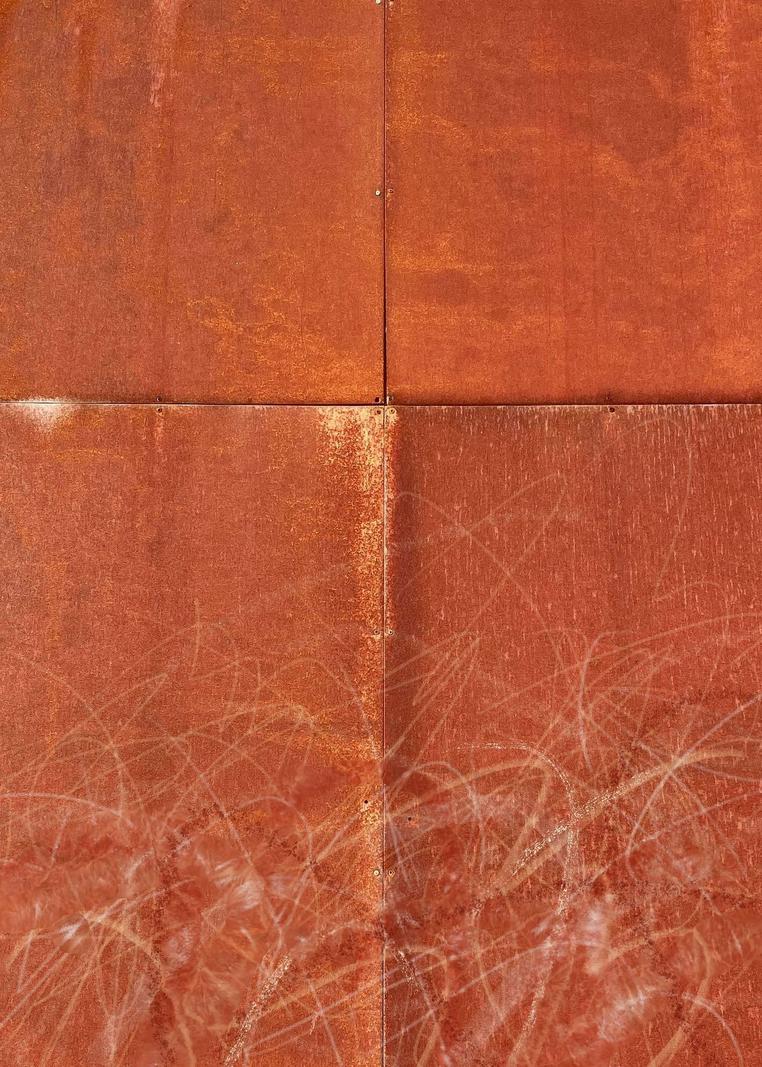
A clean, textural study with strong materials but a hesitant idea.
Short answer: not yet, at least not in this single frame. Weathered metal panels, seams and screws are a well‑trodden path in abstract photography. What you do have is a few distinctive touches—the central cross of panel joins and the lively white scratch marks in the lower half—that hint at a personal direction. If your intent is fine‑art abstraction drawn from architectural surfaces, push those specific signatures further and more deliberately so the picture feels unmistakably yours. Ask yourself: are you aiming for calm order (the grid and screws) or friction (the erratic scratches and rust bloom)? Clarifying that choice will shape both your framing and timing.
TECHNICAL EXECUTION ★★★★
Exposure and colour are controlled and natural; the rusty oranges sit in a tasteful, earthy range without garish saturation. Sharpness looks consistent across the frame and I see no obvious artefacts or heavy processing. The only technical hotspots are the tiny bright screw heads and a chalky abrasion near the lower centre which grab attention more than they need to. A polariser could help tame surface sheen if you want a more matte look. To reach five stars I’d want to see either purposeful texture revealed by raking light or absolute control over those small specular distractions.
COMPOSITION ★★★
The cross formed by the panel joins gives you a strong backbone, but everything is very centred and equal—there’s little hierarchy to guide the eye. The lower third becomes busy with pale scratch arcs while the top half is comparatively empty, so the frame feels split between calm and chaos without a clear decision. Placing the cross intersection on a third and either embracing or excluding the scratched area would create a clearer statement. Small bright flecks near the borders and the vertical seam’s oxidisation bloom at centre-left are underused assets that could become your focal anchor if framed more assertively. A tighter crop focusing on one quadrant and the seam could add tension and authorship.
LIGHTING ★★★
The light is flat and even, which is safe for colour accuracy but doesn’t sculpt the texture. This kind of surface comes alive with low, raking light that throws tiny shadows from the rust crystals and accentuates the scratches. Midday light leaves the piece feeling a bit two‑dimensional. Returning late afternoon or early morning would give you depth without needing heavy post. Five stars would require light that clearly elevates the form—either crisp side light or a controlled, soft look that intentionally minimises glare.
STORY ★★
As a fine‑art abstraction, the potential story is “order versus wear”: engineered grid and screws set against human or mechanical scuffs. Right now that idea is only suggested, not declared. The frame sits on the fence—neither austere minimalism nor a bold celebration of marks. What, precisely, do you want the viewer to notice first: the geometry of the join or the calligraphic scratches? A clearer choice would lift this from texture study to concept.
IMPACT ★★
The picture is pleasant and competent, but it doesn’t stick. Similar rust‑and‑grid studies are plentiful, so originality must come from a stronger point of view: a distinctive crop language, a consistent palette, or a repeated motif across a series. The most memorable element here is the chaotic white scratching—if that became your signature, the work could feel more your own. To hit four or five stars, I’d need a frame that either surprises with composition and light or presents a cohesive concept that feels unmistakably “ANTONIO”.
CONSTRUCTIVE NEXT STEPS
✓ Decide the story before shooting: if it’s about the cross and hardware, exclude the lower scratches by cropping or reframing; if it’s about human marks, move in and let the scratches dominate with the seam placed off‑centre for tension.
✓ Revisit the wall in raking, late‑day light and use a polariser to cut glare; this will deepen colour and reveal micro‑texture without heavy editing.
✓ In post, guide the eye: subtly burn the lower bright scuffs and clone a few edge‑bright flecks that pull attention; keep the oxidised seam as the visual anchor.
✓ Build a small series (8–12 images) from the same surface with a consistent framing logic—e.g., seam intersections and evidence of wear—so your authorship comes from repetition and refinement, not just subject matter.
AI Version 2.1