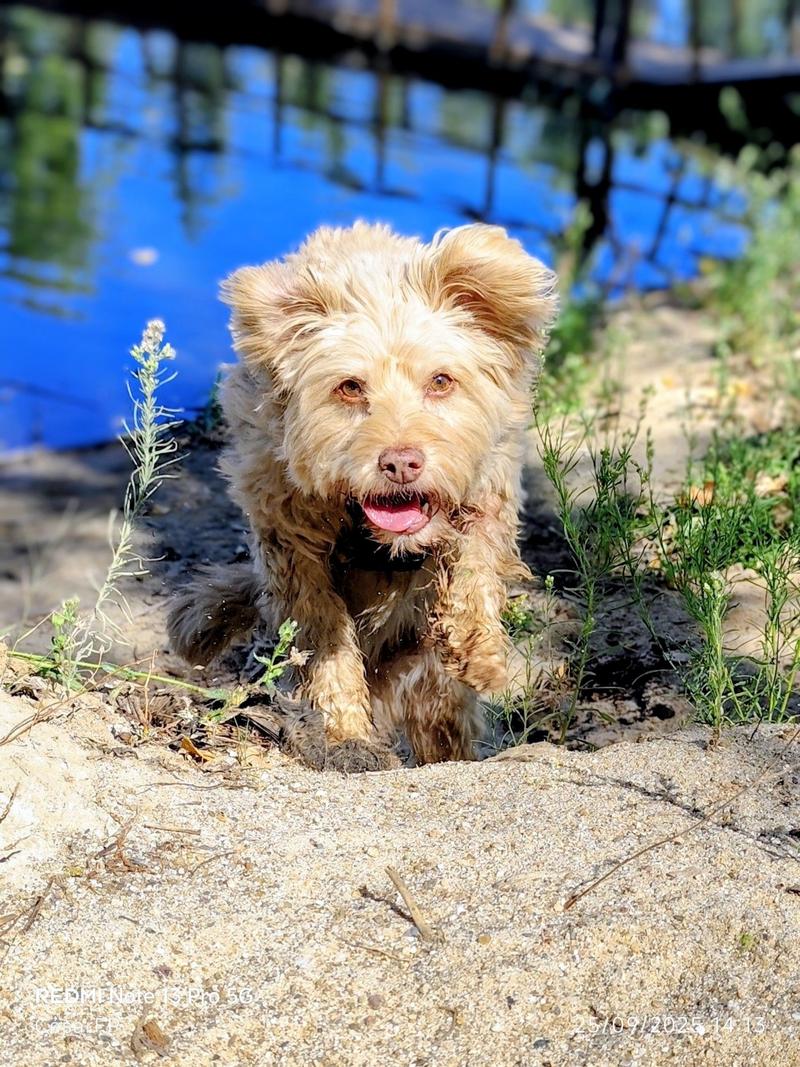
A joyful, energetic dog moment — let down a bit by harsh light and heavy phone processing.
For a phone capture, you nailed a lively moment — the dog pounding up the sand with tongue out and flecks of dirt flying. This sits between pet portrait and wildlife action. The phone has done a decent job freezing motion and separating the background, but it’s also pushed colour and sharpening hard, which makes the blue water shout and the fur look a bit crunchy. In short: the moment is strong; the file looks like a phone photo because of processing, midday light and the on‑image text. How might this scene look if you shot lower to the dog’s eye level and at a calmer time of day?
TECHNICAL EXECUTION ★★
The subject is acceptably sharp and the motion is frozen, which is the core win here. However, the file shows obvious phone processing: heavy sharpening on the fur, oversaturated blues in the water, and high local contrast. The midday sun has clipped highlights on the light fur, and the tonal range looks compressed. The watermark bottom left and the date stamp bottom right are distracting and downgrade the image for any serious use. To reach five stars you’d need a cleaner, RAW/DNG workflow (or gentler processing), no on-image text, and better highlight control.
COMPOSITION ★★★
The dog is centred and fills the frame, making the subject clear. The flying sand and foreground bank give a sense of movement, which is good. Yet the vivid blue water and the bright reflections at the top pull the eye away from the face, and the tufts of grass around the paws add clutter rather than story. The bottom text elements also fight for attention and force an awkward crop if removed. A lower viewpoint and a slight shift to place the dog on a third, with more space ahead of its movement, would create a stronger flow.
LIGHTING ★★
This is hard, overhead midday light. It creates shiny hotspots on the fur and flattens colour nuance, while the shadows under the chin and chest go a little dense. There’s a small catchlight, but the contrast is overall too harsh for a light-coated subject. Early morning/late afternoon would give softer modelling and a gentle rim on the fur, or open shade by the water would balance the tones. To reach the top tier, aim for softer light that shapes the face and protects highlight detail.
STORY ★★★
There’s a clear, cheerful narrative: a dog bursting out of the water and charging up the bank. The flying grit and open mouth sell the action nicely. It stops short of a standout behavioural frame because we’re missing the absolute peak—no water droplets flying or shake, and the background doesn’t add context beyond “lakeside.” Consider waiting for the shake, a leap, or an interaction to deepen the moment. What specific behaviour were you hoping to show: speed, play, or the transition from water to land?
IMPACT ★★
The enthusiasm of the dog is engaging at first glance, but the oversaturated blue and crunchy detail shout more than the story does. The watermark and date stamp break immersion immediately. With cleaner colour, better light, and a lower angle, this could have strong presence. As it stands, it’s likeable and personal, yet easy to scroll past in a wider edit.
CONSTRUCTIVE NEXT STEPS
✓ Turn off the in‑camera watermark and timestamp; for this file, clone/heal both and crop a little from the bottom to clean the frame.
✓ Shoot in softer light (early/late or open shade). On the phone use exposure compensation of −0.3 to −0.7 EV to protect fur highlights; use burst mode to catch the peak moment (shake, leap, sand flying).
✓ Change viewpoint: crouch to eye level and leave space in front of the dog’s movement; shift so the bright blue water isn’t directly behind the head, or use a cleaner background for separation.
✓ In post, reduce blue saturation and global clarity/structure; add a subtle mask to lift shadows and draw the eye to the dog’s face while keeping highlights under control.
AI Version 2.1