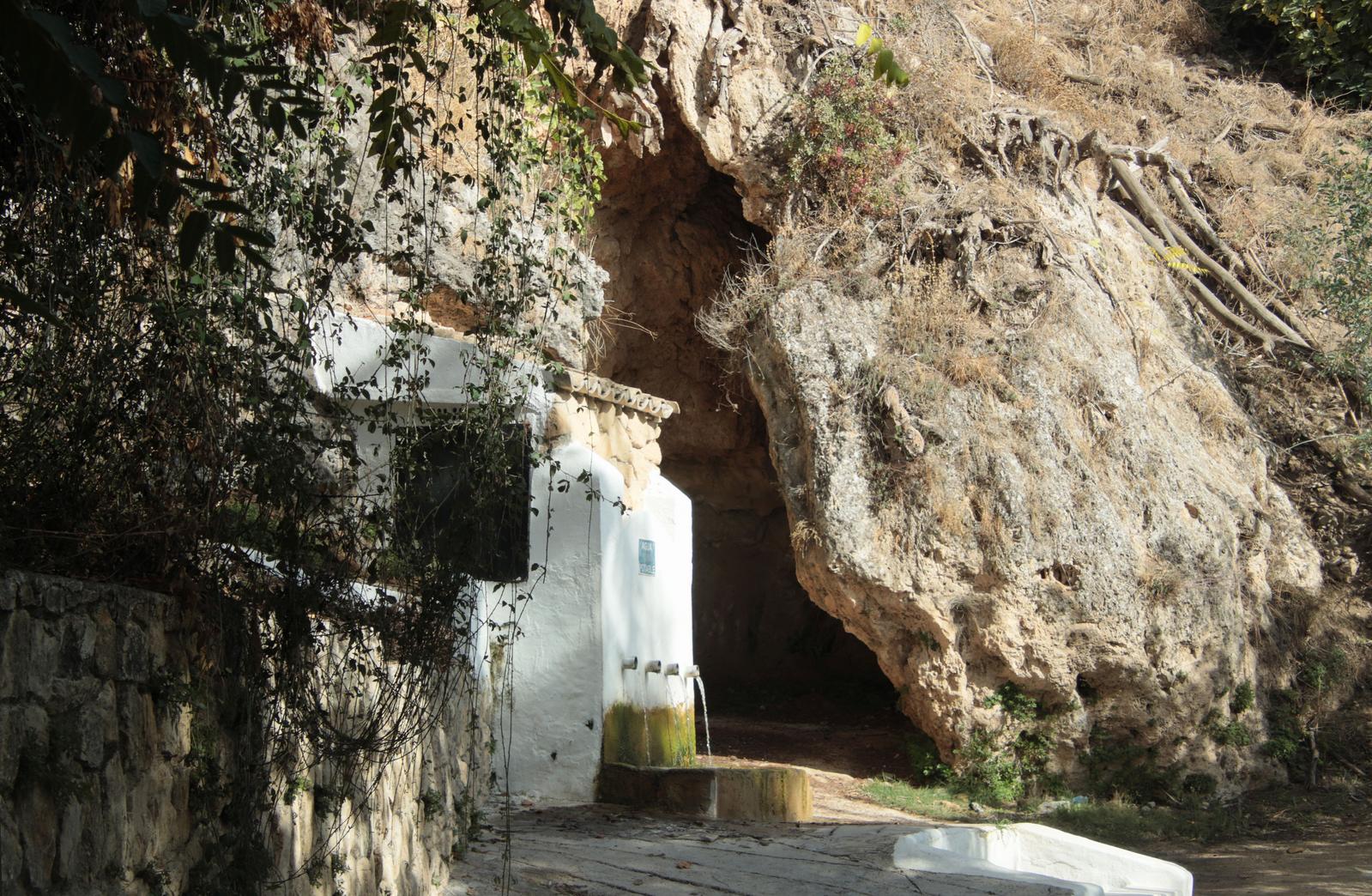
A quiet, hidden spring carved into rock — you’ve captured the pleasure of stumbling on a cool refuge.
You probably like it because it feels like a discovery. The whitewashed fountain tucked against raw stone, the trickle of water, and the cave mouth together whisper “oasis on a hot day.” That contrast — human touch versus rugged nature — is the strongest idea here and it reads clearly as travel photography. The dappled shade on the left and the bright, sun‑struck rock on the right hint at heat outside and relief inside. Do you remember the coolness of the air in that cave or the sound of the water? If so, ask yourself which element matters most to you — the water, the cave, or the contrast — and compose to make that single idea unmistakable next time.
TECHNICAL EXECUTION ★★★
Exposure is mostly well handled considering the bright white plaster and deep cave shadow. Detail holds in the stone and the algae under the taps, and there’s no obvious heavy processing. However, the dynamic range pushes the file: the cave falls to near‑black while the sunlit rock on the right borders on a hotspot, leaving the scene a touch contrasty and flat in the midtones. Focus looks steady and hand‑held blur isn’t an issue at web size, but a little more micro‑contrast on the fountain would help it pop. To reach four stars, shoot in softer light or bracket on a tripod and blend to tame the highlights while opening the shadow inside the cave. A circular polariser would also calm glare on the whitewash and wet stone.
COMPOSITION ★★
Your subject is the fountain at the cave mouth, but the frame lets competing elements steal attention. The dark rectangular sign and dangling foliage on the left pull the eye, and the bright, bulky rock on the right outweighs the fountain, making the layout feel right‑heavy. The taps sit low in the frame and the concrete basin at bottom right is clipped, so the water — your only real “moment” — is underplayed. A step to the right and closer would let the cave’s arch wrap around the white wall, making a clean natural frame and excluding the sign and foliage. Consider a portrait orientation to feature the height of the rock and the vertical fall of the water.
LIGHTING ★★
This is hard midday light: bright, slanted sun on the rock face and deep shade in the recess. It describes the heat of place, but it works against subtle texture and tone. The whitewash reflects strongly while the cave swallows detail, so your subject fights the conditions rather than benefits from them. Early or late light would carve the rock and give the fountain a gentle glow; open shade or light overcast would balance tones and keep detail in both rock and plaster. If midday is unavoidable, move fully into shade so the entire scene sits in the same light family.
STORY ★★★
There is a small narrative: a man‑made spring built into a cave, water running for travellers. The flowing stream brings a hint of life, and the contrast between refuge and sun adds atmosphere. Without a person, animal, or a more assertive gesture from the water, it remains descriptive rather than gripping. A passer‑by filling a bottle or a hand under the tap would add scale and purpose. Think about the sensation you want the viewer to feel — thirst quenched, quiet shelter, or ancient craft — and wait for the element that communicates it.
IMPACT ★★
Pleasant and genuine, but the distractions and harsh light blunt the punch. The scene has potential for a memorable “hidden spring” photograph, yet the eye wanders and the water — the emotional hook — isn’t given centre stage. Cleaner framing and better light would lift this from a record shot to something that stays with the viewer. To climb to four stars, simplify the frame and let one strong idea dominate.
CONSTRUCTIVE NEXT STEPS
✓ Revisit in softer light (early morning, late afternoon, or overcast). If returning isn’t possible, step fully into shade to keep the fountain and rock in the same light; expose for the whitewash and lift cave shadows in post.
✓ Change position: move right and closer so the cave arch frames the fountain; exclude the black sign and most of the hanging foliage. Try a portrait orientation and place the taps on the upper third so the water becomes a leading line.
✓ Give the scene a moment: wait for someone to drink or fill a bottle, or get low and close to the water stream so it becomes the hero.
✓ Post‑process with restraint: crop a sliver from the left to remove the sign, burn down the bright right rock edge, and add a gentle dodge to the fountain face for separation; keep colours muted and natural.
AI Version 2.1