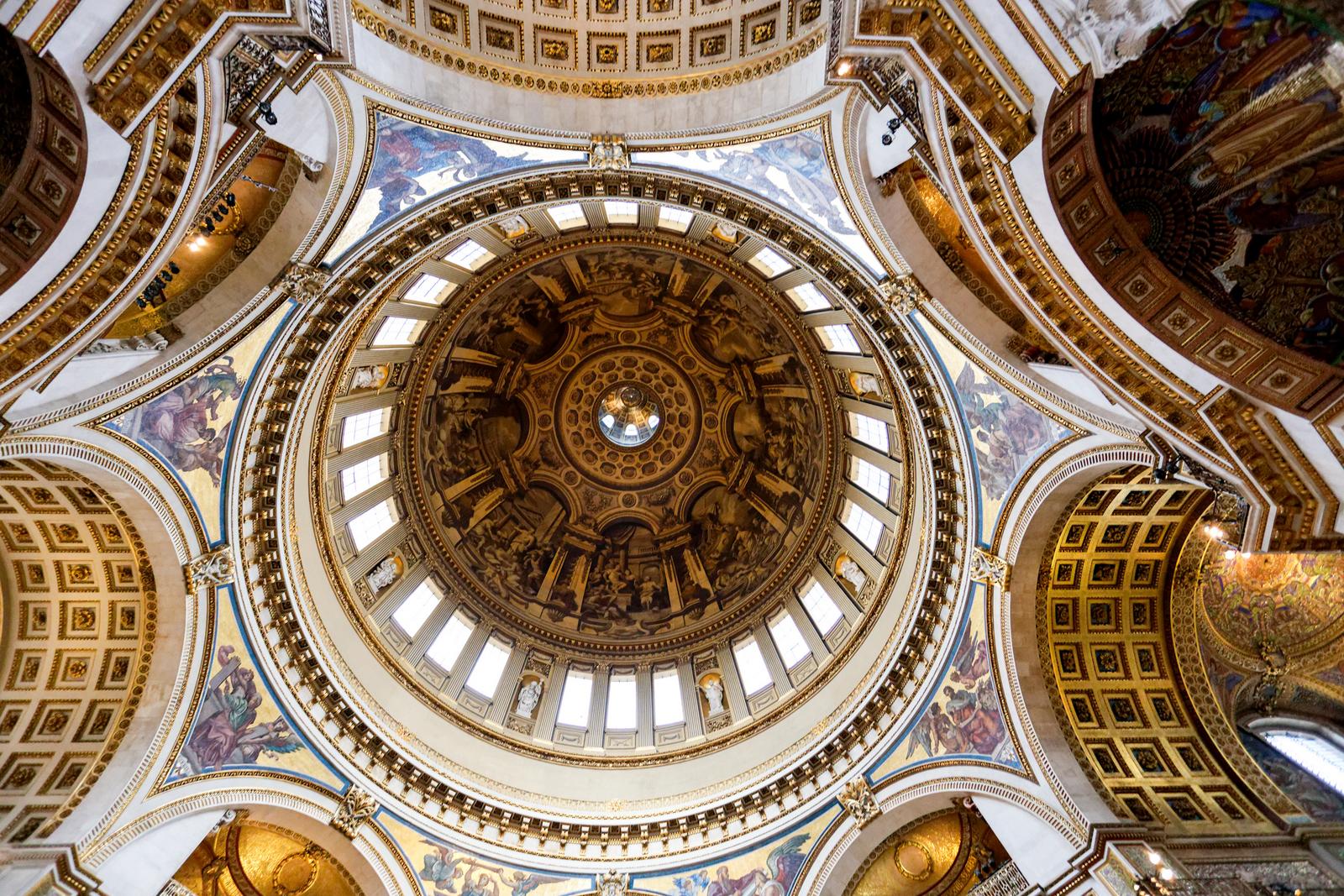
A grand, detailed ceiling study with strong craft but a conflicted sense of symmetry.
You’ve clearly aimed to bottle that feeling of awe inside St Paul’s, and an upwards architectural study is a good way to do it. The fine detail in the frescoes and gilding is well rendered, and the dome itself gives you a ready-made graphic subject. This sits squarely in architectural photography, where precision and line control matter as much as mood. Here the camera rotation introduces drama, but it also fights against the dome’s natural symmetry. Ask yourself: did the tilt add anything you wanted, or did it take away the sense of order that makes this space special?
TECHNICAL EXECUTION ★★★★
Exposure is handled well considering the bright gilding against darker painted panels; highlights in the gold are bright but not blown, and shadow detail holds. The file looks clean and sharp across the frame, suggesting a steady hand or adequate shutter speed. Colour balance leans warm, which suits the interior, though you could cool the stone slightly to separate it from the golds. I don’t see heavy HDR or haloing, which is good restraint. To reach five stars, I’d like to see micro‑contrast refined so the painted figures don’t look a touch muddy compared with the crisp mouldings.
COMPOSITION ★★★
The central oculus is close to the middle, but the whole frame is rotated, turning the perfect geometry into an ellipse and making the surrounding arches feel cropped and tense on the right edge. Architectural subjects this symmetrical reward exact alignment; even a few degrees of roll pulls the eye. The bright downlights and chopped arch at the right border tug attention away from the dome. There’s energy in the diagonal, but here it seems at odds with the building’s design language. A square-on, dead‑centre rendering (or a clearly deliberate off‑centre concept) would strengthen intent and order.
LIGHTING ★★★★
The ambient light from the drum windows gives clean, soft illumination across the dome, preserving texture without harsh hotspots. The warm gilding reads rich without veering into garish, and the shadows in the paintings are readable. Mixed light is minimal; only a few small electric sources on the right introduce cooler notes. It’s handled confidently and feels authentic to the space. For a five-star result, consider shooting when the interior is a touch darker and let the window light emphasise relief more strongly, or bracket subtly to pull a hint more tone from the darkest mural sections.
STORY ★★★
The image communicates scale and craftsmanship, which suits your aim of “wonders of St Paul’s”. What’s missing is a sense of human connection or a clear point of view beyond “look up at the dome.” A visitor’s silhouette or a hint of liturgy would add context and scale, turning a record into a moment. As it stands, it’s a faithful document rather than a scene with tension or surprise. What detail of the dome felt most “wonderous” to you—the oculus light, the figures, the repeating coffers—and how could you make that one thing the hero?
IMPACT ★★★★
The subject itself carries strong pull, and the crisp detail rewards a long look. The angled presentation gives initial punch, but the slight imbalance prevents it from being truly memorable. Clean symmetry or a stronger conceptual reason for the tilt would push this into the showpiece category. Nevertheless, it’s a confident, impressive interior study that many viewers will enjoy. A touch more intent in framing would elevate the overall presence.
CONSTRUCTIVE NEXT STEPS
✓ Revisit and shoot perfectly centred: enable the in‑camera level, use a tripod if allowed, and align the oculus dead centre; rotate by exact degrees in post only if it supports a clear concept.
✓ In post, rotate a couple of degrees to square the frame, then crop to remove the bright light cluster and chopped arch on the right; clone any tiny hotspots that pull the eye.
✓ Add subtle local contrast to the mural areas (curves or clarity on a mask) so painted figures match the crispness of mouldings without pushing into HDR.
✓ Consider a scale element next time: include a small figure under an arch or a handrail at the edge to anchor size and add a human note.
AI Version 2.1