A classic vista caught at the right second, but the file feels a bit crunchy and could breathe more.
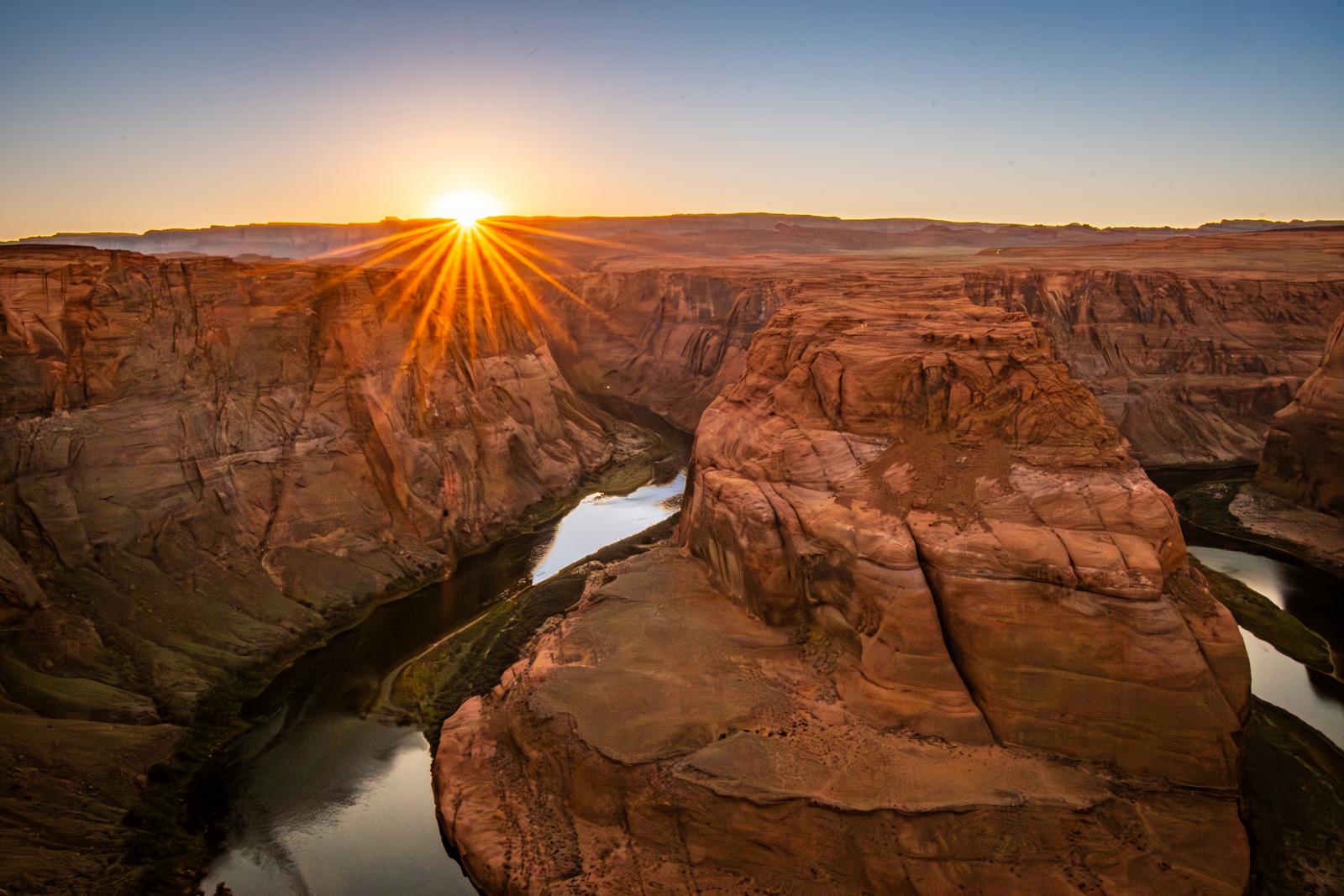
You achieved the sunstar cleanly, Steve—the spikes are crisp and the timing at the horizon is spot on. To your question: it doesn’t scream “over‑processed”, but it edges that way. The contrast and clarity on the rock look pushed, giving a slightly gritty, dehaze look and some blocked shadows in the lower left canyon. I can also see several dust spots scattered across the sky which break the polish. This is a landscape of an iconic bend; the strongest qualities are the starburst and the warm raking light across the butte on the right. How deliberate was your choice to exclude the full horseshoe and to place the sun so close to the frame edge?
TECHNICAL EXECUTION ★★★
Overall detail is decent and the sunstar is well handled, suggesting a small aperture and a stable setup. The sky contains multiple sensor/spotting marks that should be cloned; they immediately signal haste in post and are easily fixable. Contrast and micro‑contrast feel a touch heavy—likely extra clarity or dehaze—leaving the shadows slightly crushed and the sandstone a bit “crunchy”. Colour is warm but believable, though the oranges could be dialled back a notch. To reach five stars, clean the sky, soften the local contrast, and manage the dynamic range with a more natural shadow lift or a careful blend rather than global HDR.
COMPOSITION ★★★
You’ve chosen the right-hand butte as the anchor, with the river arcs leading the eye around it, and the sun placed near the left third. However, the frame sits between two ideas: the complete horseshoe view versus an asymmetrical study of the rock mass. Without a strong foreground lip or the full curve, depth isn’t maximised and the eye bounces between the sun and the butte. The horizon feels high, giving the sky little room despite the starburst being the hook. Committing to one approach—either include the full U with a clear foreground ledge, or crop/position boldly around the butte and sun—would tighten the design.
LIGHTING ★★★★
The timing is good; the low sun rakes texture across the sandstone and the starburst adds drama. The far canyon walls retain some detail and the golden cast suits the desert. The downside is the deep, inky shadow in the lower left channel which reads as a block rather than textured shade. A modest lift in those shadows or a bracketed blend would preserve shape without killing the mood. Bringing the sun a fraction further inside the frame would also reduce edge tension while keeping the rays intact.
STORY ★★★
This communicates place and time clearly: a quiet moment at sunset in a grand canyon. The starburst gives you the “moment”, but beyond that it’s a descriptive scene rather than a narrative one. There’s no scale cue or weather event to add tension or uniqueness, which is hard at such a well‑photographed location. Consider whether a human figure on a distant ledge, unusual cloud, or mist would strengthen the sense of occasion. What element could you introduce—or wait for—that would make this more than the expected view?
IMPACT ★★★
It’s attractive and competent, and the sunstar delivers initial punch. However, Horseshoe‑Bend‑at‑sunset is a saturated subject, and the composition doesn’t offer a fresh take or a strong foreground to set it apart. The slightly heavy processing also softens the emotional pull. A cleaner sky, subtler tonality, and a more decisive compositional choice would increase memorability. Aim for either a purer, quieter file after sunset or a bolder, layered frame at the moment of the sunstar.
CONSTRUCTIVE NEXT STEPS
✓ Remove the visible sensor/dust spots in the sky and consider a gentle reduction of clarity/dehaze on the rocks; pull orange saturation/luminance back a touch for truer sandstone and lift deep shadows by ~10–20 to recover texture.
✓ On location, commit to one design: step forward to include a clean foreground ledge and the full river loop, or go tighter around the butte and sun; keep the sun inside the frame by a few degrees to avoid edge tension and place the horizon deliberately.
✓ For dynamic range, shoot a 3–5 frame bracket at ISO 100, f/16 (for the starburst) on a tripod and blend manually with masks to open canyon detail without the HDR look.
✓ Consider returning 10–15 minutes after sunset for a second frame with even, pastel light; it won’t give a starburst, but it can yield a cleaner, moodier version that might outlast the cliché.
AI Version 2.1