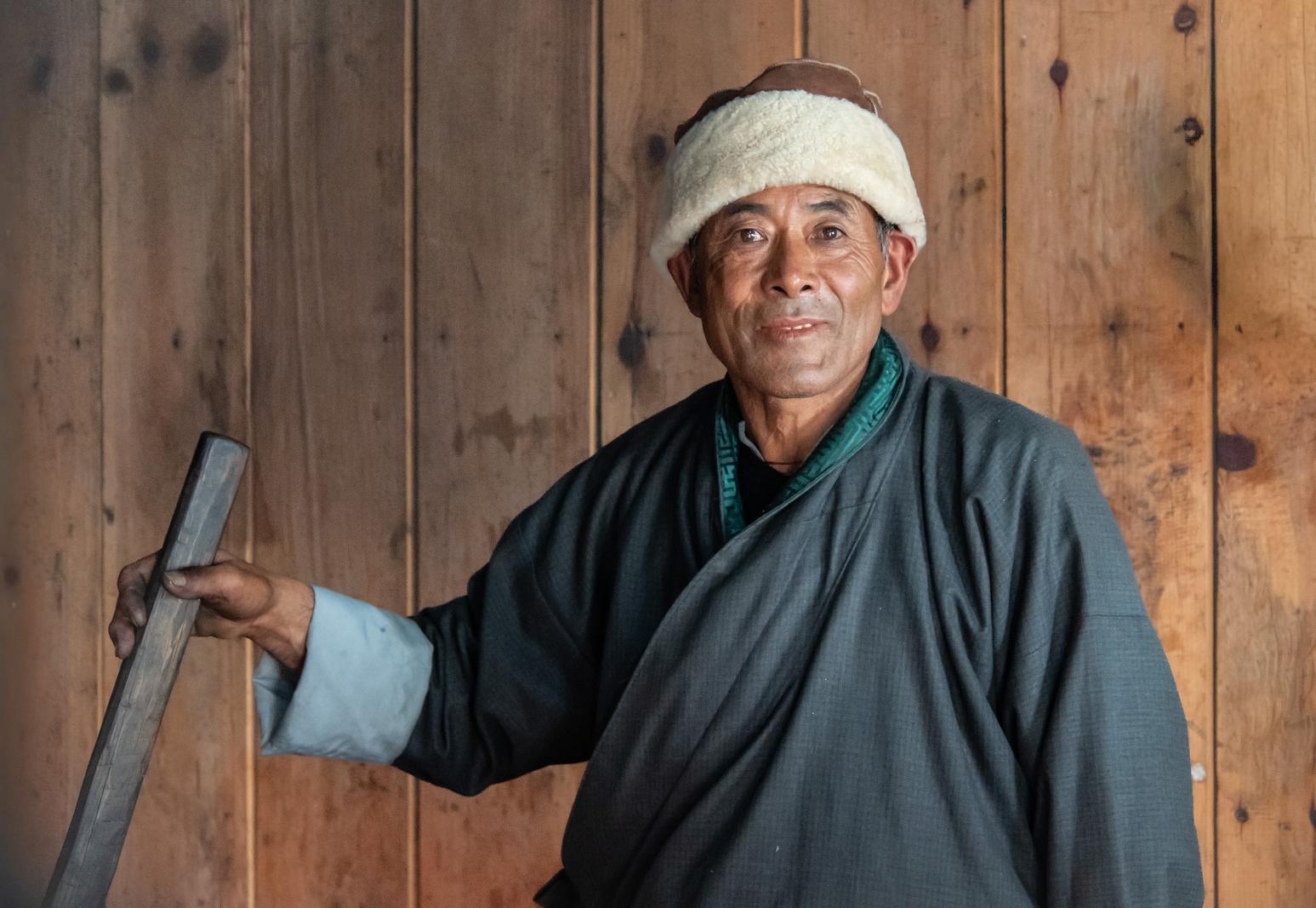
A warm, dignified portrait with lovely tones, held back by an indecisive crop.
You’re right to focus on excluding chaos; the pared‑back timber wall and the subject’s steady gaze work well for a travel portrait. About the crop: it’s neither close enough nor wide enough. The hand and tool are half‑included and tight to the left edge, creating tension without giving us the context of what he’s doing. For this file, I’d crop tighter—remove the hand and stick—and reduce the empty wall on the right to concentrate on his face and robe. If you want the hand/tool to be part of the story, you needed to go wider at capture and keep the entire hand and more of the stick in frame. Which story do you want to tell here—his craft through his hands, or his character through his face?
TECHNICAL EXECUTION ★★★★
Focus is crisp on the eyes and skin texture holds up well; this would print cleanly. Exposure is balanced with detail in the hat’s highlights and in the darker robe. Colour feels natural and pleasantly muted—no heavy processing artifacts or saturation issues. There is a slight brightness pull from the pale blue cuff that competes with the face, but that’s an easy local adjustment. With a subtle touch of local contrast on the face and a small burn on bright clothing, this would approach flawless.
COMPOSITION ★★★
The subject sits centre‑right with a large slab of empty timber to the right; this space doesn’t add meaning. The left hand and stick are cramped on the edge and cropped at an awkward point, which feels undecided. Headroom is fine, and the robe’s diagonal folds are strong, but the half‑included prop weakens the frame. A tighter vertical around head-and-chest would remove the problem, or a wider environmental frame would let the tool form a deliberate diagonal. How would the image read if he were placed on the left third, looking slightly into negative space on the right?
LIGHTING ★★★★
Soft, directional light from camera left shapes the face nicely and gives a gentle catchlight. Shadows are clean and flattering, creating depth without harsh contrast. The neutral wood backdrop takes the light well and separates him from the background. The hat brim is close to being the brightest element; a small burn would keep attention on the eyes. Turning him a few degrees more into the light would have added a touch more modelling across the cheekbone.
STORY ★★★
We get a clear sense of a calm, dignified man; his expression is open and engaging. The partially shown hand and tool suggest work or craft, but because they’re cropped and unexplained, the narrative feels incomplete. With more of the tool and workspace, this could become an environmental portrait with stronger context. As it stands, it’s a character study rather than a moment. What single gesture—full grip on the tool, a mid‑action movement, or a shared glance—would best express who he is?
IMPACT ★★★
The earthy palette and textured wall give the image a grounded feel, and his gaze holds attention. The crop indecision and excess negative space on the right reduce the punch. A decisive framing choice—either intimate head‑and‑shoulders or wider with purposeful hands—would lift memorability. Tightening the visual hierarchy so the eyes are unquestionably the brightest, sharpest point would also help. With a clearer narrative or cleaner edges, this could climb to strong portfolio territory.
CONSTRUCTIVE NEXT STEPS
✓ Commit to one story in this file: crop tighter to a vertical head‑and‑chest portrait, removing the left hand/stick and trimming ~10–15% from the right to reduce empty wall; keep the eyes near the upper third.
✓ When shooting in similar chaos, step back 1–2 feet or switch a little wider to include the entire hand and more of the tool; avoid cropping at wrists and let the stick form a deliberate diagonal within the frame.
✓ Post‑process: lightly dodge the eyes and mid‑face (+0.3–0.5 stop), burn the pale blue cuff and bright hat band (‑0.3 stop), and clone/soften the dark knot in the wood that sits near his ear to prevent mergers.
✓ Build an “edge check” habit—before pressing the shutter, scan the frame edges for cut limbs or bright patches; take a safety frame slightly wider so you can refine the crop later without losing key details.
AI Version 2.1