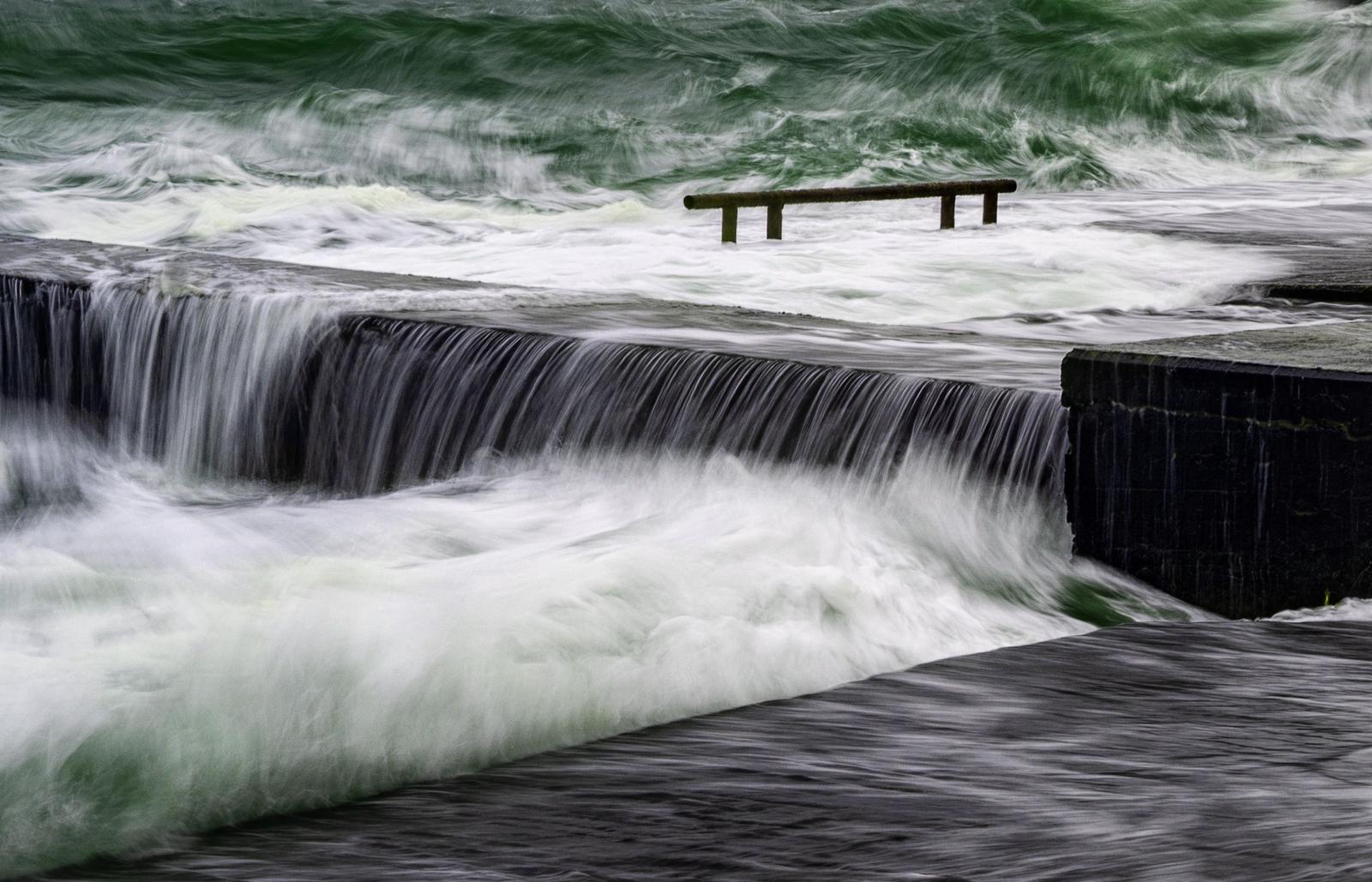
A powerful, moody seascape where engineered lines meet unruly water.
This sits between fine‑art seascape and landscape. The strongest quality is the tension between the clean concrete edges and the blurred force of the sea, especially the curtain of water spilling over the ledge. In terms of potential: it’s well suited to fine‑art prints (homes, hotels, offices), editorial features on coastlines or sea defences, and as a book/album cover where themes like turbulence, resilience or erosion are relevant. Because it’s non‑specific to place and free of people, it also has stock value for topics such as weather, infrastructure, risk or climate. If you’re targeting galleries or higher‑end prints, lean into the restrained colour and keep processing subtle. One question for you: did you test several shutter speeds to find this balance of texture versus blur, and what made you choose this one over a slightly shorter or longer exposure?
TECHNICAL EXECUTION ★★★★
The image looks clean and carefully made: static elements (the concrete blocks and rail) are sharp, while the water’s motion blur feels intentional. Highlight control in the white water is strong; there’s energy without blown patches, and the darker sea retains detail. Colour is muted and believable, with a cool green cast that suits the stormy mood. I can’t see artefacts or over‑sharpening, which keeps it natural. To reach five stars, I’d refine micro‑contrast selectively in the falling sheet of water and reassess white balance to prevent the greens from drifting too cold in print.
COMPOSITION ★★★
The diagonal ledge creates a solid route through the frame and the railing acts as a small but effective counterpoint. However, the large dark block on the right is very dominant and close to the edge, which drags the eye away from the waterfall and shortens the visual flow. The top edge is busy with churning sea, so the railing reads a little small and almost lost. A tighter crop from the right (and slightly from the top) would simplify and push attention back to the cascade. On location, a half‑step left or slightly higher viewpoint could have reduced the mass of that right block without losing the waterfall line.
LIGHTING ★★★★
Overcast storm light is working for you: it’s soft enough to keep detail in the white water, but there’s still structure in the sea. The tonal range is well handled, avoiding the crunchy look that often haunts long‑exposure seas. The concrete has readable texture without becoming the star. A gentle local dodge along the lip where the water spills would emphasise the line that anchors the frame. To hit five stars, I’d aim for a bit more separation between the waterfall’s bright band and the darker sea by subtly burning the upper background.
STORY ★★★★
The story is clear—human construction versus relentless ocean—and the chosen moment shows the sea overtopping the structure with conviction. The small railing gives human scale and a hint of vulnerability. The water’s directionality also suggests motion from top to bottom and back again, which keeps the frame alive. The narrative could be heightened by waiting for a wave that reaches slightly higher around the rail, or by isolating spray that arcs over the ledge. Consider whether including more of the structure’s context (or less, to go more abstract) would sharpen the message.
IMPACT ★★★★
This has presence and avoids cliché; no garish sunset, just raw weather and form. The cascade line is memorable and the palette is tasteful. Impact is softened a touch by the heavy right‑hand block and the slightly busy top band, which dilute the central “waterfall” moment. With cleaner framing or a punchier moment at the rail, this would step up a level. Still, it’s strong enough for print and editorial placement.
CONSTRUCTIVE NEXT STEPS
✓ Reframe or crop: trim 5–10% from the right and a sliver from the top to minimise the dark block and keep attention on the waterfall and rail; on location, try a step left or a slightly higher angle to reduce that block’s weight.
✓ Control motion with intent: bracket shutter speeds from 1/5s to 1s using a 3–6 stop ND filter; aim for one version with more texture in the falling sheet and another smoother one, then choose the take that best serves your mood.
✓ Targeted post work: subtle dodge on the lip of the spillway, gentle burn of the upper sea, and a touch of clarity/texture on the falling water; clone any tiny bright specks on the right edge so nothing competes with the main flow.
AI Version 2.1