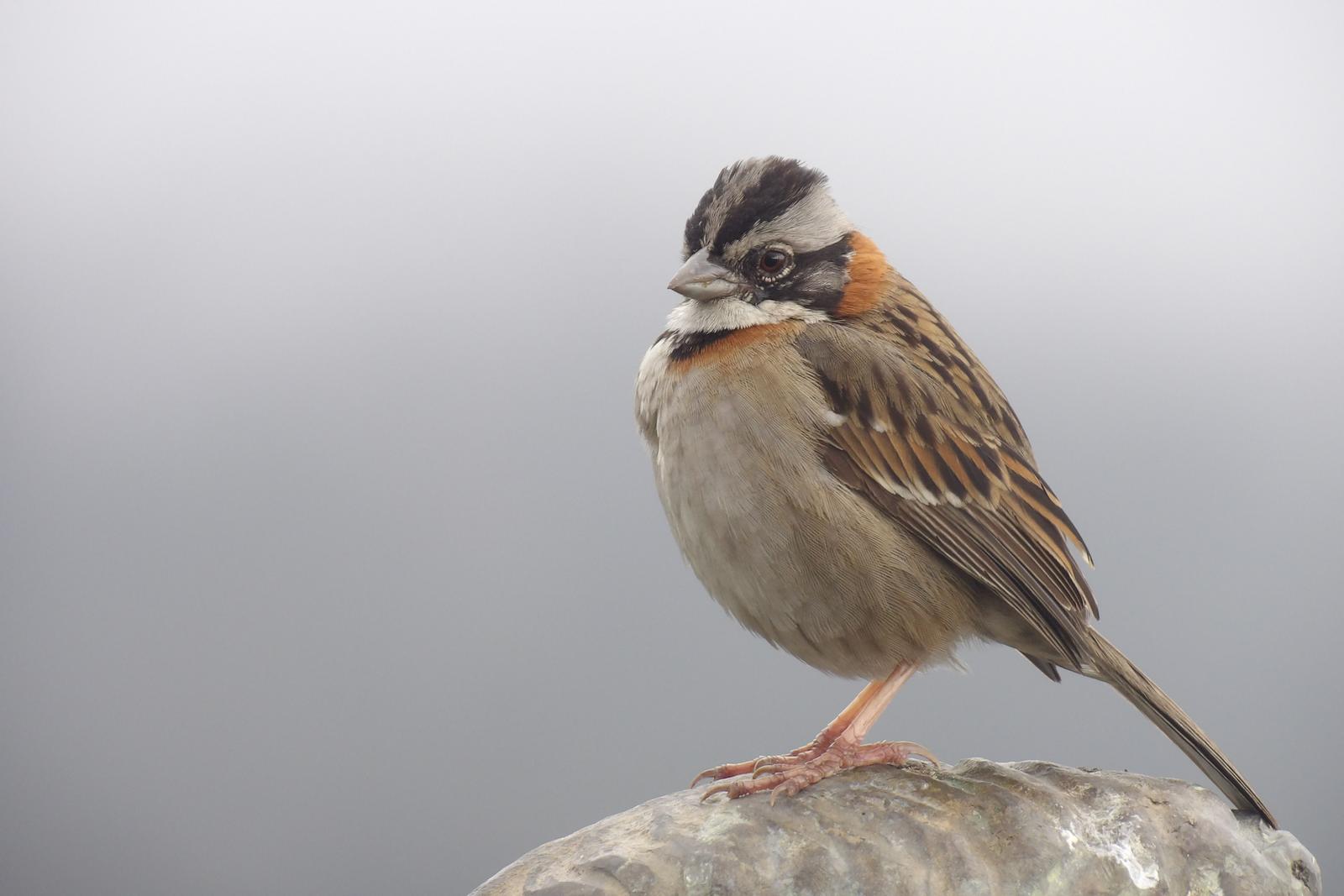
A calm, crisp bird portrait with lovely detail against a soft mountain sky.
Thanks for sharing this, Sandra. You clearly used the bird’s calmness well and made a clean, respectful portrait — this sits firmly in wildlife photography. The sharp eye, neat feather patterning and the quiet, misty background are the strongest qualities here. The unobtrusive colours feel natural and honest, which I value. Did you consider waiting for a small behaviour moment (a song, a preen) once the bird settled — that could lift a good portrait into something memorable?
TECHNICAL EXECUTION ★★★★
Focus is solid on the eye and head, giving good feather detail without obvious noise or artefacts. Exposure is well judged; the grey sky holds tone rather than blowing out, and the colours are restrained and believable. I can’t see signs of heavy processing, which keeps the file clean. If anything, the head could take a touch more micro-contrast to bring out the mask and collar, but that’s a minor tweak. For five stars I’d want absolute bite in the eye with a crisper catchlight and no hint of softness on the flank.
COMPOSITION ★★★★
The bird is placed to the right looking into generous negative space — a strong, calm choice that lets the viewer breathe. The simple, featureless background keeps attention where it belongs. Two small issues hold it back: the tail comes very close to the right edge, and the shiny highlight on the perch near the bottom right tugs the eye. A little more room around the tail would ease the tension and feel less cramped. How might the frame read if you’d stepped half a pace left to give even more space into the bird’s gaze and reduce the bright perch area?
LIGHTING ★★★
Overcast mountain light gives you very soft, even illumination — great for colour fidelity and feather detail. The trade‑off is a somewhat flat look with limited shape and sparkle. There’s a faint catchlight but it’s subtle; the eye could use a touch more life. A slight directional angle or a break in cloud would add modelling to the chest and head. Careful local contrast and a gentle dodge on the eye can mimic some of that structure without pushing it too far.
STORY ★★★
This reads as a clean portrait rather than a behaviour moment. The slight head tilt gives a hint of character and the foggy backdrop suggests altitude, but the frame doesn’t reveal much about the bird’s life or environment. Including a natural perch or capturing a call, preen, or hop would strengthen the narrative. Because the perch looks man‑made, the sense of wild place is reduced. Next time, could you wait for a song or feeding gesture to add that extra layer?
IMPACT ★★★
It’s a pleasing, well‑made image that bird lovers will enjoy, with calm mood and tidy execution. However, it doesn’t break new ground — the flat light and static pose keep the “wow” in check. Tighter technical sparkle in the eye and a more compelling moment would raise memorability. Reducing small distractions (the bright perch) would also concentrate attention. To reach four or five stars here, aim for a decisive behaviour or a moment of connection that makes the viewer pause.
CONSTRUCTIVE NEXT STEPS
- In the field, allow more breathing room around the tail and right edge; aim to keep at least a tail’s length from the border so the subject doesn’t feel cramped.
- Wait for behaviour: switch to burst mode and watch for a song, a quick preen or a hop; 1/800–1/1000s, f/6.3–f/7.1, Auto ISO, single‑point AF on the eye will keep these moments sharp.
- Post‑process locally: dodge the eye slightly and add selective sharpening/clarity to the head; burn down or clone the bright highlight on the perch to stop it competing with the face.
- When possible, favour a natural perch and a slightly lower viewpoint to strengthen the sense of place and keep the background clean while adding context.
AI Version 2.12