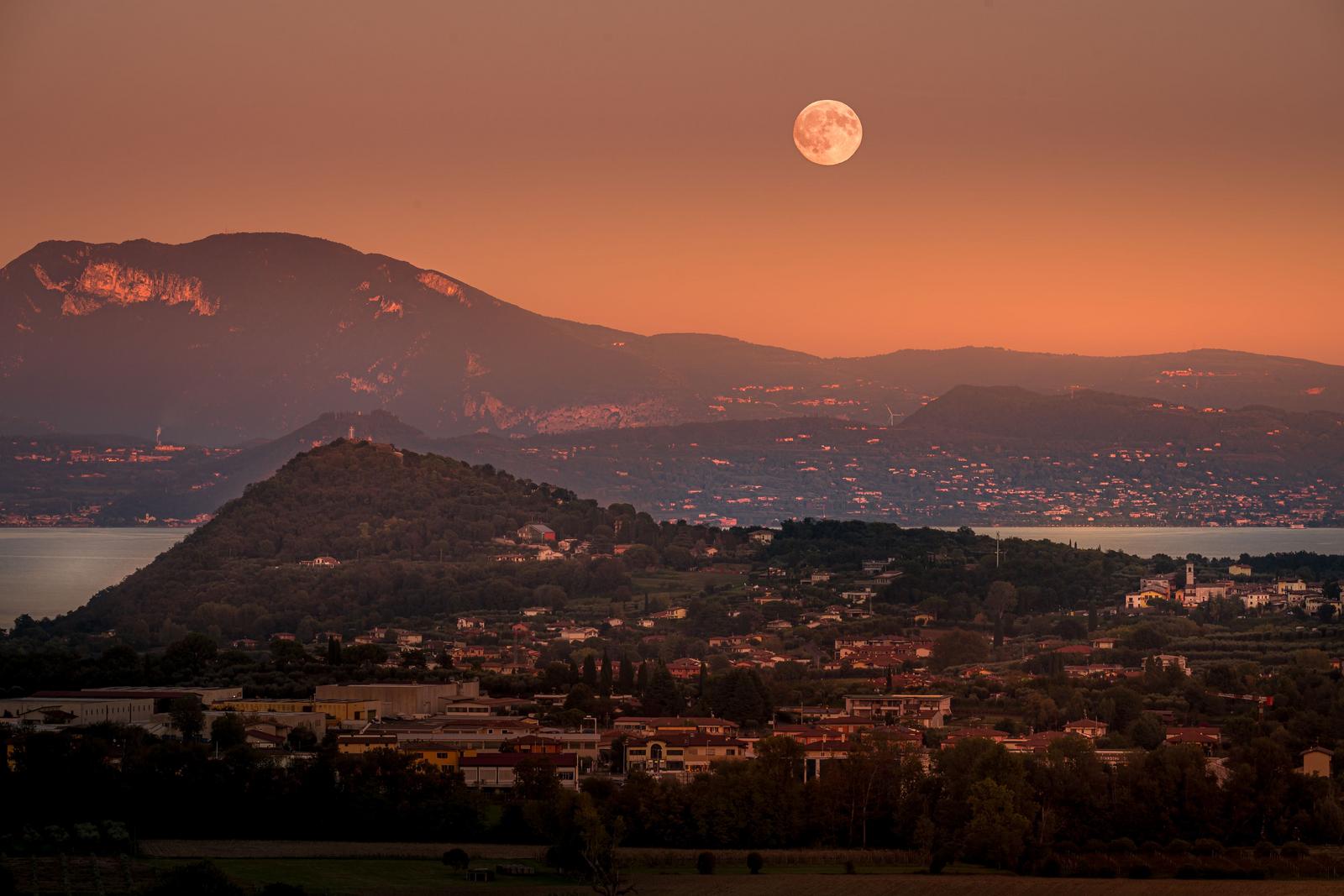
A calm dusk scene with a handsome moon, but your frame can decide more clearly what we should look at first.
You’re in landscape territory here. To your questions: the moon works well as an accent, but in this framing it isn’t the primary subject—the layered hills, lake and warm sky carry most of the weight. If you want the moon to be the subject, it needs a stronger relationship with the land (size, placement, or alignment with a landmark). The white balance reads a little hot; the whole frame leans orange which suits dusk, but it slightly flattens separation between moon, sky and mountains. Cooling the global temperature by roughly 300–600 K (and a small nudge towards green on Tint) would keep the mood while restoring some neutrality in the mountains and a more natural grey to the moon. What did you want the eye to hit first—the moon or the conical hill in the mid‑ground—and how might you position yourself to make those two elements work together?
TECHNICAL EXECUTION ★★★★
Sharpness is good front to back for a twilight landscape, and you’ve held detail in the moon—well done as that’s often blown out. Noise isn’t obvious and the exposure balances sky, land and water without crushed shadows. The colour, however, is a touch too warm globally, pushing the mountains and town into a uniform orange wash. There’s also some minor muddiness in the lower third where the industrial buildings sit in deep shadow. To hit five stars, refine the white balance, open the darkest mid‑tones slightly and consider a gentle local contrast boost on the far hills to retain depth without overprocessing.
COMPOSITION ★★★
The moon placed upper‑right is tidy and the layers of town, hill, lake and mountains create pleasing depth. However, the foreground factories and dark strip along the very bottom add weight without adding meaning. The moon currently feels detached from the landscape; it doesn’t interact with a landmark, so it reads as a nice add‑on rather than the reason for the photo. A tighter crop from the bottom and right, or a longer focal length at capture, would simplify the base and give the moon more presence. Stronger alignment—say, moon hovering above the conical hill or the small church—would provide a visual “conversation” that’s missing.
LIGHTING ★★★★
You timed this well; the soft, warm dusk light gives shape to the hills and a gentle sheen to the water. Dynamic range is controlled, and the moon’s brightness is tamed without turning the rest of the frame murky. The warmth is pleasant but slightly overdone, which reduces colour contrast between sky and land. Cooling a touch and letting the blues of the lake breathe would add separation and clarity. For five stars, aim for that sweet balance where warmth sets the mood but the scene still has natural colour variety.
STORY ★★★
The image conveys a peaceful evening over a lakeside town, and the full moon suggests the time of month, but there’s little tension or a singular moment. Without a human element or a clear relationship between moon and a specific landmark, the narrative remains general. Think about anchoring the moon to a recognisable point—a hilltop building, a bell tower, a shoreline—so viewers feel a connection between celestial and human scale. Planning tools to predict moon position could help you craft that moment. What story about this place at moonrise did you hope to tell—quiet settlement, grand geology, or lunar spectacle?
IMPACT ★★★
It’s a pleasant, well‑made view that many will enjoy, but it sits among countless warm moonrise scenes. The lack of a strong subject relationship and the busy lower third dilute the punch. A cleaner base and bolder moon placement would make it stand out. Subtler colour and a more deliberate alignment could push it towards memorable. Right now it’s good, not gripping.
CONSTRUCTIVE NEXT STEPS
- Decide the hero. If it’s the moon, use a longer focal length (200–400 mm), step back to compress perspective, and align the moon with a landmark (e.g., the conical hill or church); plan with an app like PhotoPills to stack them.
- Trim distractions: crop 10–15% from the bottom to remove the dark strip and industrial sheds, or re‑shoot from a slightly higher viewpoint to hide them behind the trees.
- Refine colour: lower temperature by ~300–600 K and reduce magenta tint by 5–10; if you like the warm sky, keep it warm but selectively desaturate/or cool the moon and distant hills with a colour range mask so they don’t all go orange.
- Micro‑contrast: add a subtle dehaze/clarity to the mid‑distance hills and a gentle lift to shadow mid‑tones; keep it light to avoid an HDR look.
AI Version 2.12