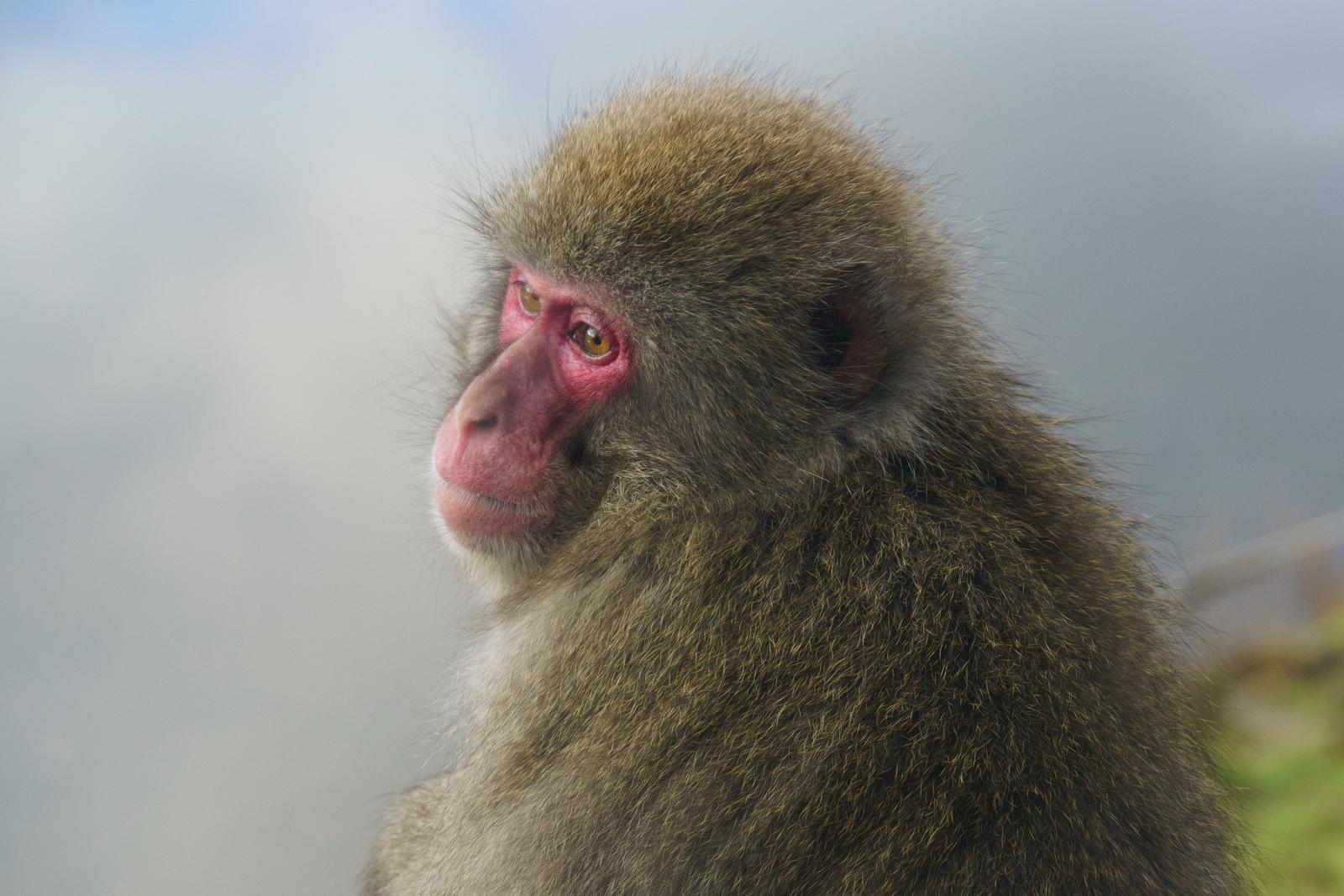
A tender, quiet portrait with lovely detail in the fur and a thoughtful gaze.
Only editing of the raw image is cropping but I’m not entirely happy with the background sky colour.
Any suggestions on improvements.
Stephen, your instinct to keep the processing light was good—the red face, catchlight and fine coat detail feel honest and engaging for a wildlife portrait. The cool, grey backdrop reads as overcast sky and does a solid job of isolating the subject, but I agree it’s a touch bland and slightly cyan, which undercuts the warmth in the macaque’s face. A clean fix is selective colour control: mask the animal, then cool or neutralise only the background (reduce blue/cyan saturation 10–20%, nudge tint a hair towards magenta to kill the greenish cast), or go the other way and lean a little cooler so the warm face pops by contrast—just keep it subtle. Because you shot through glass there’s a faint haze lowering micro‑contrast; a light dose of Dehaze/Clarity on a subject-only mask will restore bite without making the background crunchy. What drew you to press the shutter at this particular moment—the sidelong glance, or the calm posture? That answer can guide how much negative space and tonal contrast you give the background next time. This sits squarely in wildlife portrait territory.
TECHNICAL EXECUTION ★★★★
Focus looks solid on the eye and muzzle, with pleasing detail in the fur—impressive given you were shooting through glass. Exposure is well held; highlights on the pink skin aren’t clipped and the darker coat retains texture. The main technical drag is a slight veil/low contrast consistent with a pane between camera and subject, and a mild cyan cast in the sky. Noise and sharpening are controlled and there’s no heavy processing artefact. For five stars, I’d want crisper micro‑contrast on the eye and fur (local Dehaze/Texture) and a cleaner, more neutral background tone.
COMPOSITION ★★★★
Placing the macaque on the right looking into the open space works—our eye follows the gaze into that soft left-hand negative area. The simple backdrop keeps attention on the character in the face and the slightly turned body gives shape. The bottom-right corner holds a darker patch that tugs the eye a bit; a tighter crop from that corner or a small clean-up would help. Consider whether you want more room above the head—the current framing is safe but a fraction more breathing space could feel calmer. A stronger separation with a slightly lower angle might also have put the head more cleanly against the brightest background.
LIGHTING ★★★
Soft overcast light is kind to fur and avoids harsh speculars; you’ve used that to keep skin tones gentle and the coat richly textured. There’s a nice, small catchlight giving life to the eye. However, the light is very flat across the background and subject, so depth suffers a touch. Through-glass shooting also reduces contrast, which makes the light feel flatter still. A subtle subject-only contrast lift, or a gentle vignette limited to the background, would add shape without looking processed.
STORY ★★★
This reads as a calm character study—the turned head, soft mouth line and alert eye suggest a quiet moment of attention. It’s respectful and dignified, which matters with captive wildlife. The image doesn’t show behaviour or context that would push it beyond portrait into a fuller story, so it stays in the “good likeness” category. Ask yourself: could you wait for a gesture—grooming, a hand movement, steam from breath on a cold day—to add a stronger moment next time? That one extra cue can lift narrative weight dramatically.
IMPACT ★★★
The warm face against the cool background gives a pleasant, gentle presence. It’s a solid, likeable wildlife portrait that would sit well in a series from the park. What holds it back from a stronger punch is the plain, slightly tinted sky and the mild glass haze, which make the frame feel quieter than it could be. With a cleaner background tone and a bit more bite in the eye and fur, this would step up a level.
CONSTRUCTIVE NEXT STEPS
- Background colour: mask the macaque (Select Subject), then reduce Blue/Cyan saturation 10–20% and nudge Tint +3–6 magenta to neutralise the sky; alternatively cool the background slightly to make the warm face stand out—keep it subtle.
- Through-glass punch: apply local Dehaze +5–10 and Texture/Clarity +5–10 to the face and eye only; avoid global contrast so the background stays soft.
- Clean frame edges: clone/heal the small dark/distracting areas in the bottom-right and along the fur edge; keep the background an even tone.
- Field craft next time: press a rubber lens hood to the glass (or shade with a coat) to kill reflections; shoot at a slight angle to avoid internal glare; use f/4–f/5.6 and a longer focal length to smooth the background further.
AI Version 2.12