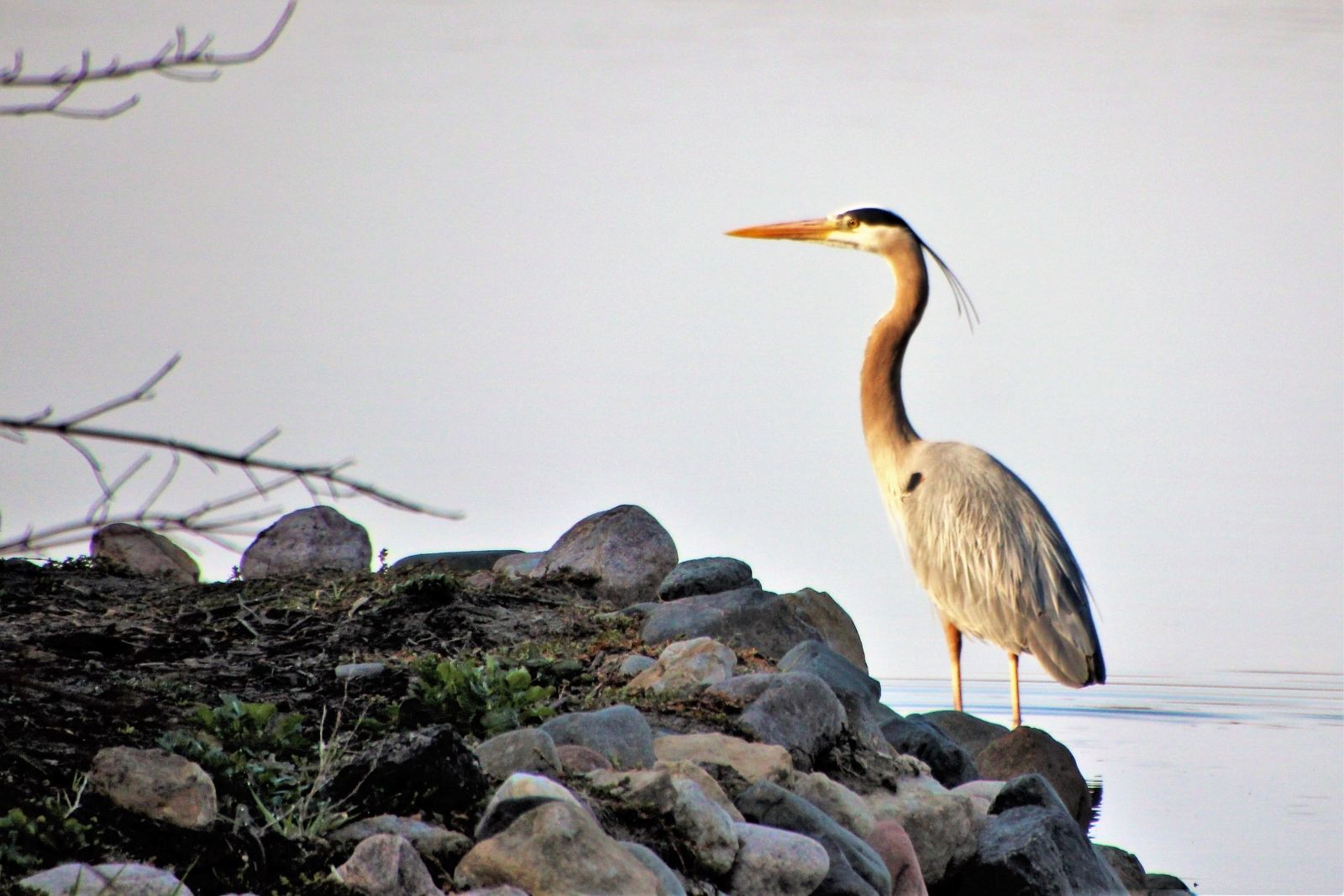
Calm, dignified bird and soothing light — the frame just needs cleaner, more intentional structure.
Yes — there are a few compositional tweaks that would lift this wildlife portrait. You’ve got a good moment of stillness with the heron side‑on, warm light kissing the beak, and plenty of negative space in the water. Right now the subject sits a bit tight to the right edge while the rock pile and the twig in the top‑left pull attention away. Aim to give the bird more breathing room in the direction it’s looking and simplify the surroundings. Consider how a small shift in position or crop could either go cleaner and more minimal, or include the environment with intent rather than clutter. Does a lower, slightly rightward viewpoint — putting the bird against only water and losing most of the rocks — fit the picture you wanted?
TECHNICAL EXECUTION ★★★★
Exposure is nicely controlled; the subtle tones in the water hold up and the warm light on the beak and neck looks natural. Feather detail appears reasonably sharp with no heavy noise or artefacts showing at this size. There might be a touch of softness through the body, likely from long‑lens distance or a modest shutter speed, but it doesn’t ruin the frame. Colour is tasteful and not overcooked, which suits the subject well. To push this to five stars you’d want critical sharpness on the eye and slightly crisper feather texture — typically 1/1000s or faster with AF‑C and single point on the eye for standing birds.
COMPOSITION ★★★
The heron faces right, which is good, but it’s a little cramped against the right edge; the gaze needs more space to travel. The dark rock mound and scattered stones form a heavy base that competes with the bird rather than supporting it. The stray twig intruding from the top‑left is a small but persistent distraction. A lower and slightly more rightward shooting position would place the bird cleanly against water and reduce the visual weight of the rocks. Alternatively, a deliberate crop that trims the left edge (losing the twig) and some of the bottom would simplify and make the bird feel more prominent. When you framed this, did you consider a vertical orientation to stack the legs and body with open water ahead?
LIGHTING ★★★★
The soft, cool background contrasted with the warm beak and neck is pleasing and gentle on the eye. The side light gives just enough shape to the plumage without harsh shadows. Highlights are held and the water remains a calm canvas, which keeps the mood relaxed. A small local lift on the eye and head would help the face pop a little more. If you had caught a touch more catchlight, the connection would jump.
STORY ★★★
This reads as a calm portrait rather than a behavioural moment. The upright stance and watchful pose hint at awareness, but there’s no action to lock in a narrative. Waiting for a stride, a stretch, or a strike would add that bit of tension that holds a viewer longer. Including a clean reflection could also build a subtle story of stillness. What behaviour were you hoping for, and how long did you work the scene before pressing the shutter?
IMPACT ★★★
It’s a pleasant, competent wildlife frame with tasteful colour and a handsome subject. The distractions and tight right edge keep it from landing as a strong minimalist study. With cleaner edges and a more decisive gesture, this could move from “nice sighting” to a photograph that lingers. Refining viewpoint and timing will deliver that step up in presence.
CONSTRUCTIVE NEXT STEPS
- On location, crouch lower and take a step or two to your right so the heron sits fully against water; avoid stacking it over the rock pile and leave at least a “beak‑length” of space in front of the head.
- Try a vertical frame when the bird is stationary: place the body on the lower-left third with ample water to the right, or include a full reflection if the surface is calm.
- Post‑process: crop to remove the top‑left twig and a slice of the heavy bottom rocks; subtly dodge the eye/head and darken the foreground stones by ~0.3–0.5 stop to keep attention on the bird.
- If sharpness is borderline, use AF‑C with a single point on the eye and aim for around 1/1000s at f/7.1–f/8 with Auto ISO; a monopod helps when waiting for behaviour.
AI Version 2.12