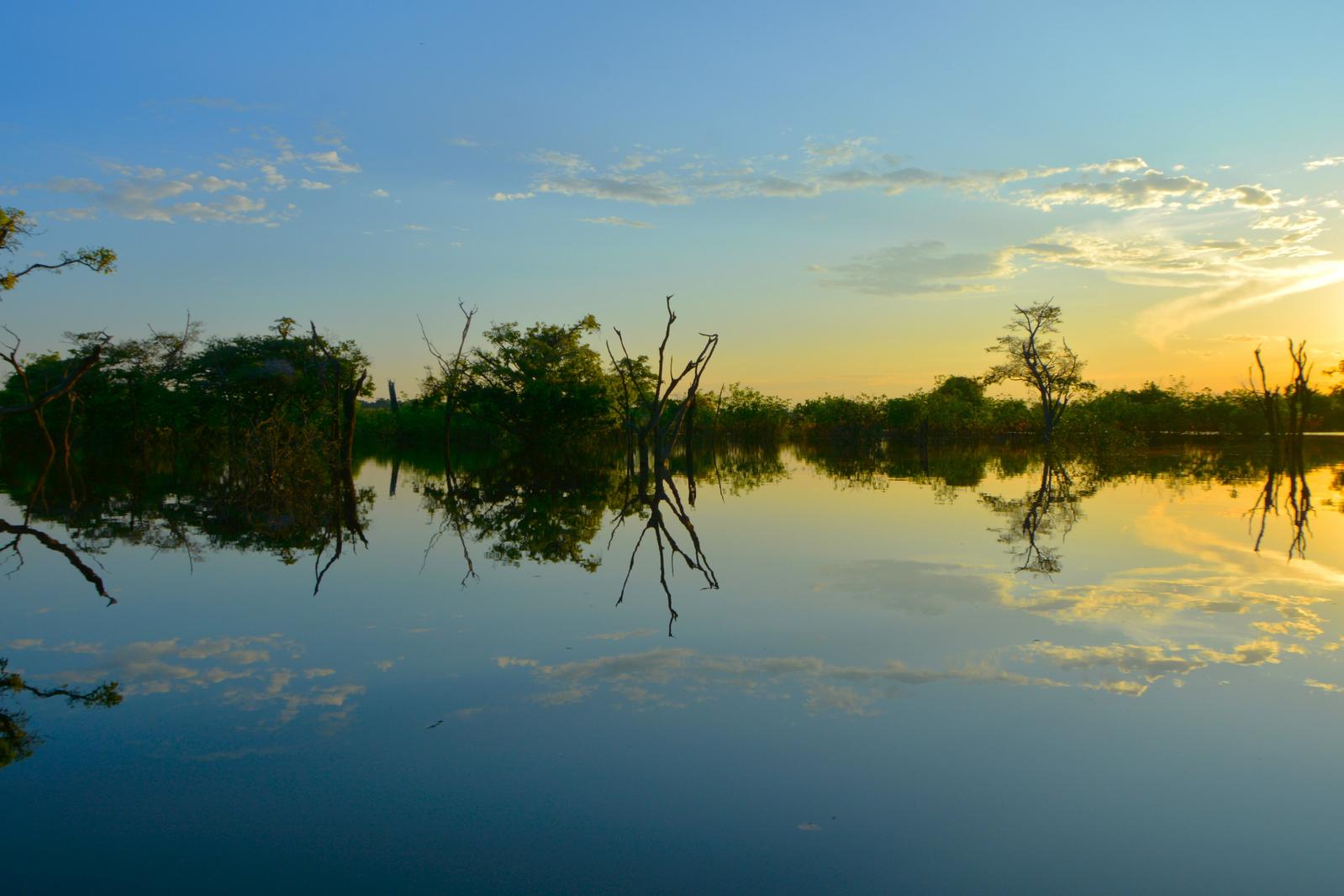
Calm water and soft dusk tones make a peaceful frame, but the scene needs a stronger point of view.
Yes, the lighting is adequate. You’ve shot in gentle golden-hour light and the still water reflects it cleanly, which suits this landscape. However, the light isn’t doing much storytelling here—it’s soft and even, so the trees read mostly as dark shapes and the mood stays safe rather than purposeful. If your goal was tranquillity, this works; if you wanted drama or depth, you’d need either more directional side light or a moment in the scene to react to that light (mist, a bird, ripples). What were you hoping the light would reveal—texture in the trees, colour in the sky, or the mirror reflection itself?
TECHNICAL EXECUTION ★★★
The exposure is generally well controlled: no ugly clipping and a straight horizon keeps the reflection believable. Colours are restrained and natural, which I like, and there are no obvious artefacts or heavy processing. The distant foliage and branch silhouettes look a touch soft, likely from haze and the low contrast of the light rather than focus error. Small edge intrusions—the twig at bottom‑left and branches clipped at the far left and right—hint at a slightly rushed frame. To reach five stars, aim for tack‑sharp detail across the mid‑ground, clean edges, and tighter control of bright sky near the right with a gentle gradient or bracketing (kept natural in post).
COMPOSITION ★★
The horizon sits almost dead centre and the frame lacks a clear focal anchor, so the eye drifts across similar tree silhouettes. The lone tree on the right has potential, but it’s small in the frame and crowded by the bright patch of sky; the clipped branch on the left edge also pulls attention. There’s a lot of empty water in the foreground without a deliberate foreground subject to justify it. Consider whether you want to emphasise the mirror reflection or the sky—at the moment it’s neither decisive nor symmetrical enough to feel intentional. How might a lower viewpoint with a reed, log, or lily at close range change the depth and give viewers a starting point?
LIGHTING ★★★
The warm, low sun paints the water nicely and avoids harsh contrast—good call on timing. That said, the light is flat across the trees, leaving them as featureless shapes; it doesn’t carve form or lead the eye. The bright area toward the right edge competes with the small tree and pulls attention out of the frame. Waiting a few minutes for the sun to dip lower, or for side light to skim the branches, would add depth and separation. A subtle graduated adjustment in post could further calm the hotspot without looking processed.
STORY ★★
The mood is peaceful, but the frame describes rather than says something specific about this place. There’s no gesture or event to hold the viewer—no bird crossing the reflection, no ripple, no mist catching light. As a result, it could be almost any wetland at sunset. Think about what single element could give this scene purpose: behaviour, weather, or a human trace handled respectfully. What did this location feel like to you, and how might you show that beyond a pretty sky and its mirror?
IMPACT ★★
Pleasant and soothing, but also familiar—central horizon at sunset with reflections is a well‑worn formula. Without a stronger subject, unique weather, or decisive composition, it doesn’t linger. A refined foreground or a clear hero (that right‑hand tree made prominent, for example) would lift memorability. Aim for a more intentional frame that either commits to symmetry or uses rule‑of‑thirds tension with an anchor. With those steps, the same light could land much harder.
CONSTRUCTIVE NEXT STEPS
- Commit to a design: place the horizon on the upper or lower third, not the middle; if you keep the reflection as the hero, drop the camera low and include a strong foreground element (reed, log, lily) within 30–60 cm of the lens.
- Refine the subject: move a few metres right and frame the lone right‑hand tree on a third with clean space around its reflection; avoid clipping branches on the edges.
- Wait for a moment: hold position for a bird, a passing ripple, or a sliver of mist; even a single disturbance in the mirror would provide a hook.
- Post‑process with restraint: crop slightly from the left to remove the clipped branches, clone the small twig at bottom‑left, and use a soft 0.5–0.7 stop graduated adjustment on the top‑right sky to tame the bright patch; consider cooling white balance by ~200K to balance the warm cast.
AI Version 2.12