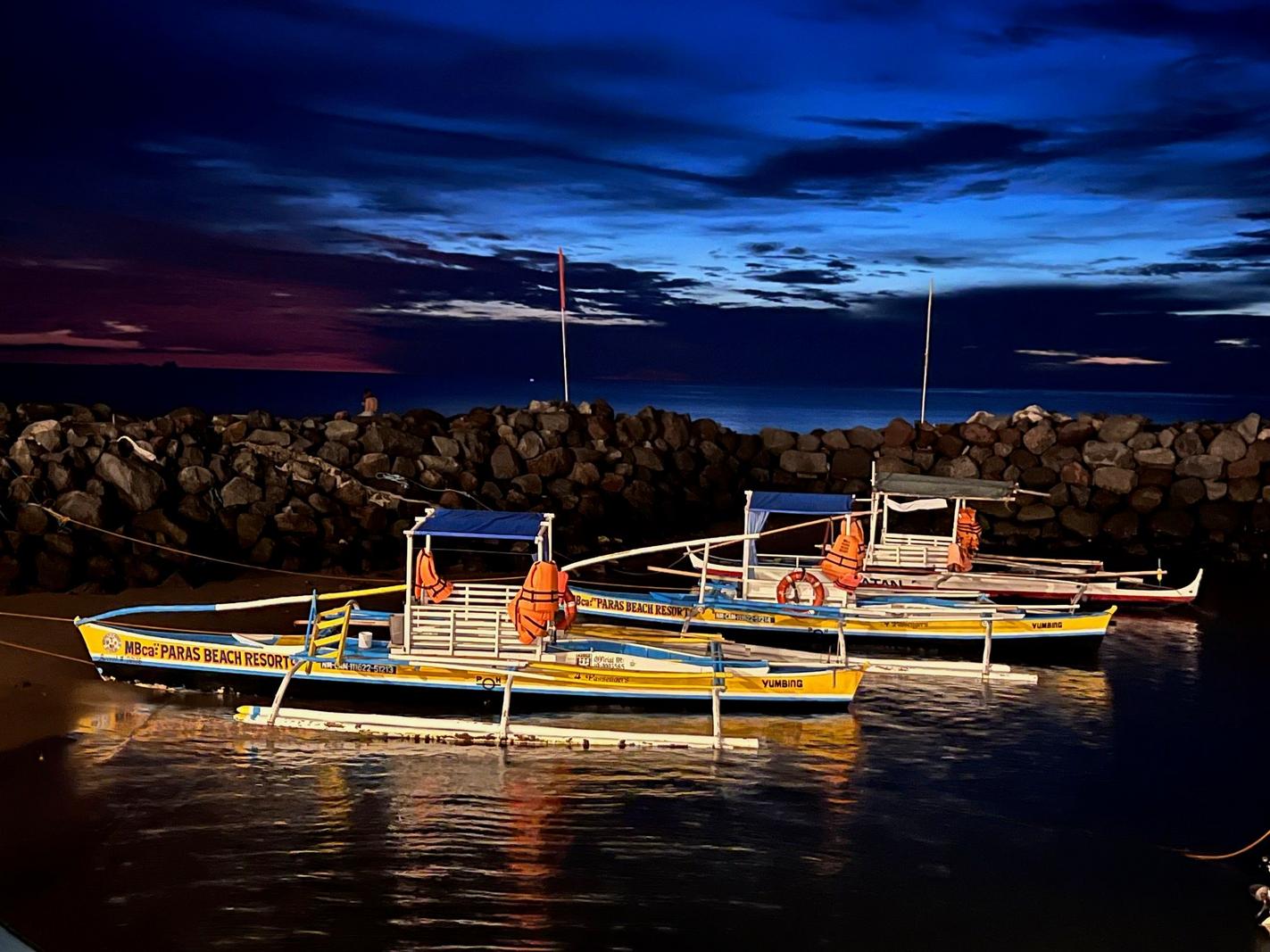
Blue-hour calm with three bright bancas anchored against a brooding breakwater.
You’ve leaned into the ambient light well—those warm dock lamps on the boats against the cool twilight sky create a strong mood. This sits comfortably in travel photography: place, time and a quiet pause before or after work at sea. The best part is how the lit hulls and lifejackets lift out of the darkness and give the viewer something definite to read. Do you feel this viewpoint and spacing give the boats enough breathing room, or would shifting a few steps have strengthened their relationship and reduced overlaps? Your intent is clear; now it’s about refining placement and balance so the scene feels as considered as the light.
TECHNICAL EXECUTION ★★★★
Focus looks solid on the nearest boat and the reflections are clean. Exposure is well judged for a high-contrast dusk scene; the boats are bright without glaring hotspots, and the sky holds colour. Mixed colour temperatures are handled tastefully—warm on the boats, cool in the sky—though the yellows and blues verge on punchy and could be dialled back a touch. Shadow noise is restrained given the low light, suggesting stable support or good stabilisation. I do see small distractions and edge artefacts (the bright rope bottom right, the person-like shape on the rocks left) that could be tidied in post. To reach five stars, I’d like to see even cleaner edges, slightly calmer colour, and either crisper micro-contrast in the rocks or a deliberate choice to keep them subtly detailed rather than dense black.
COMPOSITION ★★★
The repeating trio of bancas gives you an immediate subject and a pleasant rhythm across the frame. However, the boats overlap and tangle visually—outriggers and canopies merge—so the eye doesn’t settle as decisively as it could. The dark breakwater forms a heavy middle band and the large area of near‑black water at the bottom adds weight without adding information. Small, bright elements near the edges (the rope bottom right, the bright ladder and paddles) pull attention. How might a step left/right or slightly higher position have separated the boats and reduced this stacking? A tighter crop from the bottom to remove the dead water would also strengthen the frame.
LIGHTING ★★★★
For available light, this is handled well. The warm lamp light carves the boats from the darkness and their reflections add life to the water. The cool blue of the sky gives a clean colour contrast and confirms the time of day. The rocks are very dark by comparison; a touch more readable texture there would help the scene feel less like a cut-out. If you had arrived 5–10 minutes earlier in blue hour, the ambient/lamplight ratio might have been even sweeter, keeping more tone in the background while still spotlighting the boats. Overall, the light serves the mood and your intention convincingly.
STORY ★★★
The image communicates a quiet harbour at rest—boats ready for tomorrow, or just returned. It’s atmospheric, but it doesn’t stretch beyond description; there’s no small human gesture or bit of activity to make this night specific and memorable. A figure coiling a rope, a lamp being switched off, or even a single person sitting on the rocks would give the scene a heartbeat. As it stands, it’s a calm postcard of place rather than a moment. Consider what tiny action could have told us “why now?” not just “where.”
IMPACT ★★★
The colour contrast and still water make for a pleasing, polished frame that most viewers will enjoy. However, boat‑at‑dusk scenes are common, and the overlapping shapes and heavy mid‑tone band keep it from feeling distinctive. With cleaner spacing, a purposeful crop, and either gentle detail in the rocks or a small human element, this could move from “nice” to “compelling.” Aim for one decisive visual idea to dominate—either the rhythm of three boats perfectly separated, or a single boat as the hero with the others supporting.
CONSTRUCTIVE NEXT STEPS
- Reframe for separation: next time take two big steps left or right (or slightly higher) to reduce the overlap of outriggers and create clear gaps between the three boats; then crop 8–12% off the bottom to remove the dead black water.
- Stabilise and refine exposure: use a tripod at ISO 100–200, f/8–f/11, 2–6 seconds during early blue hour to hold sky detail, smooth the water slightly, and keep the boats tack‑sharp.
- Tidy the frame in post: clone out the rope in the bottom‑right corner and any tiny bright flecks on the rocks; lift the breakwater by about 0.5–1 stop with a masked dodge to reveal texture without losing night mood.
- Balance colour gently: reduce Yellow and Blue saturation by ~10–15% in HSL and set white balance via a grey reference on the boats’ white slats to keep the warm/cool contrast natural rather than loud.
AI Version 2.12