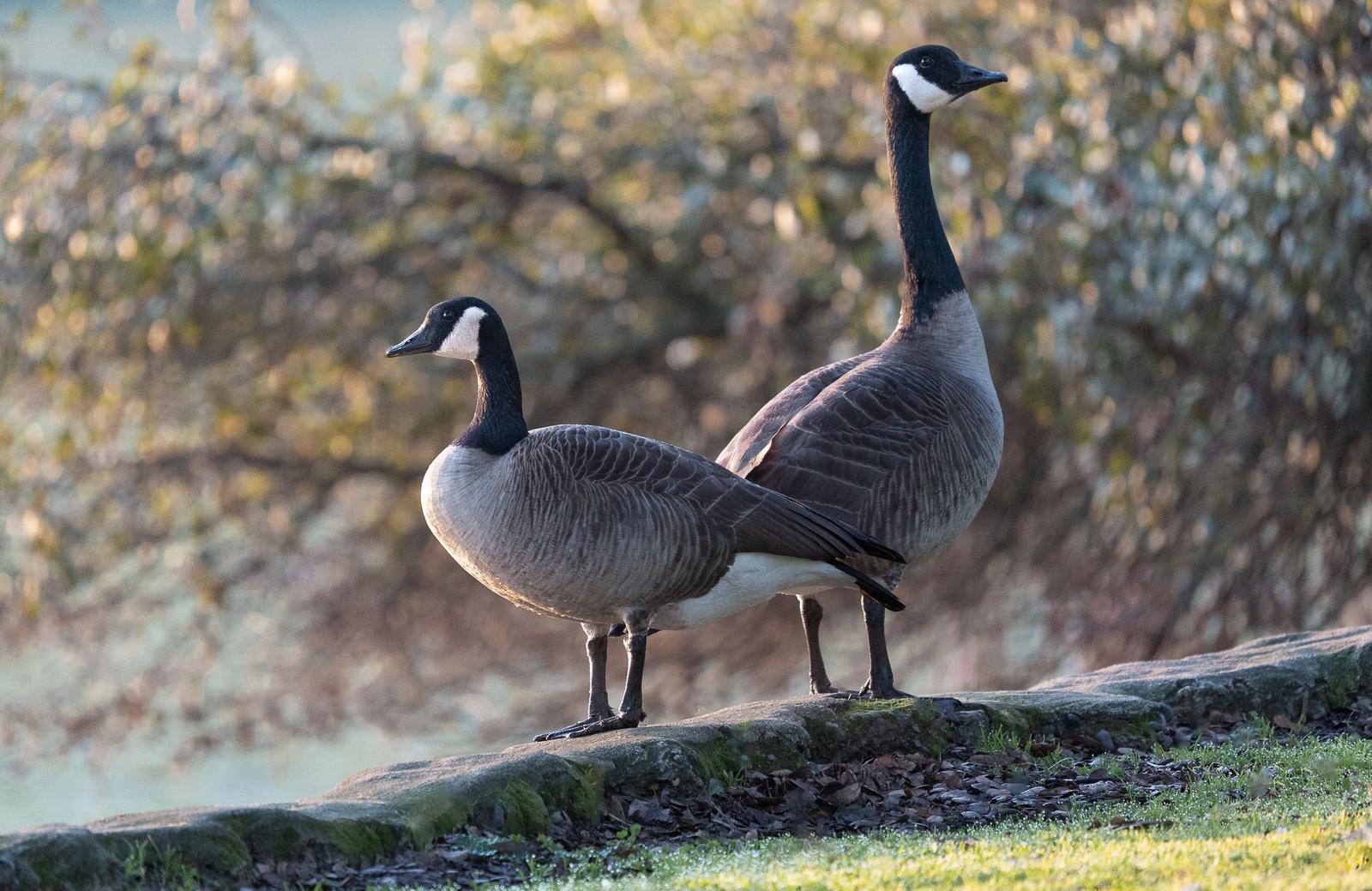
A calm, alert duet of geese held together by gentle morning light.
Not forbidden at all, Paul—subjects looking out of frame can add tension or imply awareness of an unseen world. The key is to manage space and the direction of gaze; usually we give a bit more room in the direction they’re looking, or use their gaze to balance the frame. Here the mirrored stances work: one goose scans left, the other right, suggesting vigilance. The background blur is not “too fuzzy”; in wildlife work the soft bokeh behind the birds is an asset, though the bright bokeh spots are a little busy. This is a wildlife portrait with a behavioural note, and the soft, low sun skimming the feathers is a real strength—especially the rim light along the necks and backs and the stone ledge anchoring the pair. What drew you to shoot from this height rather than a little lower to put more air behind their heads?
TECHNICAL EXECUTION ★★★★
The nearer goose is crisply rendered with clean feather detail and well-controlled whites on the cheek patch—nicely exposed. The farther bird is a touch softer, likely depth‑of‑field rather than focus error. Colours look natural and not over‑processed, and I don’t see distracting noise or artefacts. The bokeh is smooth enough to separate the subjects, though a few bright specular highlights in the foliage draw the eye. If the intent was to have both birds equally sharp, stopping down to around f/8 and nudging ISO up would help. Alternatively, keeping them in the same focal plane would preserve sharpness without sacrificing blur.
COMPOSITION ★★★
The two geese form a strong V-shaped pair, and the low stone ledge creates a stable base line. Their mirrored, outward glances suggest a watchful pair, which is a solid idea. However, the bodies overlap; the right bird’s legs and belly merge with the tail and belly of the left one, which muddles their forms. A half‑step left or right would separate the silhouettes and let each bird read cleanly. The right-hand bird sits close to the frame edge; a little more breathing space on that side would ease the tension created by its outward gaze. How would this feel if you’d waited for a single step from either bird to open a sliver of daylight between them?
LIGHTING ★★★★
The light is gentle and directional, skimming across the feathers and giving a pleasing rim along the backs and necks. It separates the dark heads from the background without blowing the whites. Shadows are soft, so we retain detail throughout. The background highlights are slightly hot in places, creating sparkling bokeh that competes a bit with the heads. A tiny head turn to catch a brighter eye‑catchlight would add bite. Overall, it’s a flattering use of natural light.
STORY ★★★
The moment reads as a bonded pair on sentry duty—each covering a different direction. It’s an honest behavioural slice that tells us something about geese without theatrics. Because both birds look away from us and overlap, the connection is descriptive rather than emotionally engaging. A call, stretch, or a simple step that separates them would strengthen the narrative. Did you consider waiting for a reaction—a honk or wing lift—to push the moment further?
IMPACT ★★★
The image is pleasant and competent, with lovely, natural tones and a clear idea. Its impact is tempered by the overlapping forms and the outward gaze that leads the viewer out of the frame rather than deeper into it. The soft light and clean detail keep it engaging, but it stops short of memorable. To hit the next level, aim for either cleaner separation and eye-level intensity or a more distinctive behaviour.
CONSTRUCTIVE NEXT STEPS
- Shift your position 30–60 cm left or right (or wait for a step) to create a clear gap between the two birds; avoid leg and tail mergers so each silhouette reads cleanly.
- Decide your depth-of-field goal: if both birds should be sharp, shoot around f/8 with a slightly higher ISO; if one is the hero, keep a wider aperture but align the birds on the same plane for better sharpness where it matters.
- Try a slightly lower viewpoint to place the heads against cleaner, more distant background and reduce the bright bokeh hotspots; this also often yields stronger catchlights.
- In post, crop a sliver from the bottom to reduce the bright grass strip and lightly tone down the brightest background highlights near the heads to keep attention on the geese.
AI Version 2.12