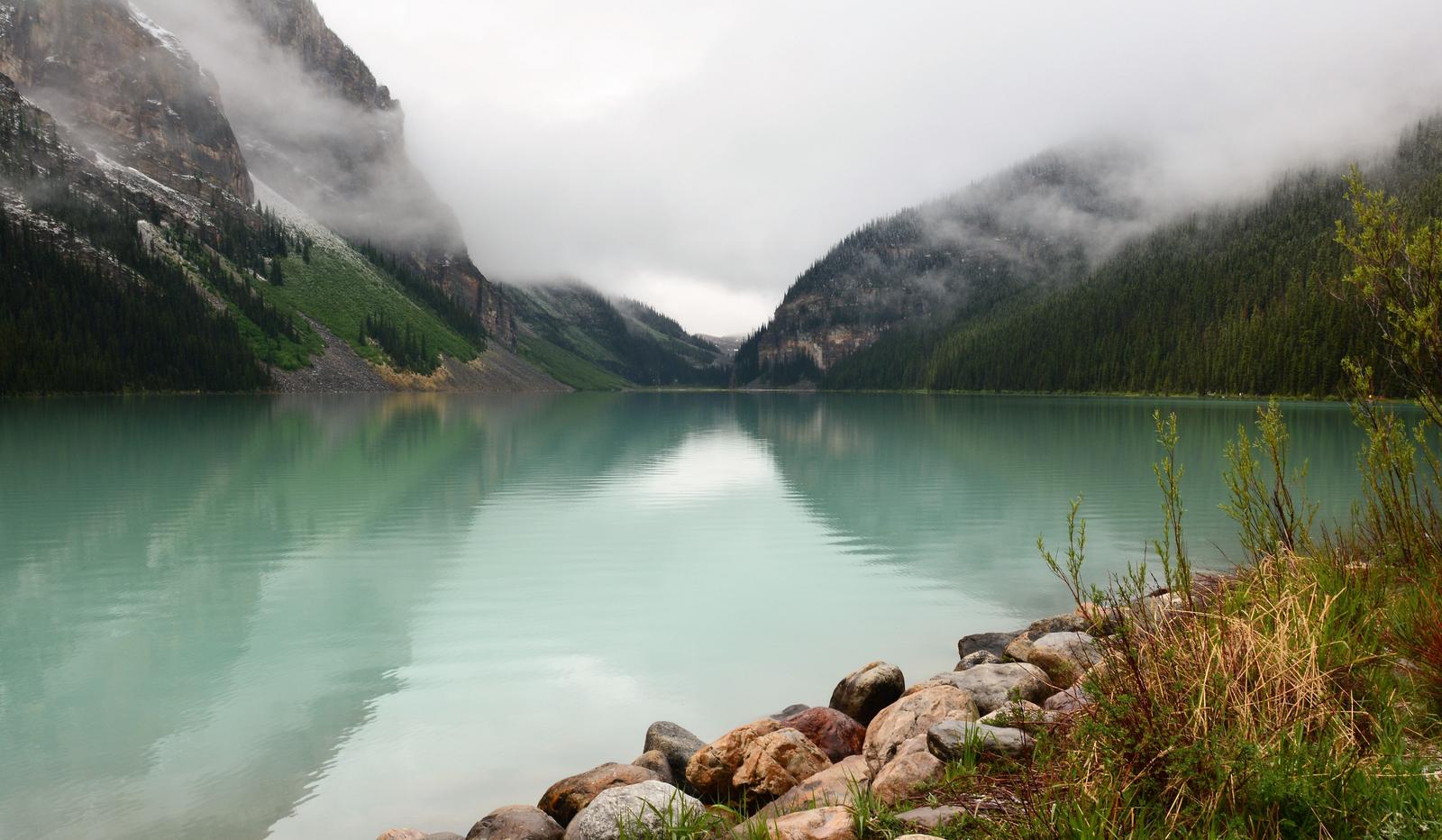
Calm water, soft mist, and clean symmetry — simple done well.
You’ve leaned into simplicity and that comes through: the lake’s glassy surface and the V of the mountains create a clear, tranquil frame. This sits squarely in landscape work, and your choice to keep colours muted and processing light suits the scene. I do agree the composition is strong, but the right‑edge scrub and the blank upper sky slightly dilute that simplicity you like. How deliberate was the inclusion of those grasses — were you using them as a counter‑weight, or were they just there? A couple of small framing and timing choices could elevate this from “calm view” to “quiet moment.”
TECHNICAL EXECUTION ★★★★
Exposure is well controlled: the pale sky holds together without nasty clipping, and the dark firs retain detail. The foreground stones are reasonably crisp, suggesting a stable platform and a suitably stopped‑down aperture. Colour looks natural with that glacial turquoise kept in check — well done avoiding heavy saturation. The scene is inherently low‑contrast because of the mist, so micro‑contrast is a touch flat; a gentle midtone contrast lift would help without breaking the mood. I don’t see artefacts or over‑processing, though there’s a very slight cool cast that could be warmed by a few hundred Kelvin if you prefer a less clinical feel.
COMPOSITION ★★★★
The central vanishing point with mountains flanking both sides gives the eye a firm path straight down the lake. The reflection reinforces that symmetry nicely, and the shoreline rocks provide an anchor in the foreground. However, the scruffy grasses on the lower right pull attention and feel at odds with the otherwise neat geometry; they nudge the frame from “minimal” to slightly busy. A lower, left‑shifted viewpoint would have turned the rock line into a stronger leading element while excluding most of the scrub. Did you try a version stepping left a metre or two and committing to a cleaner foreground?
LIGHTING ★★★
The soft, misty light suits the serenity and avoids harsh contrast, but it’s inevitably flat. There’s little directionality to sculpt the slopes, so the mid‑tones feel compressed and the water surface lacks sparkle. A brief break in cloud or the first light of morning side‑lighting those tree lines would add depth. In post, subtle dodging on the lighter bands of the distant slopes and a gentle burn on the near water could introduce shape without betraying the weather. What time of day was this — could you return for a clearing‑storm moment when the mist lifts to reveal a brighter wedge of sky?
STORY ★★★
The mood is calm and quiet, and the low cloud curling through the valley hints at recent weather. Beyond that, there isn’t a specific moment to hold the viewer — it could be any calm morning at this lake. A small element of change or scale (a distant canoe, a gull breaking the surface, or the first raindrop rings) would give the scene a heartbeat. Consider whether you want to show pure stillness or introduce a tiny disruption to create tension. What single, transient detail would say “this minute, not another” for you here?
IMPACT ★★★
It’s a pretty, peaceful frame that most viewers will enjoy, and the restraint in colour helps. However, similar views are widely seen, and the flat light and busy right edge stop it short of truly memorable. A stronger foreground design or more directional weather would lift the presence significantly. Aim for that tiny extra decision — framing or timing — that makes a viewer linger rather than nod and move on. To reach five stars, you’d need either exceptional light or a small but decisive moment that sets this apart.
CONSTRUCTIVE NEXT STEPS
- Reframe to clean the edges: either step left and lower to use the shoreline rocks as a diagonal lead, or crop 5–8% off the right to remove the scruffy grasses and keep the minimal feel.
- Manage sky weight: crop a little from the top to reduce the blank white, and add a subtle linear gradient to lower highlights while nudging midtone contrast on the mountains.
- Use a circular polariser at partial strength: rotate just enough to cut glare near the shore and reveal submerged stones, but stop before you kill the central reflection.
- Return for changeable light: aim for dawn or a clearing‑mist window when side‑light hits the tree lines; even a 30–60 second wait for a ripple, bird, or distant canoe can provide the needed moment.
AI Version 2.12