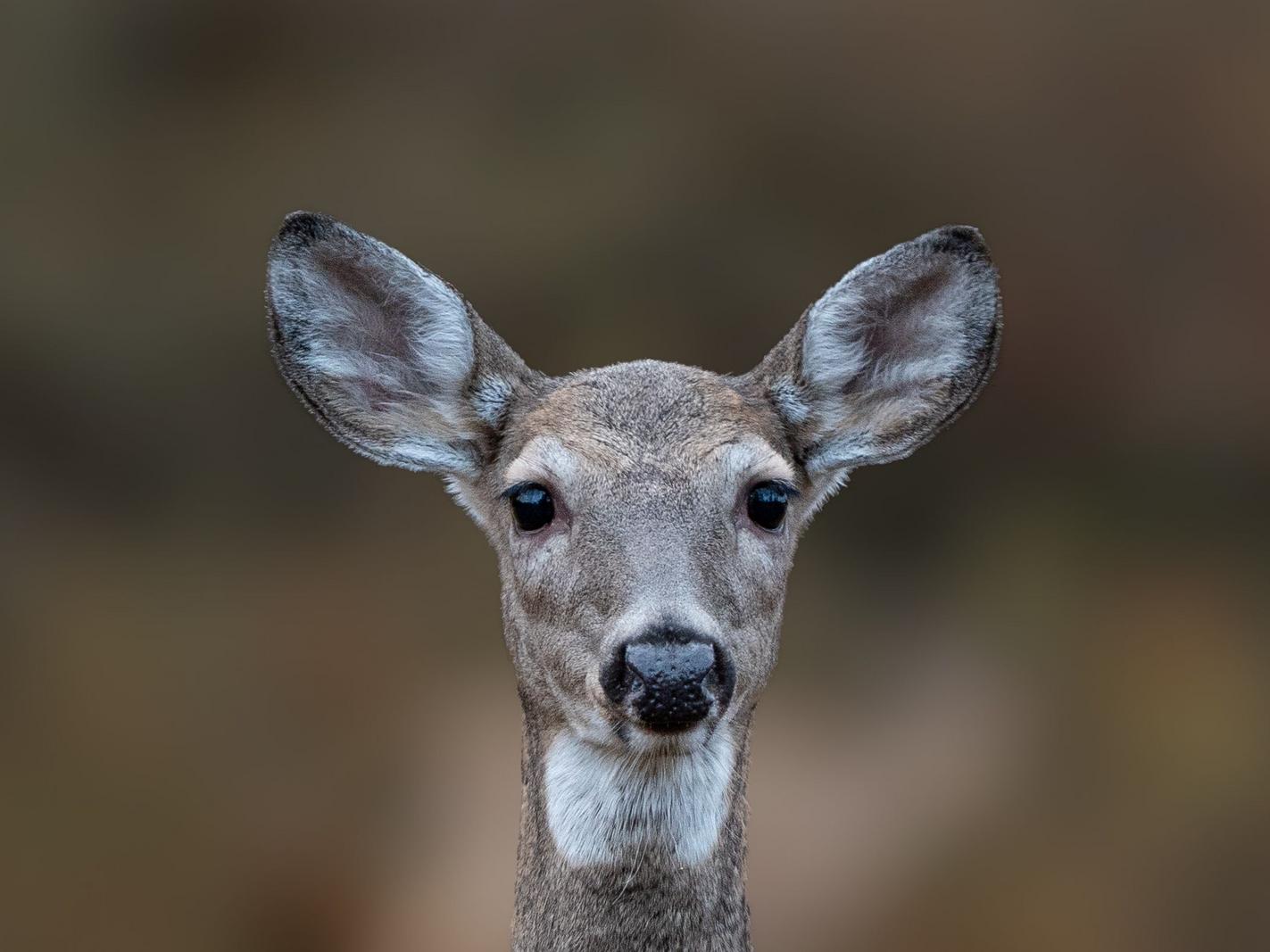
Clean, calm and direct — a respectful deer portrait that leans on precision and restraint.
Yes — for a face‑on wildlife portrait like this, centring is a strong choice because the animal’s symmetry (ears, eyes, muzzle) becomes the graphic backbone of the frame. Here it works, helped by the neutral, blurred background and the steady gaze. That said, once you choose symmetry you have to commit fully: give the ears a touch more breathing room and ensure the alignment is absolutely bang on; at the moment it feels a shade tight at the sides and bottom. I’d also consider a vertical crop to reduce the empty side space and strengthen that totem‑like presence. What feeling were you aiming for — a pure study of form, or something with more habitat and mood?
TECHNICAL EXECUTION ★★★★
Focus looks crisp on the near eye and muzzle, with fine texture held in the fur and a clean catchlight. Exposure is well controlled; the nose and white throat patch retain detail without clipping, and the background transitions smoothly with no banding. Noise is minimal and colours are natural, which suits this earthy subject. Processing appears restrained — no crunchy sharpening haloes or oversaturated tones. To push this to five stars, aim for surgical sharpness on both eyes and consider a tiny local clarity lift there to lock the connection.
COMPOSITION ★★★
The centred placement is appropriate and clear; the deer’s face reads instantly and without clutter. However, the frame feels a little cramped around the ear tips and under the chin, which undercuts the calm symmetry you’re going for. The horizontal format adds side space that isn’t doing any work, while the subject itself is a vertical shape. A portrait‑orientation crop, or simply more room around the ears at capture, would strengthen the balance. Ask yourself: would a step back or a slight reframe have let the ears breathe while keeping the gaze dominant?
LIGHTING ★★★
The light is soft and even — likely overcast — which flatters the fur and preserves detail. It’s safe and natural but also a bit flat, giving limited modelling on the face. The small catchlight helps, yet a touch of direction (early or late sun, or open shade with a lit background) would add depth and separation. There are no problematic colour casts, and tonal transitions look clean. To reach a higher mark, seek low‑angle light that sculpts the muzzle and ears and adds gentle shadow to define form.
STORY ★★★
This is a classic animal portrait: calm, inquisitive, and respectful. The eye contact provides a simple connection, but there’s little behaviour or environmental context to extend the narrative. A fleeting gesture — ears pricked in different directions, a tongue flick, breath on a cold morning — would deepen the moment. Alternatively, including a hint of habitat could suggest place and season. What small behaviour were you waiting for, and how long did you give the scene to evolve?
IMPACT ★★★
It’s a pleasant, polished deer headshot with tasteful tones and a soothing background. The image holds attention because of the steady gaze, yet it sits among many similar wildlife portraits. Stronger framing or more expressive light would lift memorability. Ethical presentation and restraint in processing are clear positives. To reach four or five stars, bring either a standout moment or a bolder aesthetic choice while keeping the dignity of the subject intact.
CONSTRUCTIVE NEXT STEPS
- Refine the frame: either step back at capture or crop to a vertical head‑and‑neck portrait that gives the ears and chin a little extra space while keeping the eyes dead centre.
- Chase shaping light: work at first/last light or position the deer so side‑light adds gentle shadow on one cheek; this will add dimension without harsh contrast.
- Wait for micro‑behaviour: a head tilt, ear swivel, or brief lick adds character and makes a simple portrait feel like a moment.
- Post‑processing: add a subtle dodge/burn around the eyes and muzzle, and a restrained micro‑contrast or texture boost on the fur while masking the background to remain smooth.
AI Version 2.12