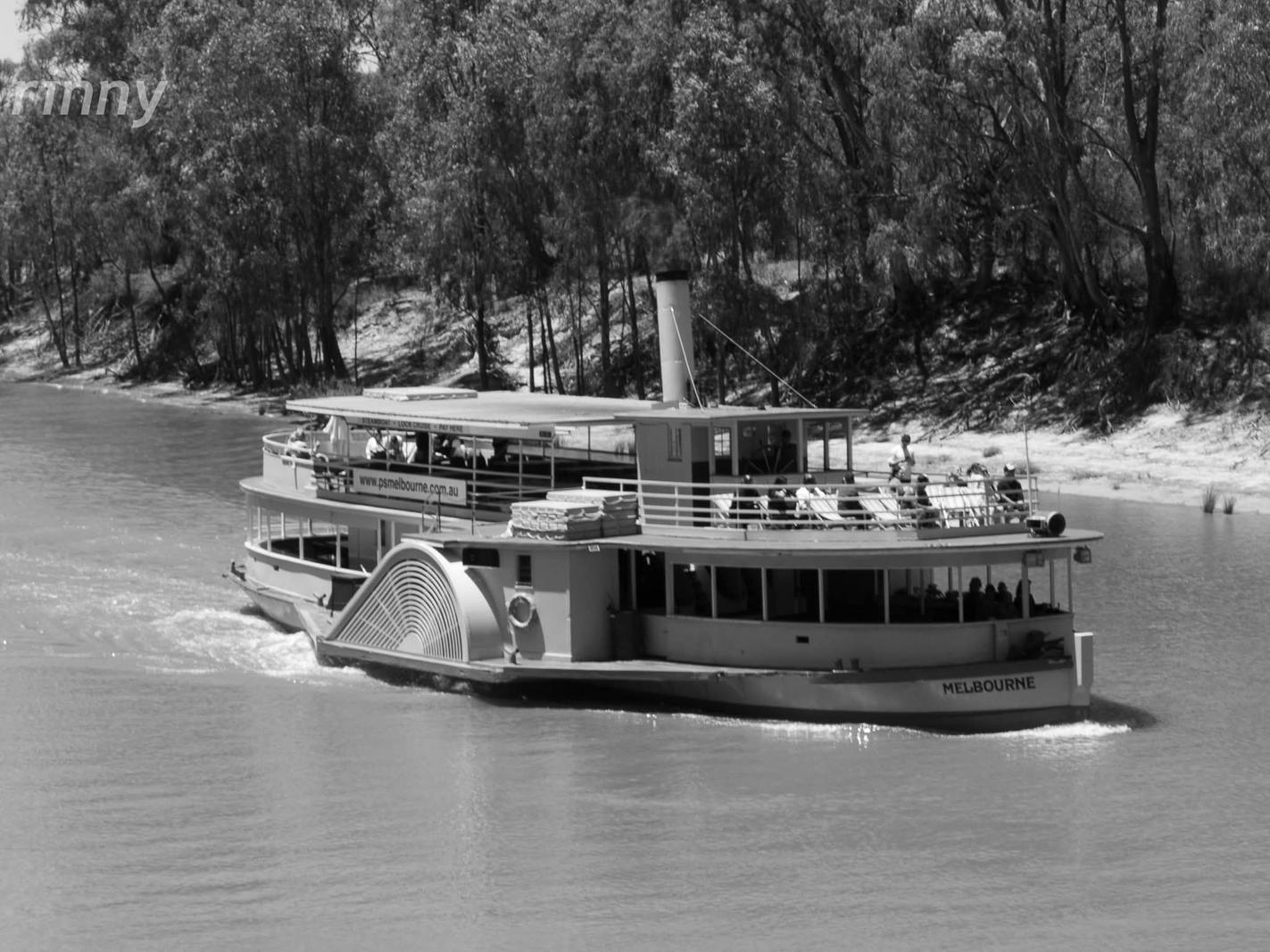
A classic river scene with a proud paddlesteamer, but the harsh light is hiding the detail you want.
To lift the windows without washing out the rest of the boat, use a targeted adjustment rather than global exposure changes. In Lightroom/ACR: create a Brush mask over the window panels (turn on Auto Mask to keep the strokes inside the frames), then raise Shadows and Exposure slightly (+0.3–0.7 stop), lower Contrast a touch, and add a little Noise Reduction to counter shadow grain. Refine the mask with Luminance Range so the bright exterior paint isn’t affected; aim the range at the darker tones only. In Photoshop: add a Curves adjustment layer, pull up the mid‑tones, invert the mask, then paint white over the windows with a soft brush; use “Blend If” to restrict the lift to the darks and avoid halos on edges. Keep the lift modest — once the interiors are about one stop brighter you’ll read the people and seats without the HDR look. Stepping back, this reads as travel/documentary: a side-on view of the vessel “Melbourne” carving through a bend, passengers on deck, bright river and timbered bank.
TECHNICAL EXECUTION ★★★
Focus looks solid across the boat and the wake, with enough shutter speed to freeze movement. The black‑and‑white conversion is clean, though the tonal range is compressed in the shadows — the windows and under‑deck areas are close to blocked up. Highlights on the water and the pale paintwork are controlled, which is good given the midday sun. I can see a faint watermark/wording at the top‑left which is distracting and should be removed or cropped. Lifting the windows locally will introduce noise, so apply selective noise reduction after dodging. To reach five stars you’d want richer mid‑tones in those dark areas straight from capture or via more refined local masks with no visible halos.
COMPOSITION ★★★
The steamer is placed slightly left of centre with space to travel into the right, which feels natural. The sweeping wake and paddle housing offer strong shapes that lead the eye through the frame. There’s a lot of empty water in the foreground and the bank occupies a heavy strip at the top; both dilute attention from the boat. The partial text/watermark in the top‑left pulls the eye unnecessarily. A tighter crop from the bottom and a sliver from the top‑left would concentrate the story on the vessel and passengers. Consider whether a slightly lower or higher vantage would have separated the white railings from the dark bank more clearly.
LIGHTING ★★
This is hard midday light: specular highlights on the water and deep shade inside the windows create high contrast. The result is readable hull detail but near‑black interiors, which is why you’re struggling with those windows. A side-lit or overcast moment would soften contrast and let the interior detail sit within range. If you can reshoot, position on the sunlit side of the boat or wait for light cloud; even five minutes of softer light would reveal faces and fittings. In processing, keep the dodging gentle and protect edge contrast to avoid a gray, milky look. For a five‑star lighting result, aim for early/late light or open shade that shapes the boat while preserving interior detail.
STORY ★★★
The frame communicates place and activity: a heritage paddlesteamer carrying passengers along a bush-lined river. The wake, the paddle housing and the name on the bow give clear context. What’s missing is a stronger human moment — a wave, a laugh, or a crew gesture — that would turn this from a record into a moment. Lightening the windows will help us read the people on both decks and make the journey feel more alive. Ask yourself: what matters most here — the elegant form of the boat, or the life aboard? That answer should guide how far you lift those interiors and how you frame future passes of the vessel.
IMPACT ★★★
The nostalgia of a paddlesteamer in monochrome has charm and will connect with many viewers. However, the heavy contrast inside the boat and the generous blank water reduce punch. A tighter, cleaner frame and visible faces behind those windows would elevate presence. Removing the top‑left text and giving the boat a little more tonal separation from the bank will also help. To reach higher, combine a cleaner composition with a livelier passenger moment and gentler light.
CONSTRUCTIVE NEXT STEPS
- Targeted window lift: in Lightroom/ACR, brush the window panes, raise Shadows +40 to +70 and Exposure +0.3 to +0.7, reduce Contrast −10 to −20, add Noise Reduction 10–20; refine with a Luminance Range mask so bright paintwork is unaffected. In Photoshop, use a Curves adjustment with a masked “Blend If” limited to darks to avoid halos.
- Crop for focus: remove the top‑left watermark and 10–15% of the empty water at the bottom; keep generous travel space to the right so the boat has room to move.
- Reshoot strategy: if possible, photograph from the sunlit side or on bright overcast; expose to the right by +0.3 to +0.7 EV to protect interior mid‑tones, then pull back highlights in RAW.
- Add a moment: wait for a wave or interaction on deck; time your frame as the paddlewash fans out to give dynamic lines leading into the boat.
AI Version 2.12