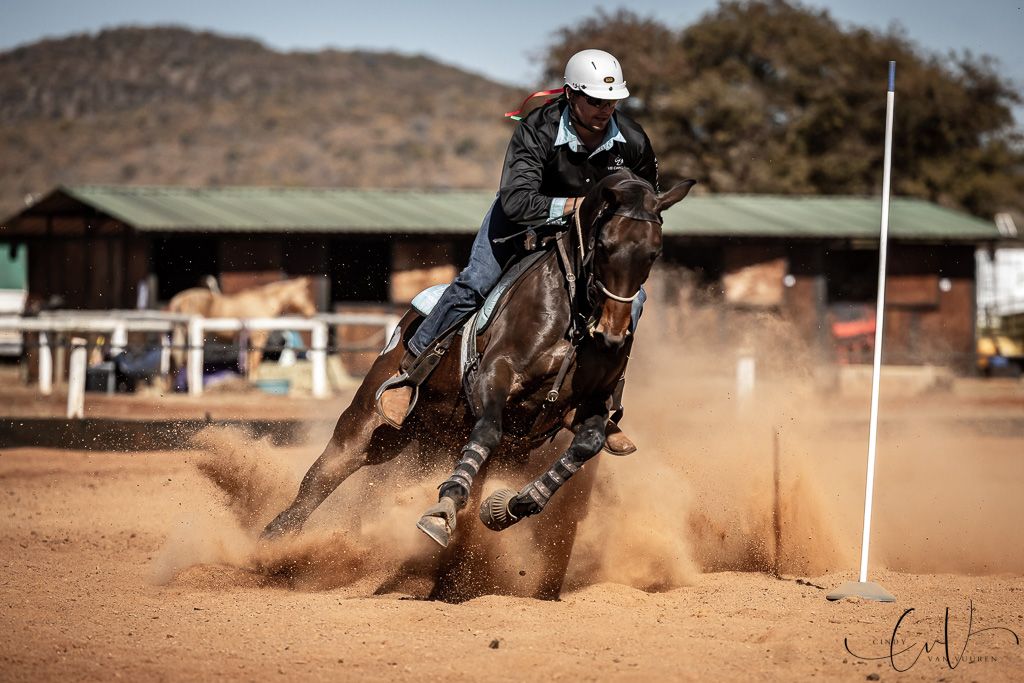
Dust, muscle and a split‑second turn — this frame crackles with energy.
You’ve leaned into the contrast well here: the sidelight carves through the dust and rakes across the horse’s shoulder, while the rider’s upper body falls partly into shade. This is a fast action sports image, and the drama is built on that light hitting the airborne sand and the horse’s powerful lean. The strongest visual notes are the sweeping plume of dust and the diagonal of horse and rider cutting across the frame. One thing to consider: if “light and shadow” is the theme, does the rider’s face being in deeper shade help or hold the image back for you?
TECHNICAL EXECUTION ★★★★
Focus looks solid on the horse’s head and tack, with a fast shutter freezing most of the action while letting the dust show some texture — exactly what you want in this scenario. Exposure is well judged for a dark horse in bright conditions, retaining detail in the coat without blowing the highlights in the dust. Colours feel natural and not overcooked, with a pleasing, earthy palette. There is a touch of motion blur in the near foreleg and flying sand, but it adds to the sense of speed rather than hurting clarity. The only technical detractions are the busy, crisp background and a visible watermark; both pull the eye away from the action. A slightly wider aperture to soften the background further would have pushed this to the top.
COMPOSITION ★★★
The diagonal line of the horse’s body and the arc of dust create strong movement from left to right. However, the bright white pole at the right edge acts like a visual stop sign and competes with your subject. The rider’s helmet and head merge with the roofline, which flattens the moment and weakens subject separation. A lower shooting position or slight step left would have given you a cleaner backdrop of arena surface or distant hills. Consider a tighter crop from the right to eliminate the pole and a little from the top to concentrate the eye on the turn. How deliberate was the inclusion of the pole — context for the event, or simply something you had to work around?
LIGHTING ★★★★
The hard, directional sun actually works in your favour by sculpting the dust and emphasising texture in the horse’s muscles. Rim light on the dust cloud gives the scene a gritty, kinetic feel. Shadows under the horse add depth and anchor the movement. The trade‑off is the rider’s face being a little lost in shadow under the helmet, which slightly reduces connection. A subtle local lift on the face or waiting for a turn where the face catches the sun would help. Overall, the light sells the speed without feeling garish.
STORY ★★★★
This captures a decisive point in the turn: hooves digging in, dirt exploding, rider committed to the line. We understand the stakes and the skill involved even without seeing the full course. The horse’s expression and the rider’s body angle communicate tension and control. What’s missing is a small element that anchors context — either clearer placement of the pole in a cleaner way or a glimpse of an objective, like the next marker, to complete the narrative. Still, the frame feels honest, athletic and immediate.
IMPACT ★★★★
The energy hits you straight away; dust trails and diagonals give it a cinematic punch. The busy sheds and animals in the background, plus the bright pole and watermark, dilute that punch a little. Clean those elements and this becomes a real portfolio-level action image. It’s memorable for the athleticism and the way the light rips through the dust. Ask yourself: if you saw this printed large, would anything in the periphery still tug your eye from the core moment?
CONSTRUCTIVE NEXT STEPS
- Reframe or crop to remove the white pole on the right and a touch of the top; aim for a tighter 4:5 that centres the turn and dust plume. Clone any remaining bright flecks and consider removing the watermark for presentation.
- Shoot lower and slightly left of the turn so the rider’s head sits against clean arena or sky rather than rooflines; this also amplifies the dust and power.
- Use a wider aperture (e.g., f/2.8–f/3.5 at 1/1600–1/2500s, ISO to taste) to blur the background buildings while keeping the horse’s head sharp.
- In post, add a subtle dodge to the rider’s face and a gentle burn on the background structures to keep attention on the action; add a touch of clarity/texture to the dust trail only.
AI Version 2.12