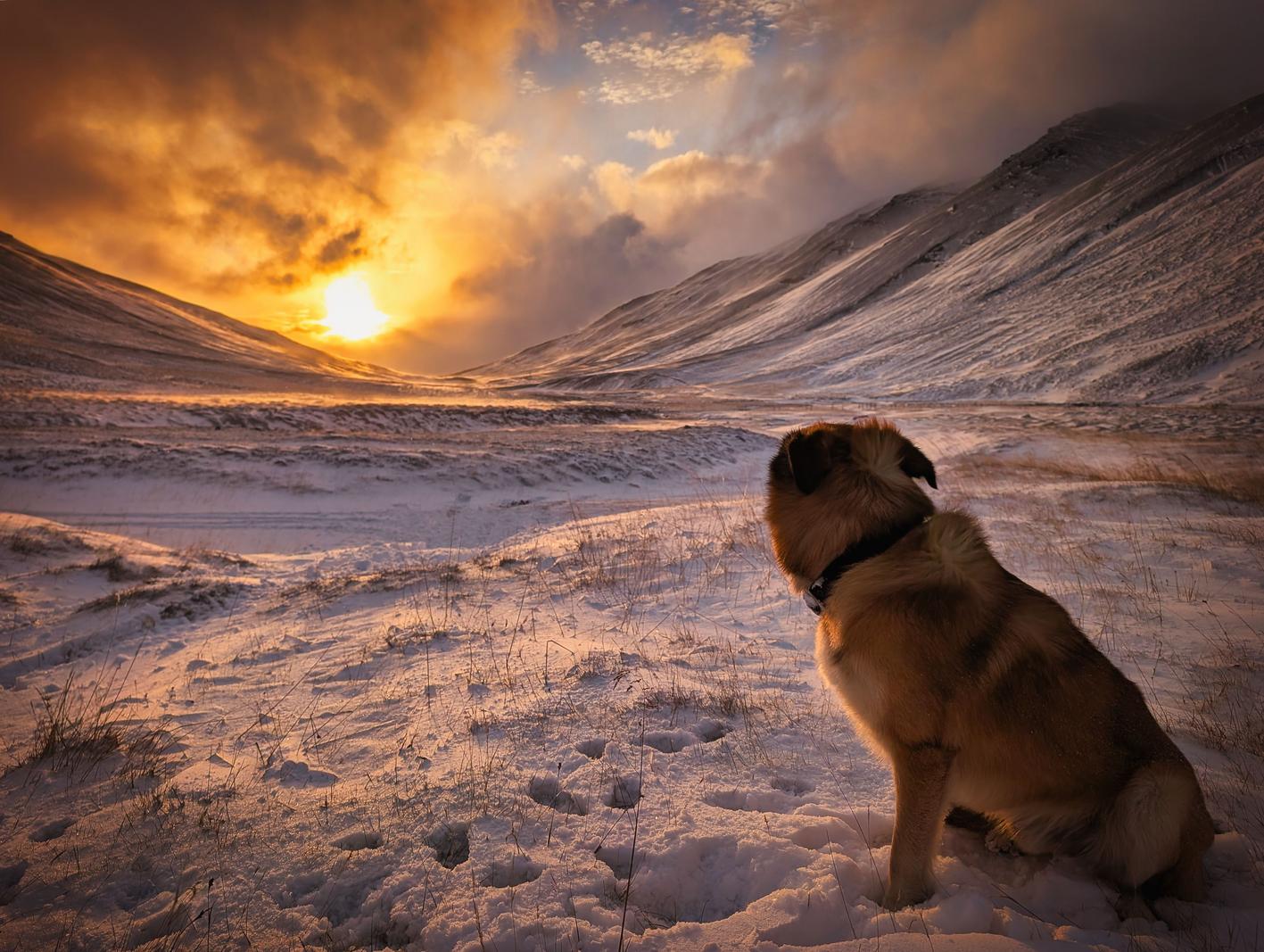
A tender, quiet winter scene lifted by a strong subject and gorgeous light.
You’ve definitely caught the last light, and used it for mood rather than just colour. This reads primarily as a landscape with a companion animal as the anchor, which is a smart way to dodge the “pretty sky” trap. The warm rim light along the dog’s back and the snow picking up the glow give the frame a calm, end‑of‑day feel. What I’m looking at most is the relationship between the dog on the right and the sun sitting low in the valley—there’s a clear dialogue between the two that carries the picture. Did you consider shifting position to separate the dog’s head from the darker hillside so the profile cut cleanly against brighter sky?
TECHNICAL EXECUTION ★★★★
Exposure is well judged for a high‑contrast sunset; the bright core around the sun is hot but believable and doesn’t feel like heavy HDR. Detail in the snow holds up nicely with crisp texture, and there’s no obvious noise or artefacts in the shadows. Colour is warm without sliding into garish oranges—good restraint. The dog appears sharp enough to anchor the frame, though the shadow side could use a touch more detail to reveal form. To hit five stars I’d like to see slightly better control of the extreme highlights near the sun and a subtle lift on the dog’s darker fur to balance the tonal range.
COMPOSITION ★★★★
Placing the dog on the right and letting it look into the valley works; the eye follows its gaze down the V‑shaped lines towards the sun. The sweep of the mountains creates strong depth with clear foreground, midground and background. Where this slips is the merger of the dog’s head with the darker slope; the profile gets a bit lost and the gesture softens. A small step left or a slightly lower viewpoint would have put the head against brighter sky, giving a cleaner silhouette and more presence. A fraction more breathing room around the dog’s paws would also help reduce the crowded feeling at the bottom edge.
LIGHTING ★★★★★
This is the kind of winter light worth waiting for—low, directional and full of texture. The golden rim down the dog’s back is beautiful and ties the subject to the landscape. The warm/cool contrast between sky and snow reads naturally and adds depth. Even with the hot core of the sun, the rest of the frame holds detail without crunching the shadows. Any attempt to “fix” the bright sun would likely deaden the mood; it’s working in your favour here.
STORY ★★★★
The image suggests a clear moment: a pause at day’s end, shared with a loyal companion in a big, quiet place. The dog’s attentive posture gives us the feeling of witnessing the last warmth drop behind the ridge. Because we see the back of the head rather than a clean profile or visible eye, the emotional read is a touch muted; a slightly stronger gesture from the dog would heighten connection. How might the scene change if you whistled for a head tilt or waited for the ears to perk?
IMPACT ★★★★
This rises above a routine sunset because you’ve given the viewer a subject and a sense of scale. It’s memorable and calm, with a consistent colour palette and honest processing. What keeps it from iconic is the near‑miss on the dog’s separation and the slight pull of the brightest area dominating attention. A cleaner silhouette or a more decisive canine gesture would push this into the top tier.
CONSTRUCTIVE NEXT STEPS
- Reposition a step or two left and slightly lower so the dog’s head breaks against the brighter sky, creating a clean profile; give an extra 2–3 cm of space at the paws.
- In post, use a soft graduated mask from the left to hold the sky by about 0.3–0.5 stops and a subtle radial burn around the sun; then locally dodge the dog’s shadow side by ~0.2–0.4 stops to reveal texture without flattening.
- If the dog will tolerate it, coax a small head turn or ear perk (a quiet whistle or hand movement) to add a clearer gesture without making it feel staged.
- Consider bracketing a second, darker frame for the sky only when the dog is still; if movement is likely, stay with a single exposure and rely on local adjustments to maintain realism.
AI Version 2.12