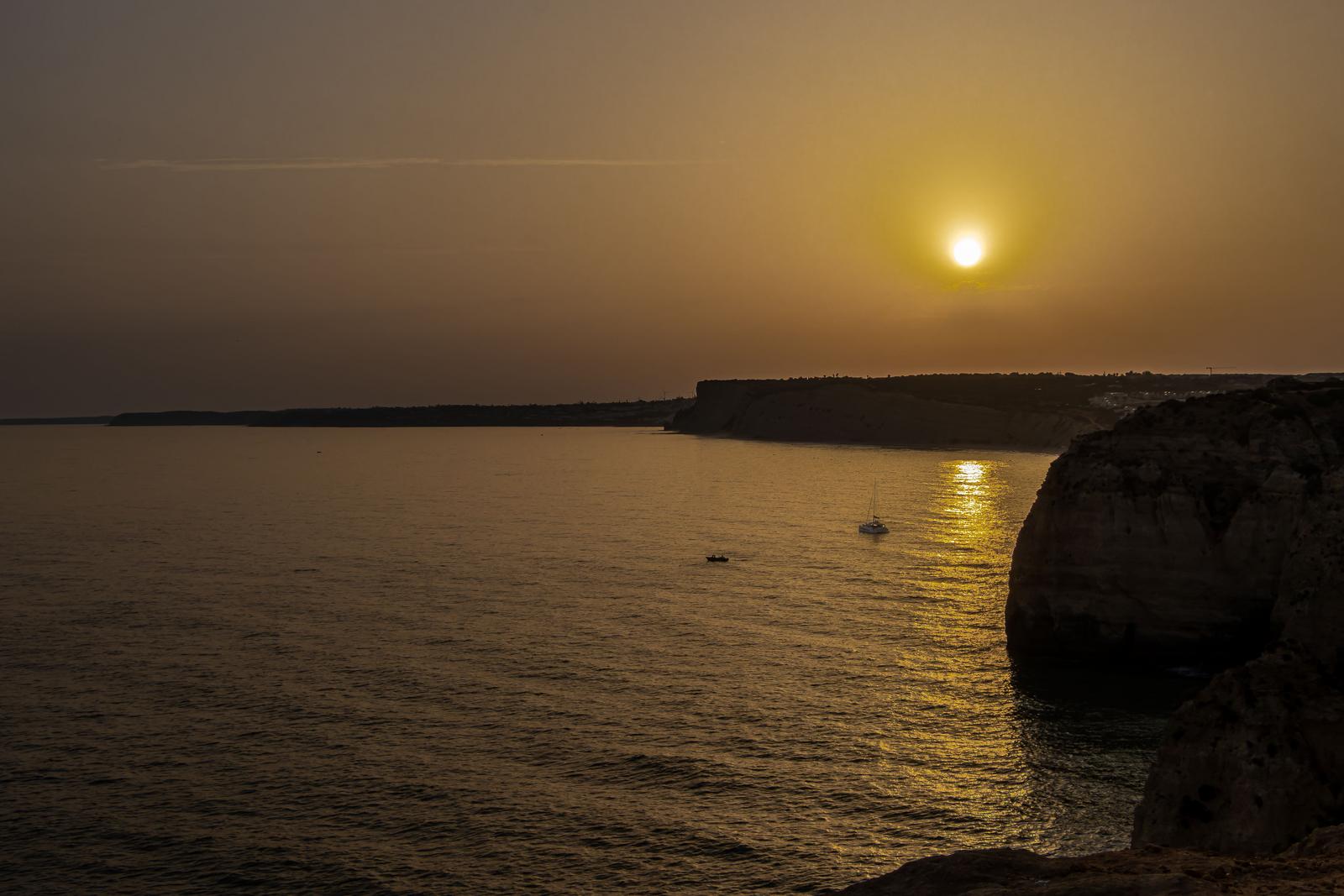
Golden light and calm water, but the picture needs a stronger hero to rise above “nice sunset.”
Jorge, you’ve captured a classic view of Sagres at day’s end — warm sun, reflective path on the water, and those cliffs anchoring the right side. This sits in the travel/landscape space. The small yacht gives scale and a hint of life, which is the most interesting element here. As it stands, the frame reads as a pleasant sunset rather than a defined moment. If your goal was to convey the feeling of being on Europe’s edge, you’re close, but the image needs clearer intent: is the story the yacht, the golden path, or the hulking cliffs?
TECHNICAL EXECUTION ★★★★
The exposure is handled well for a high-contrast scene; the bright sun is clipped a touch, which is acceptable here and feels natural. The shadows on the right-hand cliffs are very deep, verging on featureless, suggesting the dynamic range was pushed — RAW development could recover a little texture without looking forced. Colour is warm and muted, which suits the scene; consider nudging white balance a shade cooler to avoid the brown cast creeping into the sea. Sharpness across the midground water looks solid; any haze on the distant headland reads atmospheric rather than soft focus. There are no obvious artefacts or heavy processing tells, which keeps the file honest.
COMPOSITION ★★★
The sun and its reflection form a strong vertical axis on the right third, and the cliff acts as a frame — good foundations. However, the frame is right‑heavy and the left half becomes empty water without a payoff. The yacht is promising but too small to carry the eye, and it merges with the bright reflection; the tiny dinghy mid‑frame splits attention. Either elevate the yacht’s importance (closer, or timed to sit cleanly on the gold path) or commit to the cliffs as the hero with foreground texture. What did you want the viewer to look at first — the yacht, the sun, or the cliff? That answer should dictate placement and scale.
LIGHTING ★★★
The warm, low sun paints the sea nicely, but the light is relatively uniform with haze muting depth. The cliffside has fallen into near‑black, which flattens form and removes texture that could add interest. Five to ten minutes later, when the sun kisses the horizon, contrast eases and colours often deepen, giving you a richer palette and a more manageable dynamic range. Alternatively, a touch of side light earlier in golden hour would carve the cliff more decisively. A soft GND in-camera or gentle local adjustment in post could balance the right edge without making it look artificial.
STORY ★★
There’s a mood of calm and the suggestion of travellers at anchor, but the scene doesn’t land a specific moment. The boats are too distant to convey activity or intent, and the land is a silent silhouette. A clearer gesture—boat crossing the brightest part of the reflection, a fisherman on the cliff edge, or weather adding tension—would turn this from “pretty view” into “held breath at day’s end.” Right now the frame asks the viewer to supply the narrative. What single action or element could you have waited for that would have defined this evening for you?
IMPACT ★★
It’s pleasant and well-exposed, but it sits among countless sunset coastlines. Without a stronger subject or unusual weather, it’s easy to scroll past. The yacht hints at potential but never becomes the scene’s anchor. To reach higher impact, you need either distinctive conditions (mist, dramatic clouds, sea spray) or a decisive human/nautical moment that feels unmistakably Sagres.
CONSTRUCTIVE NEXT STEPS
- Commit to a hero: wait for the yacht to enter the brightest part of the reflection or frame a person on the cliff edge; if neither happens, exclude small boats altogether to avoid half‑stories.
- Balance the frame: step a few metres left and include a textured foreground ledge or plants, or go longer (100–200mm) to isolate the yacht against the sun path and compress the layers.
- Tame the range: shoot a slightly darker base exposure (−0.7 EV) and lift cliff shadows locally in RAW, or use a 2–3 stop soft GND. Avoid multi‑frame blends if boats are moving to prevent ghosting.
- Refine the colour: cool WB by ~300–500K and add a touch of midtone contrast; consider removing the tiny dinghy with a heal/clone to simplify the story.
AI Version 2.12