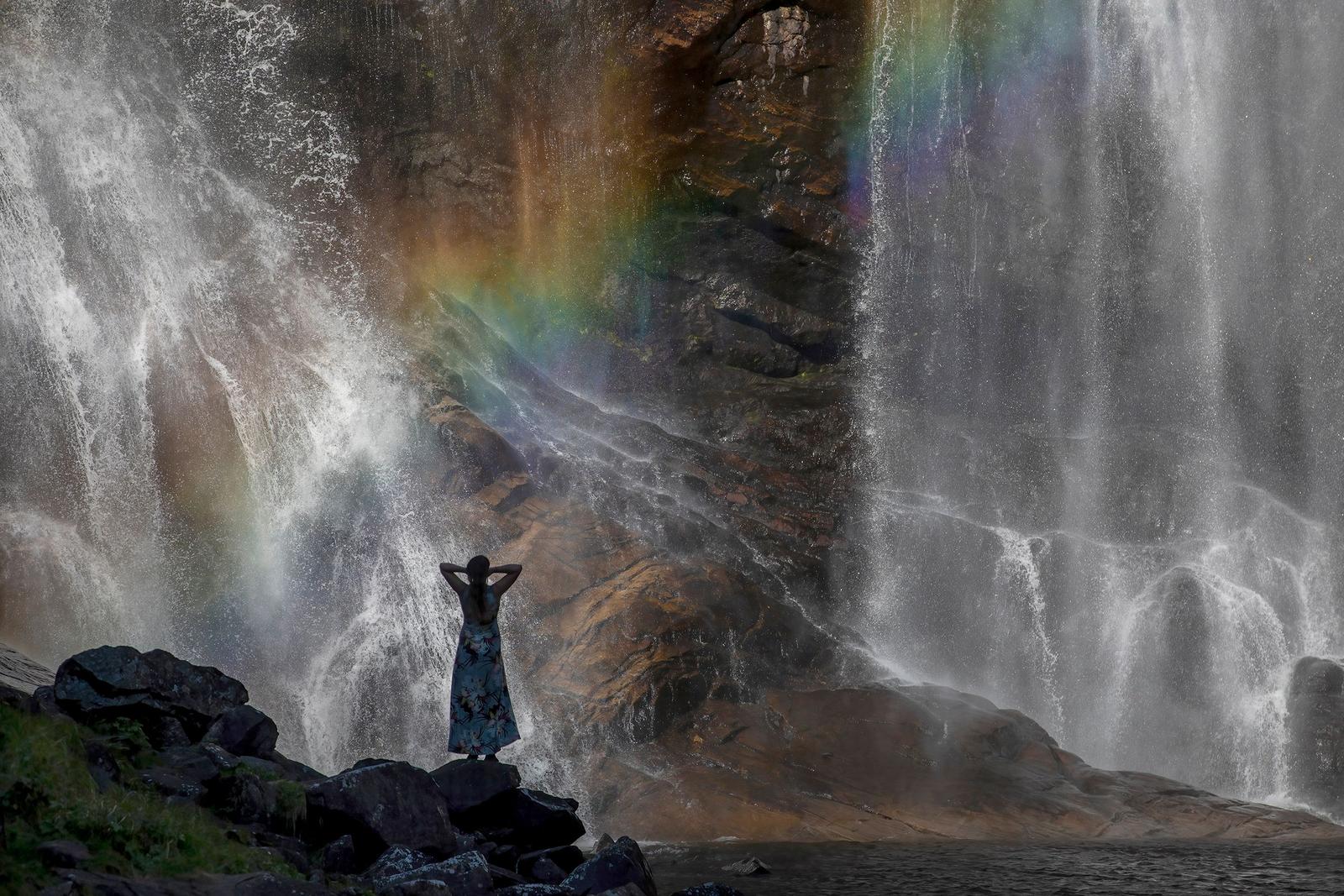
A powerful sense of scale — a lone figure dwarfed by a roaring wall of water and a rainbow.
You’ve made a strong travel image that uses a human silhouette to give scale to a dramatic waterfall, with the rainbow adding a welcome dash of colour. Is the idea common? Yes — person + waterfall is a well‑worn trope — but this execution rises above the average because the figure’s clean silhouette, the textured rock, and the visible arc of colour all work together. What stops it being truly distinctive is that the gesture and placement are good rather than unforgettable, and a large portion of the right side feels like repetition of falling water. Consider what would happen if the figure were slightly larger in frame or positioned directly under the brightest part of the rainbow. What was your thinking in choosing this exact stance (hands behind head) and placement low left — did you try a frame with the figure a step to the right or a more expressive pose?
TECHNICAL EXECUTION ★★★★
The file looks clean and detailed: the rocks and spray hold texture and the silhouette edges are crisp, suggesting a sensible shutter speed and steady camera. Highlights in the white water are bright but not blown to emptiness, which keeps the scene believable. Colour is restrained; the rainbow isn’t over‑pumped, and there’s no heavy HDR or halos. If anything, the darkest rocks at the very bottom read a touch murky, likely from mist lowering local contrast. For a five‑star technical result, I’d like to see slightly more micro‑contrast around the figure and a touch more control over the bright patch of water on the far right edge, which pulls the eye.
COMPOSITION ★★★★
Placing the person on the lower left third works well and immediately establishes scale. The arc of the rainbow sweeps diagonally behind them and helps anchor the eye in an otherwise uniform wall of water. Negative space is used with intent, though the rightmost column of falling water adds bulk without adding new information. A modest crop from the right (about 10–15%) would tighten the frame and strengthen the rainbow–figure relationship. Imagine also stepping a metre to your right so the figure sits directly beneath the brightest green/yellow band — that could give a stronger graphic hook.
LIGHTING ★★★★
Backlit mist creates the rainbow and gives the water nice separation from the dark rock, while the subject reads cleanly as a silhouette. The overall light is soft, so textures in the cliff come through without harsh contrast. It isn’t dramatic golden light, but it serves the scene and preserves natural colour. A polariser, carefully rotated, could fine‑tune the rainbow’s intensity, though be aware it can also diminish it entirely. To reach five stars, timing this for a moment when the sun brightens the rainbow a fraction more — or when a shaft of light hits the figure’s rock — would add another layer of punch.
STORY ★★★★
The figure’s pose — hands behind the head, looking up — reads as awe and gives the scene its human heartbeat. The scale difference between person and waterfall tells a clear story of encountering nature’s power. It’s honest and respectful; nothing feels staged beyond a simple placement. Where it falls short of being unforgettable is the lack of a distinct, unique gesture or interaction — an outstretched reach toward the rainbow, wind catching the skirt, or a small splash might have pushed it over the line. What subtle moment were you hoping for here, and did you wait for several gestures to see which felt most true?
IMPACT ★★★★
This has immediate presence — most viewers will pause on the rainbow and the tiny person against the huge curtain of water. It’s far better than a standard postcard because of clean execution and restrained colour. That said, the concept is familiar, and a large expanse of similar water on the right softens the final hit. A tighter, more intentional frame and a slightly stronger gesture would make it stick longer in the memory. With those refinements, this could become a portfolio piece rather than simply a strong image of a popular subject.
CONSTRUCTIVE NEXT STEPS
- Refine the frame: crop 10–15% from the right to reduce repetition, and consider a step to your right next time so the figure sits directly beneath or just inside the brightest section of the rainbow.
- Direct for gesture: ask your subject to hold a clearer line (arms wider, lean back, or reach toward the colour) and shoot a short burst to catch one decisive posture that feels natural.
- Dial exposure for texture: expose for the highlights in the water, then add a touch of local contrast/clarity around the silhouette and nearby rocks; gently burn down the bright water on the far right edge.
- Control motion creatively: for crisp spray keep 1/250–1/500s; for a hint of silk use 1/20–1/40s on a tripod and have the subject stay very still for one frame. Avoid polariser settings that kill the rainbow; rotate and watch it live in the viewfinder.
AI Version 2.12