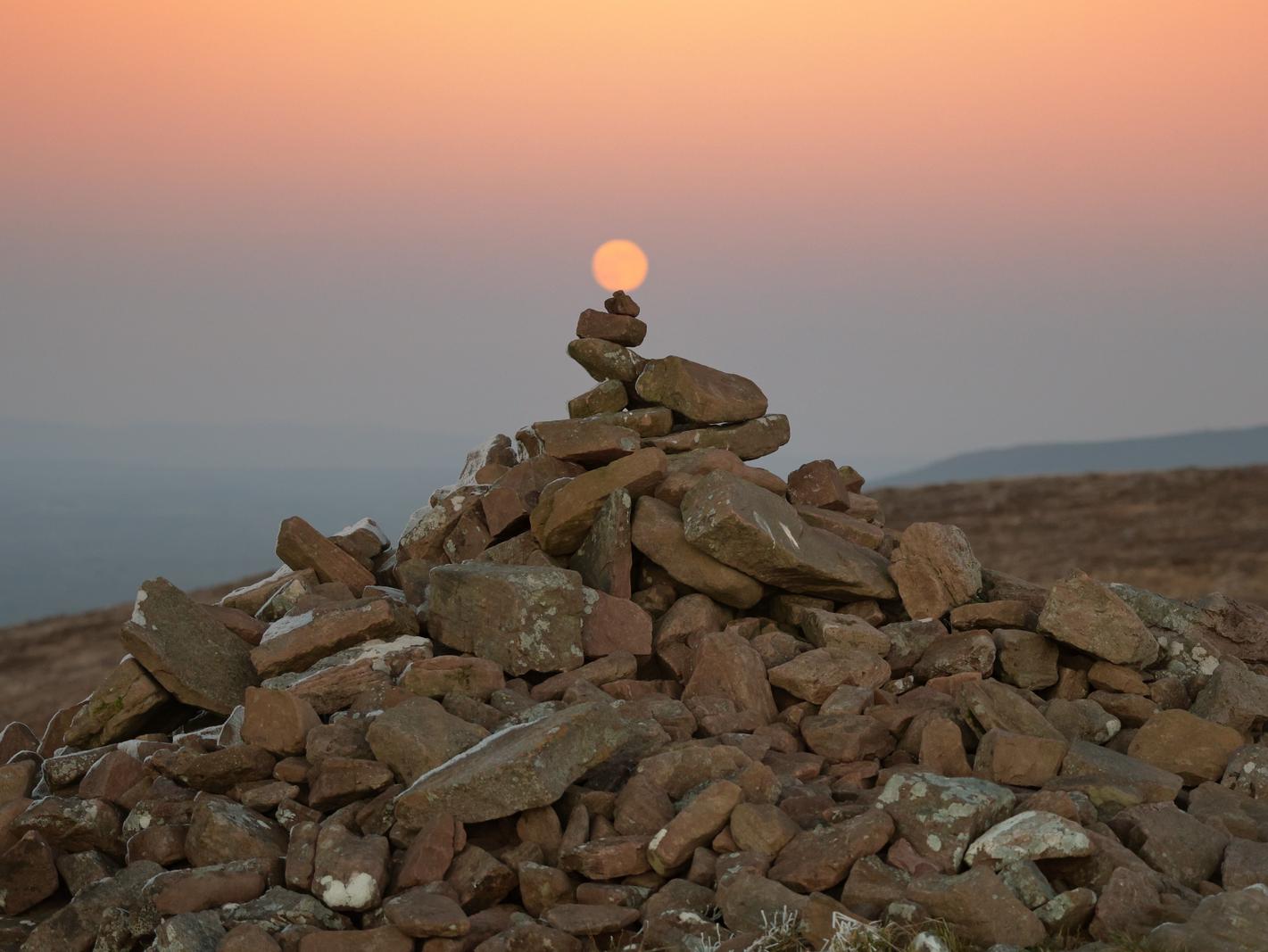
A calm, earthy frame where a cairn reaches up to meet the rising moon.
Joseph, your aim is clear: line up the cairn with the moon and bottle that quiet hilltop moment. The warm dusk gradient and the careful placement of the moon just above the top stone are the picture’s strengths. As a landscape, it’s tidy and honest, with natural colour and no heavy processing. The challenge is that the moon reads small and hazy; without your caption, many viewers wouldn’t recognise a “supermoon.” Did you consider using a much longer focal length and backing up so the moon grew in the frame while keeping the cairn aligned?
TECHNICAL EXECUTION ★★★★
Exposure is well controlled: the rocks hold texture and the sky keeps a smooth gradient without clipped highlights. Focus on the cairn looks crisp, and the natural, muted colour palette suits the subject. The moon, however, is soft and lacks surface detail—likely a mix of atmospheric haze and focus/DOF choices with the foreground relatively close. A tripod appears to have been used or at least a steady hand; there’s no obvious motion blur or noise. To reach five stars, aim for sharper lunar detail by exposing for the moon and stopping down around f/8–f/11 while increasing focal length; mask or lift the cairn in post if needed.
COMPOSITION ★★★
The cairn is a strong anchor and the near alignment with the moon is pleasing. Still, the rock pile occupies a bulky mass that feels a touch static, and the low, sloping ridge on the right edge competes with your subject. The frame would be cleaner if the cairn sat fully against sky with no landforms intersecting it. A lower or slightly more left‑right position would simplify the silhouette and make the moon–cairn relationship read instantly. A tighter crop on the right could also remove the competing hillside.
LIGHTING ★★★★
The soft, warm dusk light is gentle on the rocks and gives the scene a calm mood. Haze lowers contrast, which softens the moon and flattens the distant landscape a little. The cairn is lit enough to retain texture without going silhouette-black, which suits your earthy approach. Waiting for slightly clearer air or shooting a few minutes deeper into blue hour could give the moon stronger presence while keeping some foreground detail. For a five‑star moment, side light on the cairn would sculpt shape and add dimensionality.
STORY ★★★
The cairn hints at human passage and wayfinding, and the rising moon adds a quiet sense of time. Beyond that, the frame doesn’t push a stronger narrative; it’s primarily a neat alignment. Because the moon appears modest, the “supermoon” idea isn’t communicated strongly on its own. Consider whether including scale (a tiny figure near the cairn) or stronger weather would deepen the sense of occasion. What were you hoping viewers would feel about this hilltop—solitude, ritual, or simply a pleasing arrangement?
IMPACT ★★★
It’s pleasant and well‑handled, with a calm atmosphere and natural tones. However, the scene sits among many “moon-over-foreground-object” images and doesn’t yet have a distinctive twist. The small, hazy moon keeps the wow factor down. A more dramatic scale relationship or a cleaner silhouette would lift memorability. Push for that one decisive alignment that makes a viewer stop without needing a caption.
CONSTRUCTIVE NEXT STEPS
- Use a long lens (200–400mm) and step back so the moon grows relative to the cairn; shoot around f/8–f/11 and focus slightly beyond the cairn to keep both acceptably sharp. A tripod and 2‑sec timer will help.
- Time it for early blue hour: expose for the moon (spot meter, roughly 1/125–1/250s at f/8, ISO 100–200) so you retain crater detail; lift the cairn subtly with a local dodge in post rather than globally brightening the sky.
- Refine the frame: move so the cairn sits fully against sky and crop a little from the right to remove the sloping ridge that competes with the subject.
- In post, apply a restrained local Dehaze/Clarity and a touch of selective sharpening on the moon only; keep colours muted to avoid a garish “sunset postcard” look.
AI Version 2.12