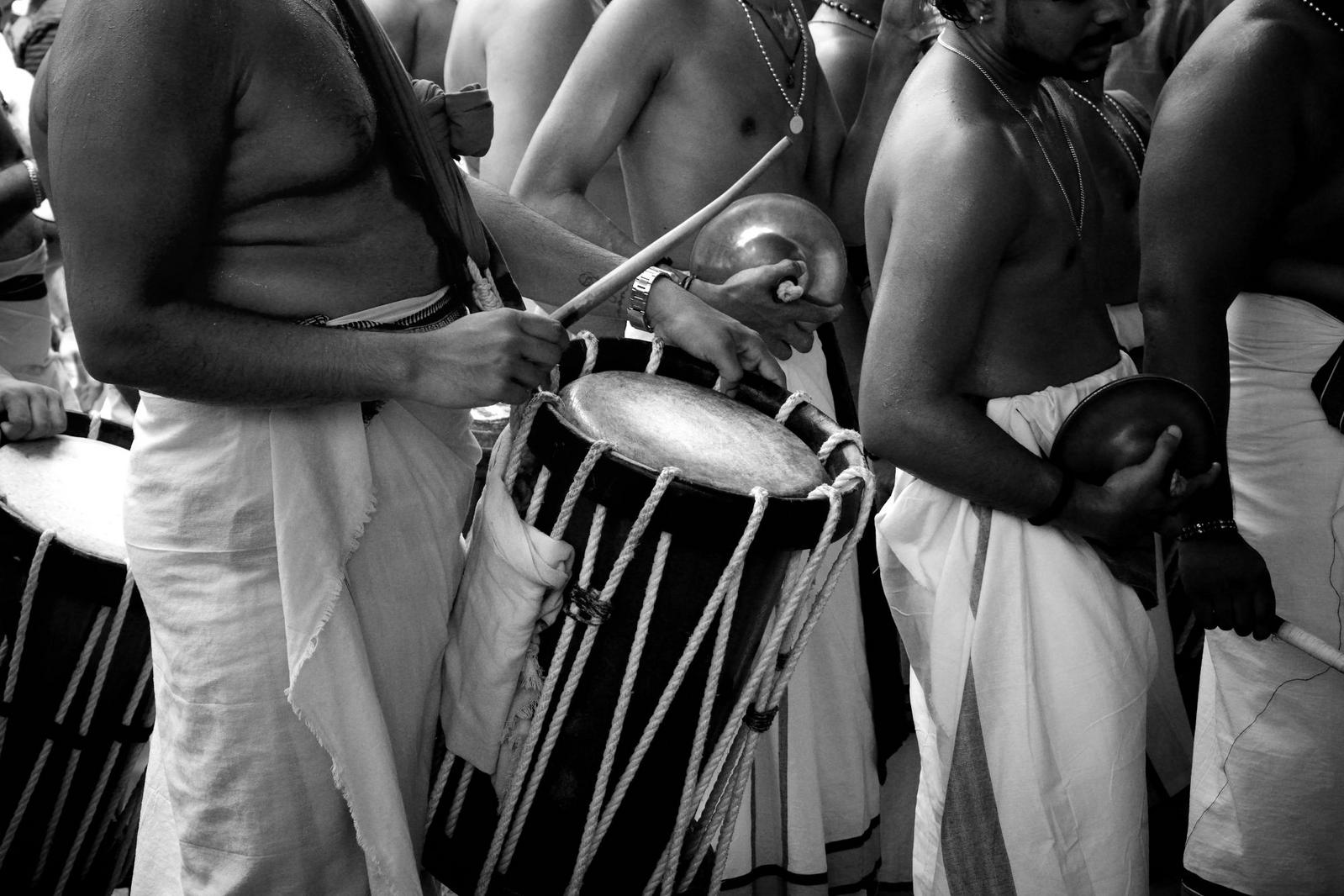
Strong rhythm in the hands and ropes, but the frame feels a touch cramped for the energy you’re hinting at.
Short answer: it’s better if your goal is to celebrate the craft of the drummers rather than the people themselves. The tight focus on torsos, hands, and instruments gives me sound and movement without needing faces, and the monochrome treatment suits the textures of skin, rope and drumhead. This sits between travel and documentary photography. What holds it back is that the moment feels like preparation rather than impact—the stick isn’t mid‑strike and the frame is crowded at the edges, so the energy never fully lands. Ask yourself: were you trying to show the roar of performance, or the quiet concentration beforehand? Your answer should drive how tight you frame and when you press the shutter.
TECHNICAL EXECUTION ★★★★
The file looks clean and sharp where it matters—on the central drumhead, ropes and the player’s hand. Tonal range in the black and white conversion is good, with pleasing detail in the midtones and no obvious blocked shadows. Grain/noise is unobtrusive and suits the subject. I do notice small hot spots on skin and a bright wristwatch that pull the eye, which could be tamed in post. Processing feels natural and not overdone. To reach five stars, refine local contrast and control the few bright distractions so the attention sits squarely on the playing hands.
COMPOSITION ★★★
The choice to exclude faces and concentrate on instruments is a strong idea; repetition of drums and cymbals builds a visual beat. However, the frame is tight to the point of feeling cramped—the cut drum on the far left and the cropped forearms on the right nibble at the main subject. The central drum is a good anchor, but it competes with several similarly toned shapes around it. A little breathing room or a slightly lower angle to stack hands and instruments in layers would guide the eye more decisively. Consider whether a step left or a modest crop from the right would clean the edge mergers. Five stars would need a cleaner edge and a more deliberate hierarchy of elements.
LIGHTING ★★★
The light is functional and honest—soft enough to keep skin tones gentle and preserve texture on the drumhead. It doesn’t add much drama though; there’s no directional highlight shaping the scene or separating your main hands from the background bodies. A touch more shadow‑to‑highlight separation on the primary hands and drum would help. In post, selective dodging and burning could sculpt that depth. On location, waiting for a shaft of side light or turning a few degrees to use existing direction would elevate the mood. For five stars, I’d want light that intentionally carves out the key gesture.
STORY ★★★★
The cultural cues are clear: traditional dress, clustered percussion, and the tactile focus on hands. I read this as the build‑up to performance, which is a valid and engaging slice of the event. Still, the moment is not quite peak—no visible strike, recoil, or shared glance to give it a heartbeat. A raised stick, a blurred stick against a sharp hand, or a cymbal clash would deepen the sense of time and sound. What specific beat were you waiting for, and did you try a short burst to catch it? One decisive gesture would move this from strong context to a memorable moment.
IMPACT ★★★
The image holds attention thanks to texture and repetition, and the monochrome choice keeps it timeless. It doesn’t quite stop me in my tracks because the frame’s tension leaks at the edges and the action feels paused rather than pulsing. With a cleaner anchor and a more charged gesture, this could sing. Think about how you want the viewer to feel the rhythm—through frozen precision or controlled motion blur—and build the frame around that choice. To reach higher impact, aim for that single, unmistakable beat.
CONSTRUCTIVE NEXT STEPS
- Chase a peak gesture: pre‑focus on the central drum and shoot a short burst as the stick rises or makes contact. Try 1/125–1/160s for a hint of stick blur with sharp hands, or 1/500s to freeze a crisp strike—commit to one look.
- Clean the edges: take half a step left and slightly lower to stack the hands and avoid the partial drum on the far left; leave a touch of negative space around your main drum to create hierarchy.
- Selective post: dodge the main playing hands and drumhead by 10–15% and burn down the bright wristwatch and any hot skin highlights; add a gentle S‑curve and a bit of clarity/structure to the drum texture only.
- Isolation when possible: if light allows, open to around f/2.8–f/4 to soften the background torsos so the tactile details on the central drum become the clear focal point.
AI Version 2.12