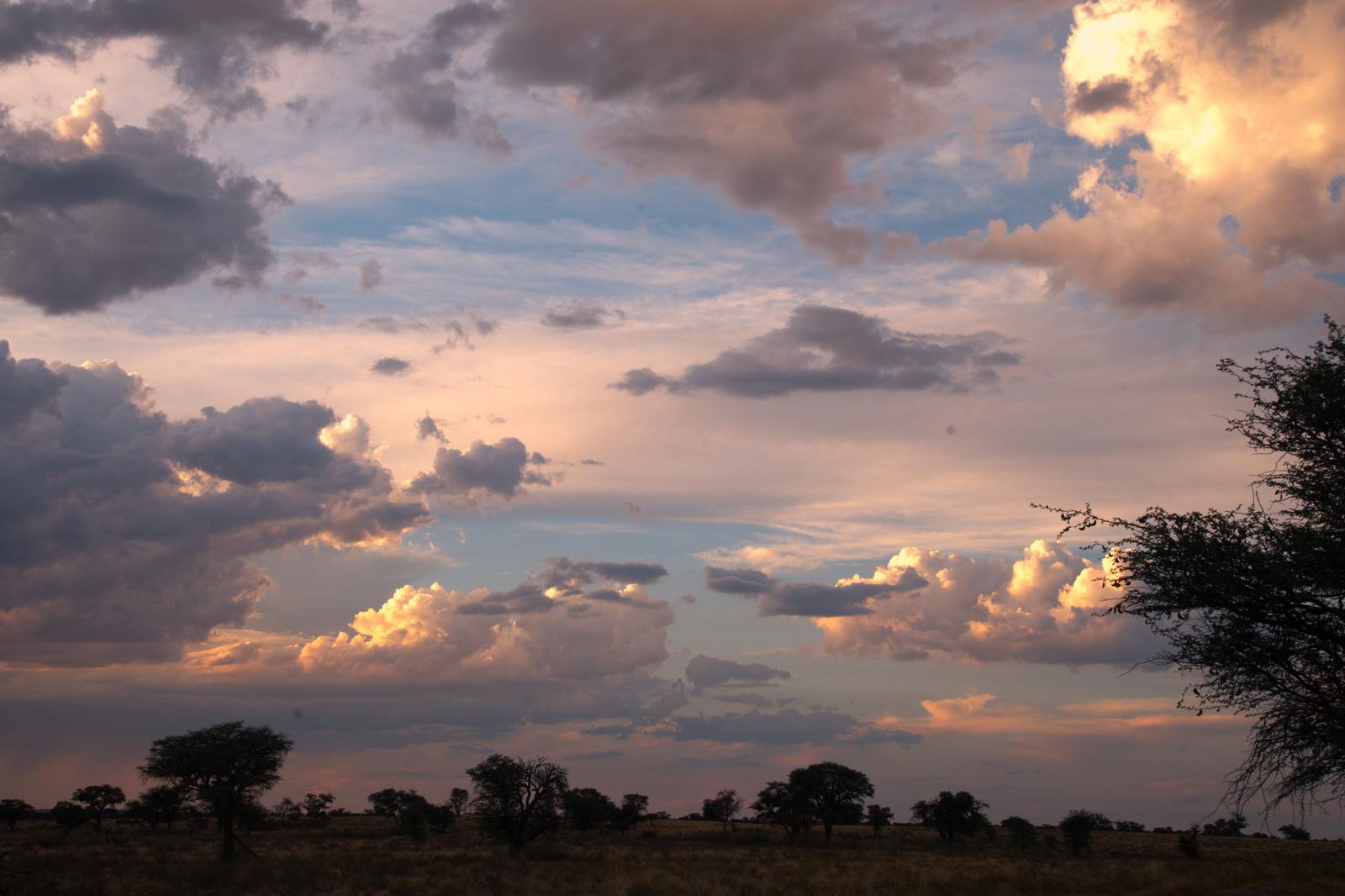
Gorgeous storm light, but the frame is waiting for a stronger anchor on the ground.
Thanks, PAT. You’ve clearly chased weather for this one, and the warm clouds flaring against the cooler sky communicate the brewing change. This sits firmly in landscape territory, with the silhouetted trees giving a sense of place. The left side’s darker cloud mass suggests the approaching front, while the brighter pile of clouds on the right holds the eye. As it stands, it’s mainly a sky study; if your goal was to show the storm arriving, the ground needs a bit more involvement to fully sell the idea. What drew you to this exact spot—was there a foreground subject you considered but chose to exclude?
TECHNICAL EXECUTION ★★★
Exposure is well controlled with no heavy clipping; the tonal range across the clouds feels natural and the colours are tastefully restrained. Sharpness looks fine for the distance, though the tree line is a touch soft which is typical at this scale. There is a small circular dust spot in the mid‑right sky that needs cloning; it pulls the eye once seen. The lower land is very dark, which suits a silhouette, but a gentle lift in the deep shadows could reveal just enough texture to ground the scene. Processing appears clean and not overdone, which is good. To reach five stars you’d need a spotless sensor/sky, crisper micro‑contrast, and richer detail in the darker band.
COMPOSITION ★★
The sky occupies almost the entire frame, yet there’s no clear focal anchor on the land to counterbalance it, so the eye floats. The thorny tree intruding from the right edge feels like a late arrival and creates tension without purpose; either include it fully as a framing device or exclude it. The horizon is very low and straight, but the lack of a foreground element leaves the scene flat despite the dramatic clouds. The better trees sit as small silhouettes; placing one on a third and giving it space would help. A modest crop from the right and a sliver off the top would tighten the frame. Stronger placement of a single tree or a foreground feature would push this to four stars quickly.
LIGHTING ★★★★
The light is your strongest asset: warm evening tones kiss the cumulus while cooler blues hold the mid-sky, giving real atmosphere. The darker mass on the left reads as weather building and adds tension. Highlights on the top-right cloud verge on hot, but they add energy rather than harm. The ground is in shadow, which suits the mood, though a touch more separation on the treetops would help. Waiting for a defined rain shaft or a last shaft of light on a foreground tree could have elevated this into something special. With a more emphatic light event, you’d be in five-star territory.
STORY ★★
“Incoming Storm” is suggested by the cloud forms, but the frame doesn’t capture a decisive moment—no visible rain curtains, wind‑bent grass, or subject reacting to the weather. It’s a beautiful view rather than a scene with an event. A figure, an animal, or a vehicle moving across the plain would lend scale and urgency. Alternatively, a clear downpour streak or lightning would make the narrative unambiguous. What single element could you have waited for to say, unmistakably, “it’s arriving now”? Right now the mood is there, but the moment is thin.
IMPACT ★★★
The colour and cloud drama make this pleasant to look at, and the scene has calm grandeur. However, sky‑led frames like this are common, and without a strong ground subject or a specific weather moment, it doesn’t linger in the memory. The right‑edge tree and lack of anchor dilute the punch. Tightening the composition and adding a clear hook would lift it from “pretty” to “compelling.” A more singular gesture—rain shaft, lightning, or a lone tree given prominence—would raise the impact to four or five stars.
CONSTRUCTIVE NEXT STEPS
- Commit to a foreground anchor: step a few metres to place a single acacia cleanly on a third, or get lower to give it more sky; alternatively, include the right-edge tree fully as a framing silhouette instead of clipping it.
- Watch for the telling weather detail: wait for a visible rain shaft, gust-bent grass, or a passing animal/person for scale to turn mood into a moment.
- Refine the frame in post: crop a little from the right to remove the intruding branch, heal the dust spot in the mid‑right sky, and add gentle dodge/burn to shape the cloud highlights and lift a hint of texture in the land.
- Field technique: if time allows, use a longer focal length to isolate the most dramatic cloud structure over a chosen tree, or stitch a short pano to keep scale while controlling edges.
AI Version 2.12