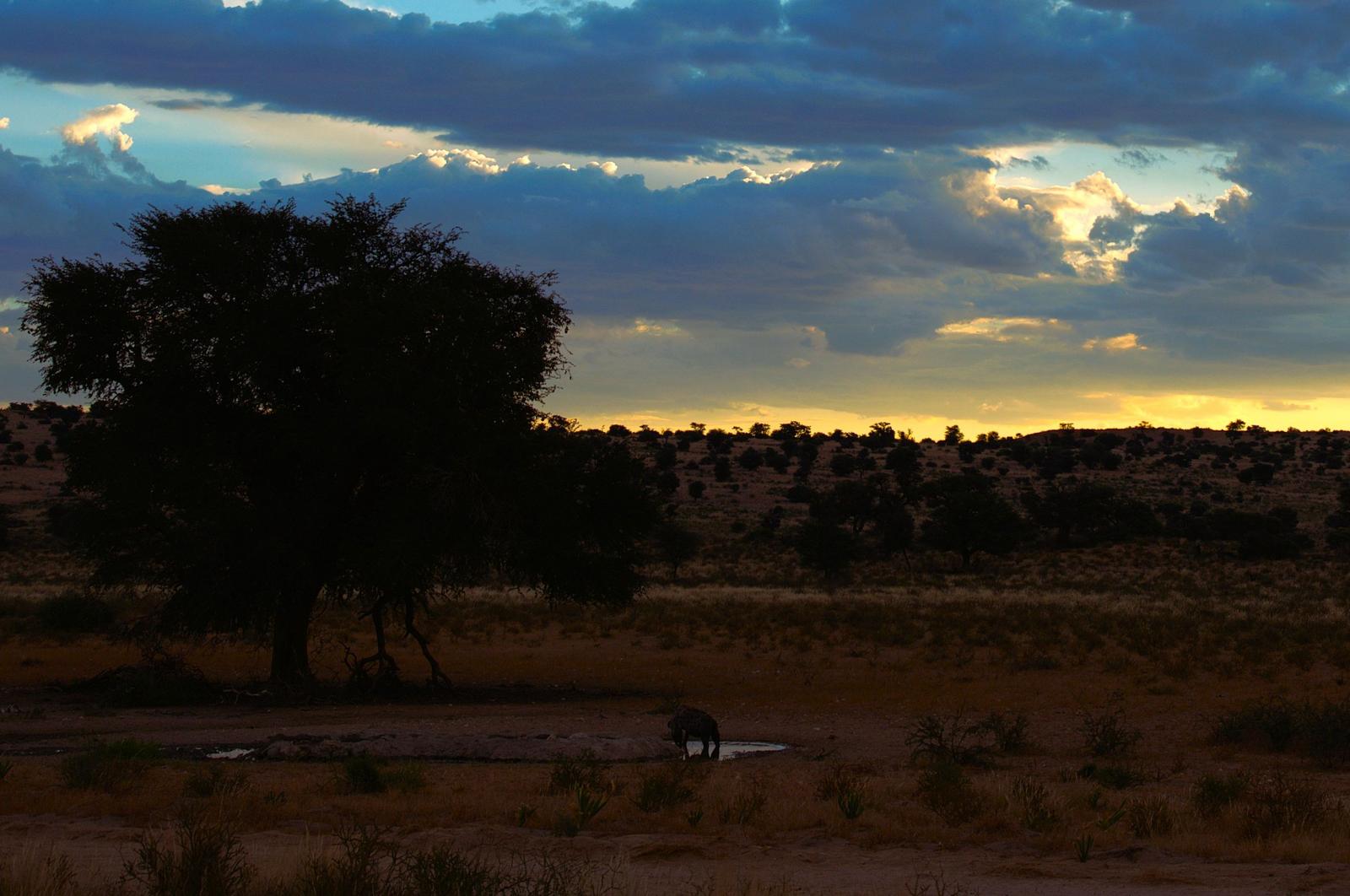
Moody sky and a lonely waterhole hint at a story, but the scene never quite commits to one.
Pat, you’ve caught a dramatic weather front with a warm slit of light on the horizon and a strong tree silhouette anchoring the frame. There’s also a small animal drinking at the waterhole near the bottom centre, which introduces a potential narrative. This sits between landscape and wildlife, but it leans heavily toward landscape because the sky takes most of the attention. My read is that you wanted the storm and the last light to set the mood; if so, the animal needs either clearer visibility or omission. What did you want the viewer to notice first—the brewing sky or the lone drinker—and how did that choice drive your framing?
TECHNICAL EXECUTION ★★
The exposure holds the bright sky nicely, but the foreground is crushed into deep shadow, leaving the tree a solid block and the animal barely legible. Dynamic range feels beyond a single exposure here; detail around the waterhole is lost, which weakens the potential story. I don’t see obvious artefacts or heavy processing, and colour looks natural, which is good. However, the imbalance between sky detail and land shadow reads as underexposed foreground rather than a purposeful silhouette. A soft-edge graduated ND in-camera, or a carefully masked lift of the lower third in post, would retain a natural look without turning the land to mud.
COMPOSITION ★★★
The large tree on the left gives the frame weight and a clear anchor, and the horizon sits comfortably near the lower third. The issue is focus of attention: the eye roams the big sky but then drops to a very small, dim subject at the waterhole that doesn’t read strongly. There’s a lot of empty, dark foreground in the lower quarter that isn’t earning its space. A tighter crop from the bottom and right, or stepping closer to let the waterhole sit more decisively in the frame, would simplify the message. How might this scene change if you committed to either a pure silhouette of tree plus sky or a narrative of the animal at the water?
LIGHTING ★★★
The storm light is attractive—the cool blues of the clouds contrast with the warm band on the horizon, and the ceiling of cloud adds texture. That said, the light that matters for the subject on the ground is extremely low, leaving the story element in near darkness. A slight shift in timing—two or three minutes earlier while there was still residual light on the land—could have shaped the tree and revealed the waterhole without killing the sky. Alternatively, using the remaining glow to backlight the animal for a rim-lit outline would have created separation without lifting shadows excessively.
STORY ★★
There is a germ of a narrative: a lone animal grabbing a drink as the storm approaches. Unfortunately, the animal is so small and dark that most viewers will miss it on first pass, so the scene defaults to “stormy sunset with tree.” Without a readable gesture or clearer subject, the tension between calm water and oncoming weather doesn’t land. Giving the animal scale—closer framing, brighter separation, or a reflection in the pool—would make the moment feel specific rather than generic.
IMPACT ★★
The sky is pretty, but there are countless similar sunset-storm frames; the image needs a stronger hook to stand out. As presented, the mood is pleasant yet familiar, and the hidden subject prevents that second look. With clearer intent—either a striking silhouette graphic or a readable wildlife moment—the photograph could step beyond a standard sky shot. Right now it’s easy to pass by.
CONSTRUCTIVE NEXT STEPS
- Decide the hero: if it’s the animal, move closer or use a longer focal length to make it fill at least 1/10th of the frame; time it so the animal’s profile is against the glowing horizon or a lighter ground for separation.
- Balance the dynamic range in-camera with a 2–3 stop soft-edge graduated ND over the sky, or in post with a masked linear gradient lifting only the lower third; add gentle local dodging around the water to guide the eye.
- Crop purposefully: try a panoramic crop removing part of the dark lower foreground and some right-hand space, keeping the tree as a left anchor and placing the waterhole on a third.
- Arrive a touch earlier or stay a touch later to catch side or backlight on the ground; a faint rim light on the animal or a reflection would strengthen the story without resorting to heavy edits.
AI Version 2.12