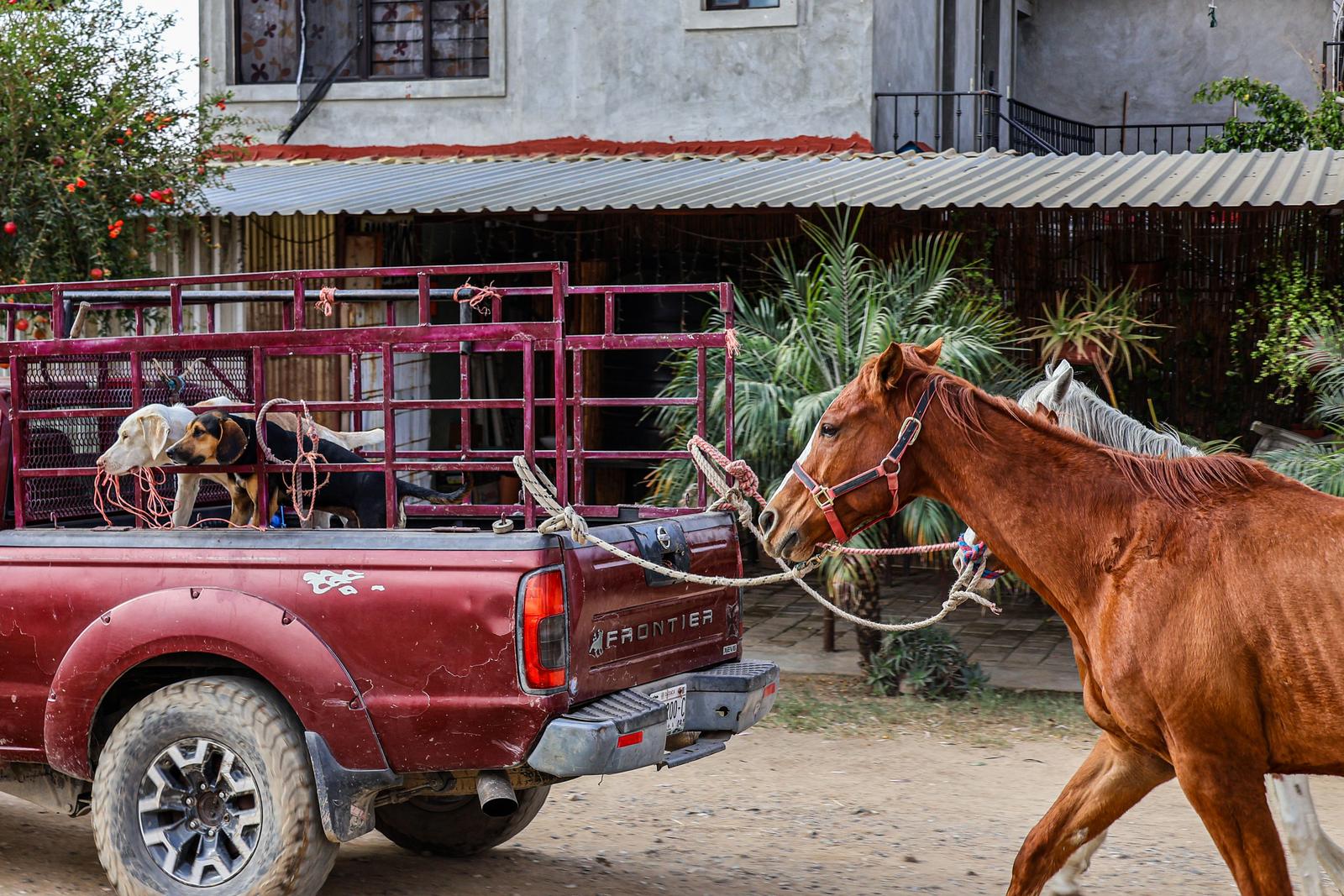
A lively, slightly chaotic rural moment with the horse, dogs and pickup held together by that taut rope.
Yes, it does tell a story — we immediately read “animals in transit,” thanks to the chestnut horse striding alongside the pickup and the two dogs riding in the caged bed. The rope creates a clear connection and a touch of tension that pulls the eye through the frame. This sits comfortably in travel/documentary territory: a candid slice of everyday logistics. Where it falls a little short is clarity; the busy background and the second, half‑hidden horse soften the narrative. What drew you to press the shutter at this exact second — the rope’s angle, the dogs’ attention, or the horse’s step? Deciding that in advance can help you refine framing and timing on scenes like this.
TECHNICAL EXECUTION ★★★★
The file looks clean and sharp where it needs to be: detail in the horse’s coat, the pickup’s scratched paint, and the dogs is well resolved. Shutter speed is sufficient to freeze the horse’s walk without awkward blur, and there’s no obvious noise or artefacts. White balance feels natural and the colours are believable rather than over‑pumped. Depth of field is on the deep side, which keeps the background readable but also busier than necessary. Processing appears restrained, which suits the subject. To push this to five stars, consider a wider aperture or longer focal length to soften the background and a slightly faster shutter (around 1/800s) to lock in a crisper step.
COMPOSITION ★★★
The strongest choice here is the diagonal rope linking horse to truck; it provides a visual path and literal story. The dogs form a supportive second layer, adding character. However, the frame is busy: the corrugated roof, windows and foliage compete for attention, and the pale horse merging behind the chestnut creates a distracting overlap. The chestnut’s legs are crowded near the lower edge and there’s limited “look‑space” in front of it, which compresses the movement. A small shift left and lower would have separated subjects and granted breathing room ahead of the horse. Cropping a sliver from the top would also tame the cluttered roofline.
LIGHTING ★★★
The light is soft and even, which preserves texture in the animals and avoids harsh shadows — perfectly serviceable for a candid. That said, it’s also a little flat, so forms don’t pop from the background as much as they could. Side light or late‑day sun would sculpt the horses and emphasise dust and texture in the street for added atmosphere. A catchlight in the horse’s eye is faint; a slightly different angle to the sun could help. Nothing is blown or muddy, but the light isn’t actively adding drama or direction to the narrative.
STORY ★★★★
The narrative is clear: animals on the move, improvised rural transport, and the practical bond between them. The horse’s forward step and the taut rope offer motion and purpose, while the dogs, alert in the truck bed, add personality. It’s a genuine, humane moment rather than a setup. The missed opportunity is a stronger peak gesture — ears perked, a cleaner stride, or both dogs looking at the horse simultaneously. Including the handler or driver could add a human layer to anchor the scene. Even without that, the frame communicates place and activity effectively.
IMPACT ★★★
The combination of horses and dogs with a dusty pickup is unusual enough to grab attention, and the earthy palette suits the subject. However, the cluttered upper background and the overlapping second horse dilute the punch. The image is engaging on first look but doesn’t fully lodge in memory. A cleaner background, a more decisive stride, and stronger directional light would elevate it from good document to standout picture. Ask yourself: what single element should the viewer remember — the rope, the dogs’ expressions, or the horse’s motion — and compose to make that the unquestionable star.
CONSTRUCTIVE NEXT STEPS
- Refine the viewpoint: step half a metre left and crouch slightly to separate the chestnut from the grey horse, give more look‑space ahead of the stride, and reduce the roofline clutter.
- Time for a peak gesture: wait for a clean mid‑stride with the front hoof lifted and ears forward; ideally, catch both dogs looking toward the horse so the relationships align.
- Control depth of field: try f/4–f/5.6 (or a longer focal length) with 1/800s+ and ISO as needed to blur the busy background while keeping the animals sharp.
- Post‑process selectively: crop a little off the top, subtly darken the background roofs/windows, and gently reduce the red saturation of the truck in HSL so the animals take priority.
AI Version 2.12