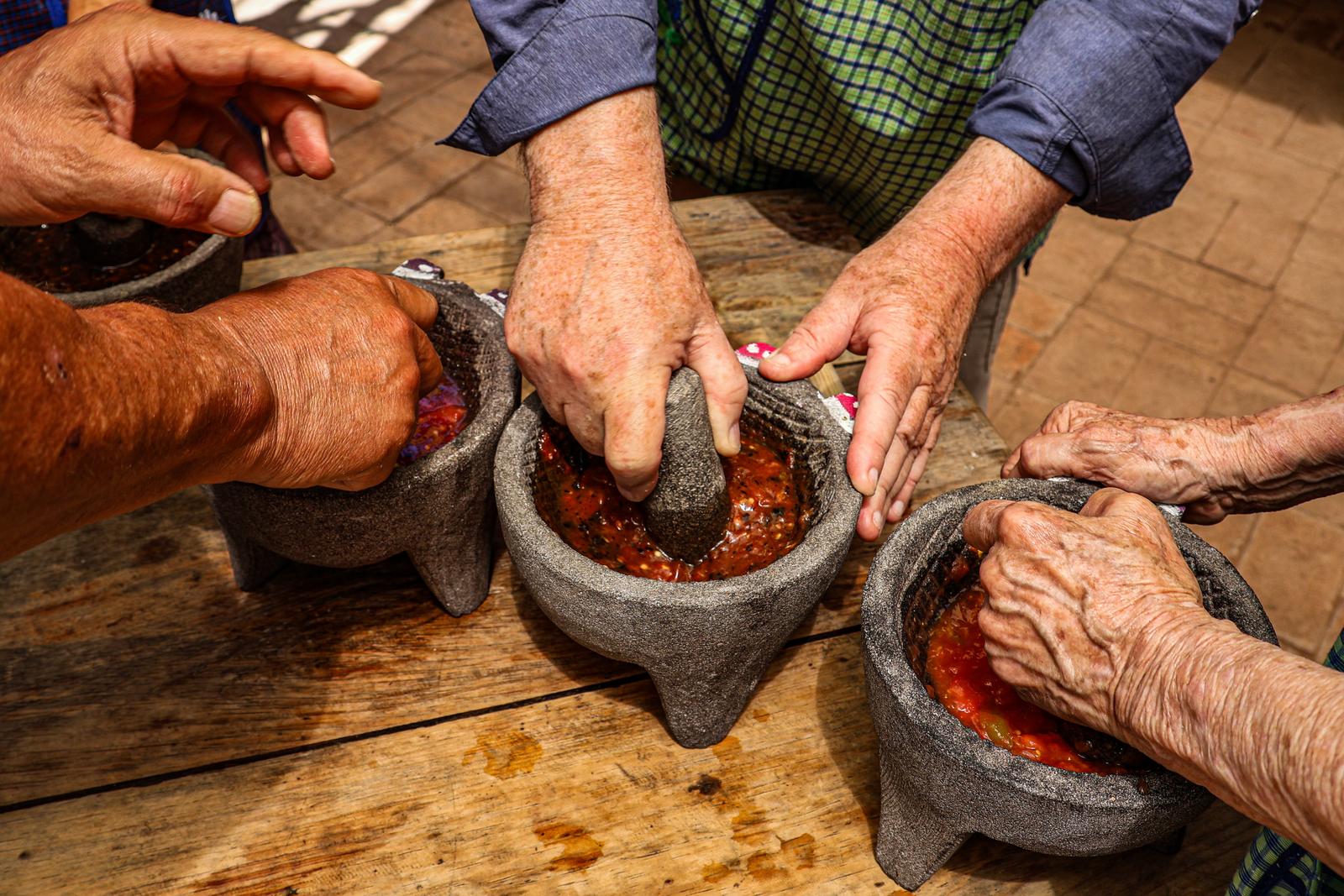
A lively, tactile slice of communal cooking that puts craft and culture right under our noses.
Removing the bottle was the right call, Susan — the frame feels cleaner and the attention stays on the three molcajetes and working hands. For this travel/documentary‑style food scene, the strongest qualities are the textures: stone against skin, salsa glistening, and that scarred wooden table. The “wow” factor, however, won’t come from tidying alone; it will come from a peak gesture or stronger light shaping to give the action more bite. The central bowl already acts as a solid anchor, and the repetition of hands left and right builds rhythm. Ask yourself: what extra beat — a lifted pestle, flying salt, a squeeze of lime — would turn this from a good record into a moment?
TECHNICAL EXECUTION ★★★★
Focus is confident and consistent across the frame; the stone texture and skin detail hold up well, suggesting a sensible aperture and steady shutter. Colour is mostly natural with warm, earthy tones appropriate to the subject, though the skin veers a little orange/red. There are no obvious artefacts or heavy processing, which keeps the image honest. The only technical niggle is the bright patch in the top-left that pulls the eye and hints at mixed lighting. A touch of colour calibration and local control would push this closer to publication quality.
COMPOSITION ★★★
The trio of bowls makes a strong, repeatable motif and the central pestle provides a clear focal point. Edges, though, are tight: the left forearm and upper corners feel cramped, and the bright wedge of light in the top-left competes with the subject. Consider either including the full circumference of all three bowls for a formal, graphic arrangement, or committing to a tighter crop that turns them into a deliberate pattern. Right now it sits between the two approaches, so some energy leaks from the frame. How might stepping back 20–30 cm, or raising your vantage a touch, have cleaned those borders?
LIGHTING ★★★
The light is natural and serviceable, revealing colour and texture without heavy shadows on the key areas. That said, it’s a little patchy — the hot spot in the top-left and some specular sheen on skin suggest mixed shade/sun. Side light raking across the bowls would carve more depth into the stone and salsa. Open shade or a diffuser above the table would instantly smooth the scene and keep attention where you want it. A small white cloth just out of frame could also lift shadow detail on the hands without looking artificial.
STORY ★★★★
The photograph communicates a clear narrative: shared labour, tradition, and food made by hand. The differing ages in the hands and the repeated tools suggest community and continuity. What’s missing is a single, decisive micro‑moment to crown the story — a sprinkle, a squeeze, or one pestle paused mid‑air with salsa dripping. Even a hint of motion blur on a pestle against otherwise sharp hands could speak “work in progress.” You’re very close to a frame that would sit comfortably in a travel essay on regional cooking.
IMPACT ★★★
The image is engaging and pleasant to linger on, thanks to texture and repetition, but it doesn’t yet stop me in my tracks. The slightly busy edges and flat light dampen the punch. A stronger moment or more intentional edge control would raise memorability significantly. Your bottle removal helped, but the next leap will come from timing and light direction, not more cloning. What would you prioritise next time: a cleaner, more graphic overhead or a looser frame that brings in one face for added connection?
CONSTRUCTIVE NEXT STEPS
- Control the borders: either include all three bowls cleanly with a little breathing room, or crop tighter into a bold pattern; clone/burn the bright top-left patch and any edge glints.
- Chase a peak gesture: ask someone to pause with a raised pestle or sprinkle salt; try 1/60–1/100 sec to keep hands sharp but blur the pestle slightly for energy.
- Soften and shape the light: move to open shade or hold a diffuser overhead; add a white napkin/board to reflect light onto the hands from camera-right for texture.
- Refine colour in post: reduce oranges/reds by 5–10% in HSL for more natural skin, then add a subtle dodge on the central salsa to guide the eye.
AI Version 2.12