Bold shapes and textures, but the frame needs a clearer hero and kinder light.
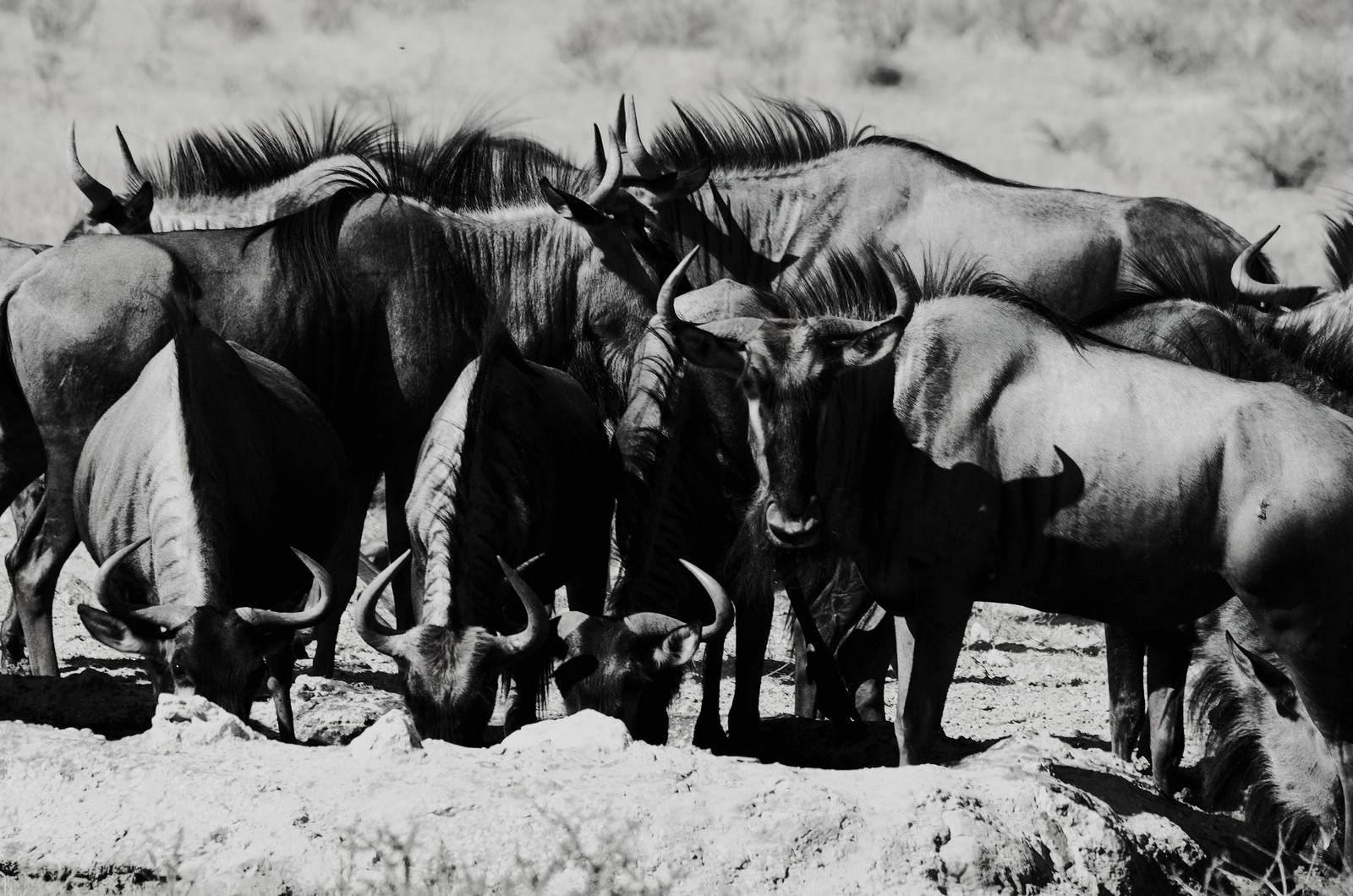
Yes, black and white is a sensible direction here. Midday colour on grey-brown animals and pale dust can look washed out; monochrome lets the manes, horns and rib lines become graphic. In this wildlife scene the B&W conversion does strengthen the patterns, but the current processing is very contrasty, pushing the animals’ bodies into deep, featureless blacks so they merge together. If you keep more mid‑tones and separate a single “hero” animal, the choice will pay off. What did you want the viewer to notice first—the herd as one mass, or the individual looking toward you on the right?
TECHNICAL EXECUTION ★★★
Focus looks serviceable and the shutter seems fast enough to freeze the quiet movement at the water, so the file holds together. The monochrome conversion, however, crushes shadows across flanks and faces; much of the hide texture is lost and the eyes lack life. Highlights on the bright sand in the foreground draw attention away from the animals and feel a little hot. Grain/noise isn’t a problem. To reach five stars, retain detail in the blacks, control that foreground brightness, and locally lift the eyes or faces you want us to read first.
COMPOSITION ★★
The cluster of bodies creates a strong pattern, but there’s no decisive anchor. Horns and backs overlap heavily, and several partial horns on the left and right edges feel cut off. The animal facing the camera on the right could be the hero, yet it’s half-shadowed and crowded by others, so the eye wanders. Consider whether this is a portrait of one wildebeest or a study of repetition—right now it’s between both ideas. A tighter crop around three heads at the water or, conversely, isolating one animal with cleaner space would add intent.
LIGHTING ★★
The overhead sun is unforgiving—deep, hard shadows slice across bodies and kill catchlights. B&W doesn’t hide that; it often exaggerates the contrast, which is what’s happening here. The bright foreground rock/dust patch steals attention, while the animals’ faces sit in shade. Early or late light would give rim edges along manes and horns, add separation, and put a sparkle in the eyes. Short of reshooting, selective dodging on chosen faces and gentle burning of the foreground would help.
STORY ★★
We read “herd at a waterhole,” but there’s no moment to hold us—no head toss with droplets, no wary glance, no clear interaction. The one animal looking toward you hints at connection yet remains visually buried. Wildlife benefits enormously from gesture; even a single raised head or a calf nudging through legs would turn this into a scene rather than a record. What would you have waited for here—synchronised drinking, dust kicked up, or a stare-down from a single subject?
IMPACT ★★
The repeating manes and curved horns give an immediate graphic appeal, and the monochrome treatment suits a gritty, arid feel. But the clutter, crushed tones and harsh light blunt the photograph’s presence. With a defined subject and more readable tones, this could move from “pattern study” to a memorable wildlife image. To reach higher impact you need a clearer focal point and a moment that rewards a second look.
CONSTRUCTIVE NEXT STEPS
- When faced with a tight herd, commit to a hero: use a wider aperture (around f/4–5.6) and place a single AF point on the eye of the animal you want; let the rest fall softer to separate layers.
- Work the light: aim for early/late shooting with the sun at 30–60° to the side or slightly backlit to get rim on manes and horns and catchlights in the eyes; start around ISO 400, 1/1000s, f/5.6.
- Refine the B&W: reduce global contrast, lift shadows +20–30, and locally dodge your chosen face and horns; burn the bright foreground and clone small bright specks to keep attention on the animals.
- Consider two alternative crops on this file: a tight panoramic strip across the three drinking heads, or a vertical/portrait crop isolating the right-hand animal—remove partial horns at the edges either way.
AI Version 2.12