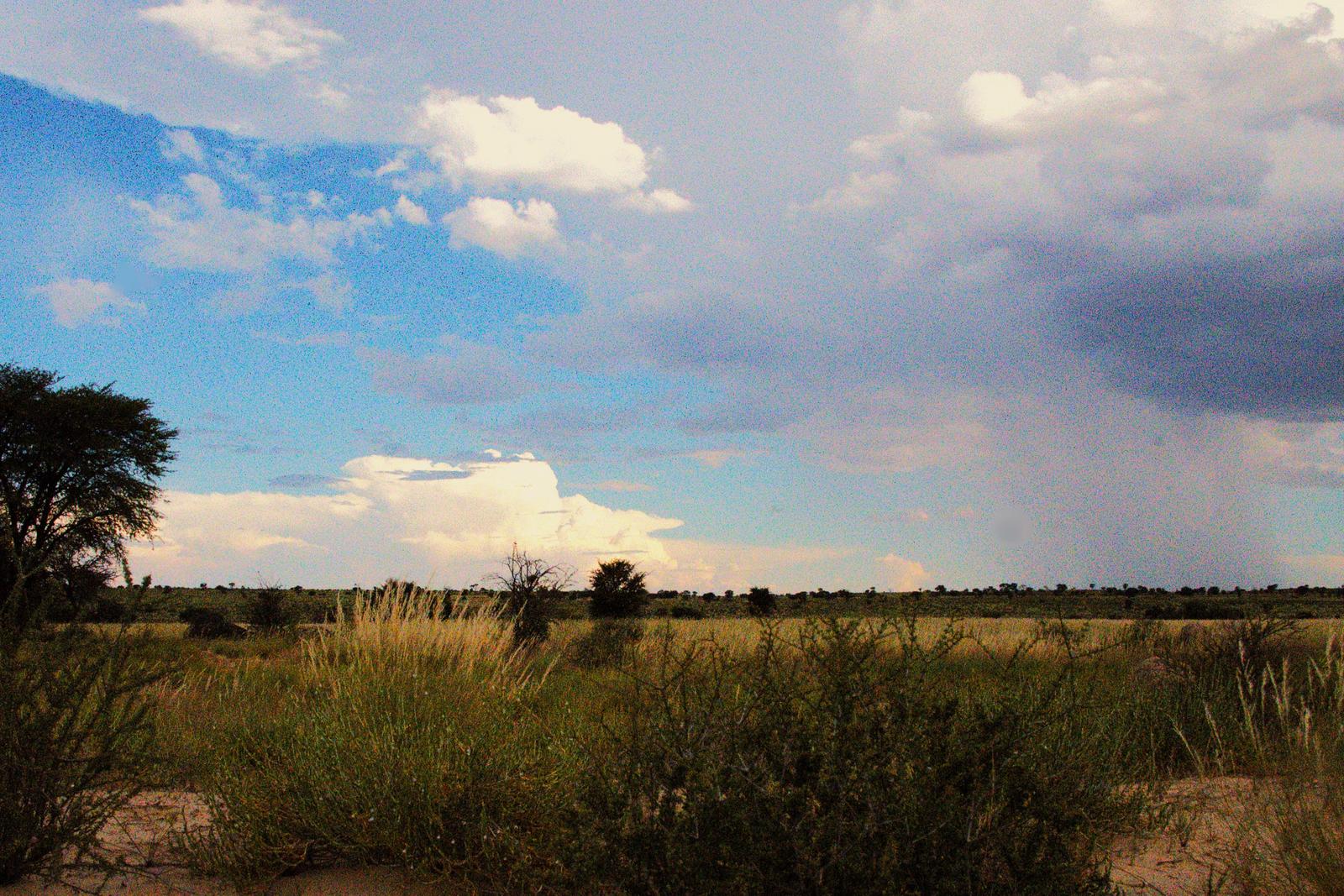
A promising weather scene, but the frame doesn’t yet decide what it wants to be.
Good that you’re practising cropping — it’s the cheapest, most powerful edit we have. Here you’ve photographed a wide, open landscape with a distinctive rain shaft on the right and textured grasses in the foreground. As a landscape, the success of any crop hinges on a clear subject and clean edges. At the moment the partial tree on the far left and the busy foreground dilute the idea; the crop feels undecided between “big sky” and “approaching storm.” Ask yourself: which is the subject you want the viewer to notice first — the rain curtain, the blue‑grey sky contrast, or the sweep of grasses? Your answer should dictate the crop.
TECHNICAL EXECUTION ★★
The file looks noisy and a bit gritty across the sky and grasses, suggesting high ISO or heavy lifting in post. There’s also a hint of over‑sharpening, which accentuates the grain and gives the foliage a crunchy look. Colours push slightly harsh (particularly the greens), which fights the muted tones this kind of scene can carry well. Exposure is generally fine, with detail in both clouds and land, but the rough texture distracts. For five stars you’d need a cleaner raw conversion: base ISO, careful sharpening, and targeted noise reduction that preserves cloud detail while smoothing the sky.
COMPOSITION ★★
The horizon is placed low, emphasising the sky, which could work if the sky is the hero. However, the strongest element is actually the rain shaft on the right, yet it shares space with a cut‑off acacia on the left and a tangle of scrub at the bottom — neither adds meaning. My eye bounces between edges instead of settling. Consider a decisive crop: remove roughly the left 20–25% to eliminate the truncated tree, trim the bottom 10–15% to lose the messy sand and scrub, and place the rain column on a right‑hand third. Alternatively, go vertical around the storm to make it the subject. What would the frame feel like if that left tree were either fully included as a framing device or excluded entirely?
LIGHTING ★★★
The light is mixed but serviceable: sun breaking left, rain cloud darkening right. It gives a mild sense of changing weather, though it’s not particularly dramatic in the grasses, which read a little flat. Waiting for a shaft of light to skim those tall seed heads would add depth and a natural focal point. White balance feels slightly warm in the land compared with the cool sky; a gentle calibration could unite them. To reach a higher rating, time it for lower, directional light that carves shape into the foreground while the storm holds form in the background.
STORY ★★
The implied story is “rain sweeping across the savannah,” which is a good starting point. But the frame doesn’t commit: no human scale, wildlife, or clean foreground anchor to deepen the sense of place. The half‑tree on the left feels incidental rather than purposeful, and the busy brush doesn’t guide us. A clearer moment — a gust bending the grass, a lone animal against the rain, or simply a stronger, cleaner foreground — would lift the narrative. What single detail could you include to make this a moment rather than just a view?
IMPACT ★★
The weather contrast has potential, but the indecisive crop and noisy file blunt the punch. It reads like a workmanlike record of a scene rather than a frame that grabs and holds attention. Stronger subject emphasis and cleaner processing would boost presence considerably. A bold panoramic or tight vertical around the rain column could turn this into a keeper. Aim for one clear idea per frame: sky drama or foreground texture — not both fighting for attention.
CONSTRUCTIVE NEXT STEPS
- Crop decisively: remove the left 20–25% to lose the cut tree, trim 10–15% from the bottom, and place the rain shaft on a right third; test a 16:9 panorama to emphasise the horizon, and a vertical crop centred on the rain for comparison.
- Clean the file: reduce luminance and colour noise in the sky, back off global sharpening, and slightly desaturate greens to a more natural, earthy tone.
- Shoot at base ISO (e.g., ISO 100), f/8–f/11 for depth, and use a tripod if needed; expose to the right to keep sky noise down, then pull highlights in post.
- On location, commit to a foreground anchor (a full acacia, a termite mound, or a clean grass clump) and avoid partial cut‑offs near the edges unless they are deliberate frames.
AI Version 2.12