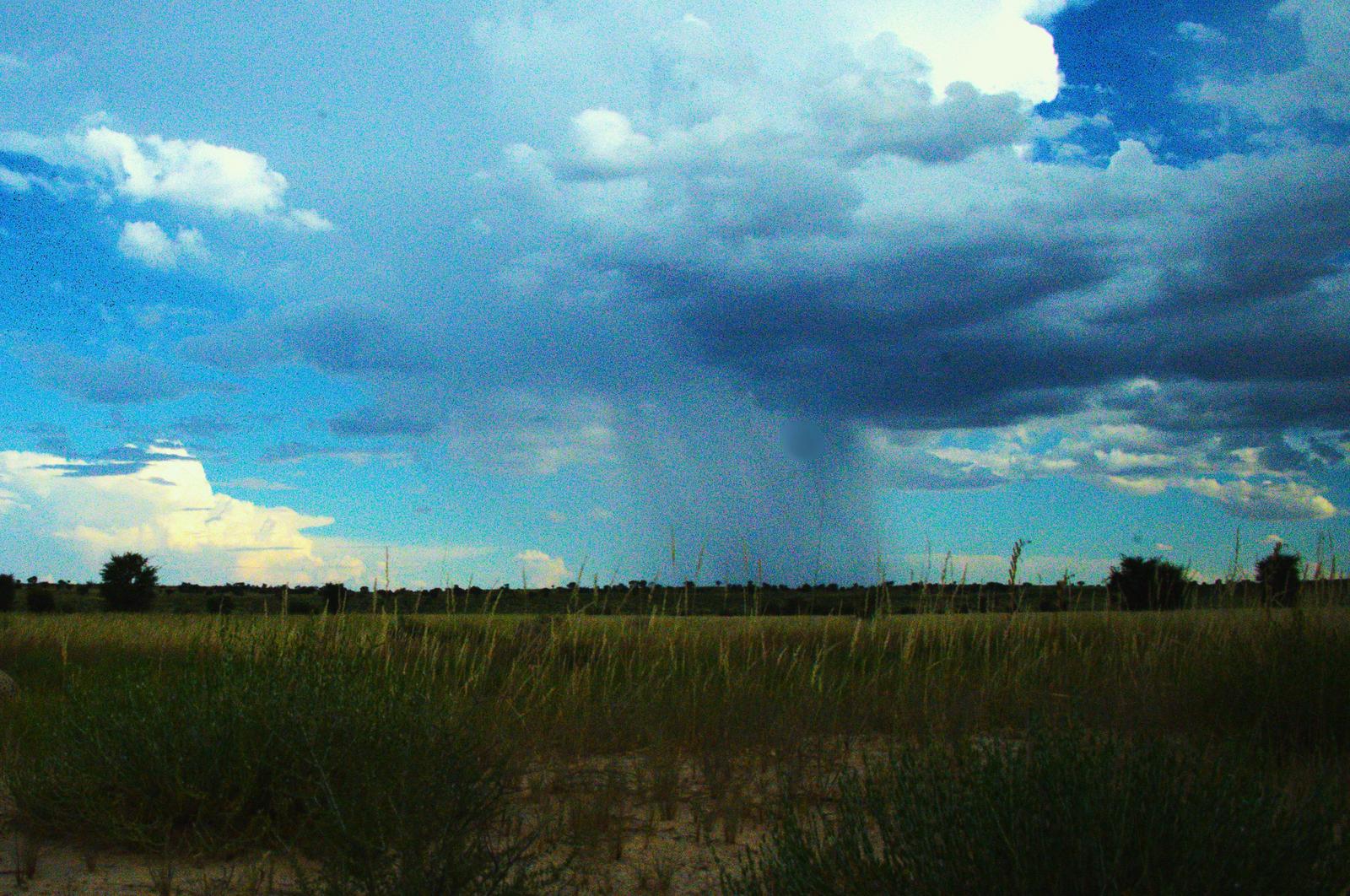
A striking weather moment is here, but the crop and processing are dulling its power.
Thanks, PAT. This version still feels undecided about what it wants to be: a study of that dramatic rain shaft, or a wide view of the plains. As a landscape, the central column of rain is the heart of the frame, yet it sits dead‑centre with a lot of loosely defined grass foreground and some bright, patchy sky pulling attention away. If your goal was to strengthen the crop, I’d either commit to a tall portrait built around the rain column and brooding cloud above it, or go panoramic and trim much of the foreground and right side to let the storm own the scene. Which story do you want the viewer to feel first—the isolated downpour, or the scale of the country beneath it?
TECHNICAL EXECUTION ★★
There’s noticeable noise and coarse grain across the sky and shadows, suggesting a high ISO or heavy pushing in post. Colours are oversaturated—especially the blues—and the clouds have a slightly crunchy, over‑clarified look. I can also see a round spot near the centre‑right of the rain column that looks like a dust spot or a cloning artefact, which needs cleaning. Detail in the grass is muddy while the sky is aggressively processed, so the tonal balance doesn’t feel natural. To reach five stars you’d need a cleaner base file (ISO 100 on a tripod, careful exposure) and subtler processing with restrained saturation, smoother noise control, and removal of artefacts.
COMPOSITION ★★
The rain shaft is the subject but it’s centred, which flattens the tension. The foreground scrub occupies the lower quarter without offering a leading line or anchor, and the bright broken patch of blue in the top right competes for attention. Placing the storm off to the left or right third would give the empty space a job to do. Alternatively, a 4:5 vertical around the column and the heavy cloud above would concentrate the eye and build scale. Consider what a lower viewpoint might do—could taller grass become a soft frame rather than a cluttered base?
LIGHTING ★★★
The light is serviceable and the storm cloud provides mood, but it feels like mid‑day or early afternoon—contrast is high and colours are hard. The underside of the cloud is nicely brooding, while the land is comparatively dull, so the scene lacks cohesion. A touch more exposure on the field (or capturing when side‑light skims the grass) would help the land hold its own. Timing this for lower sun or immediately pre‑/post‑shower would add texture and depth without relying on heavy sliders. To reach top marks you’d need light that shapes the scene and defines layers more clearly.
STORY ★★★
The isolated downpour is a genuine moment with a clear narrative: weather striking one patch of land while the rest waits. However, there’s little in the frame to provide scale or a secondary note—no road, fence post, or animal to ground the experience. Because the crop is undecided, the viewer is left between “big sky” and “weather detail” without the payoff of either. Choosing one story and framing intentionally around it would elevate this from a record to a moment you can feel. What single element could you add or emphasise to communicate the size of that rain shaft?
IMPACT ★★
The subject has potential, but the heavy processing and static framing reduce the hit on first glance. Oversaturated blues and the crunchy cloud texture feel digital rather than atmospheric. The eye drifts between bright sky patches and messy foreground rather than locking on the rain column. With a decisive crop and more natural finishing, this could be a bold, simple statement about weather and space. As it stands, it’s easy to pass by.
CONSTRUCTIVE NEXT STEPS
- Choose a committed crop: either a 4:5 vertical around the rain column and cloud above, or a 2:1 panorama trimming the bottom 15–20% and most of the right side; place the rain shaft on a third, not the centre.
- Re‑process gently: reduce Vibrance/Saturation by ~20–30%, pull back Clarity/Dehaze on the sky, and apply selective contrast to the rain column only; use luminance NR on the sky to smooth grain.
- Clean the file: heal the circular spot near the centre‑right of the rain shaft and any other dust marks; even out the bright hole of blue top‑right with a subtle gradient or crop it away.
- On location: tripod, ISO 100, f/8–f/11; expose to the right without clipping cloud highlights and consider a 3‑shot bracket for safer sky/land balance. Avoid strong polarisers on wide angles which can cause patchy skies.
AI Version 2.12