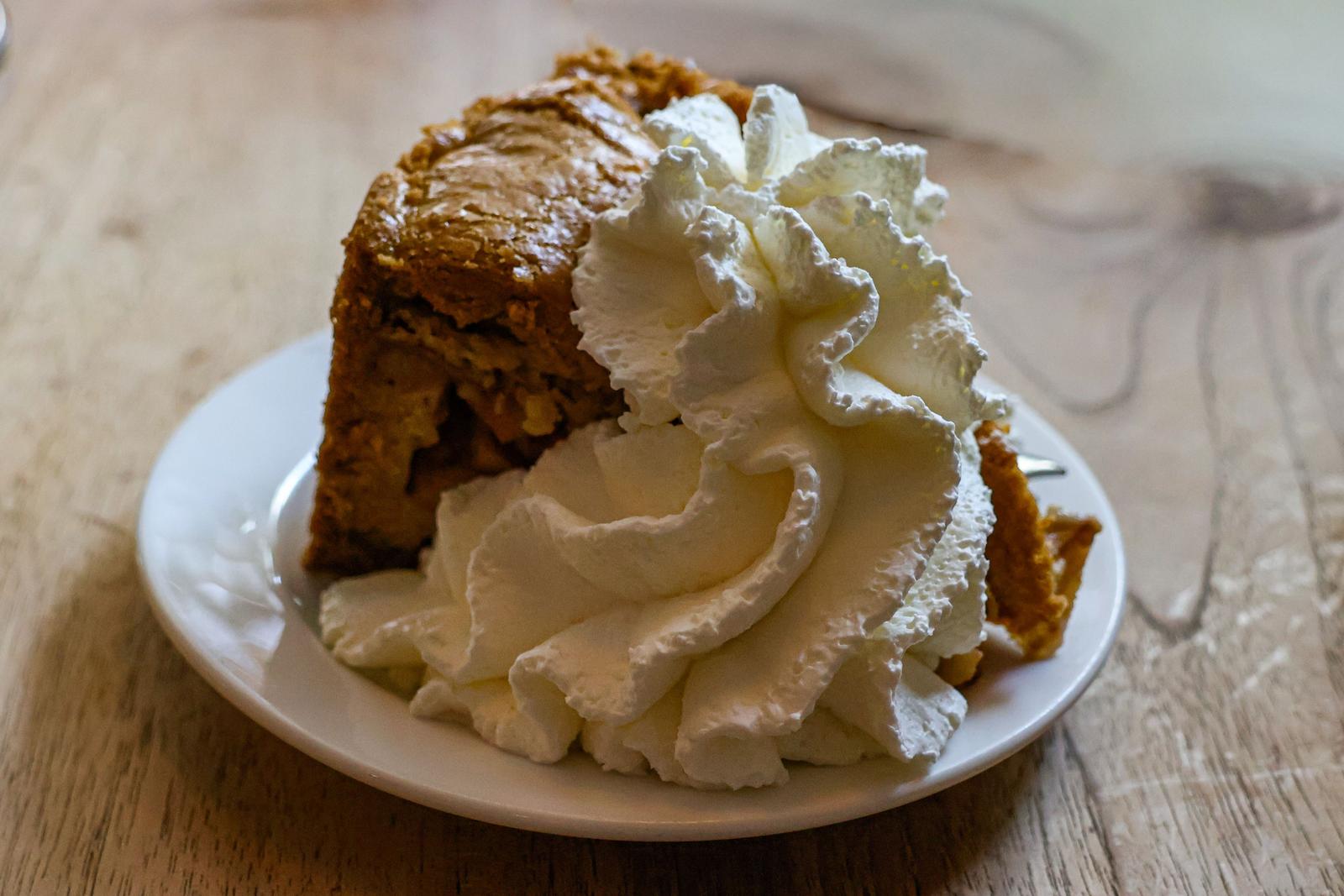
Comfort-food close‑up, but the cream steals the show from the pie.
Thanks Susan. Your goal is clear: celebrate a regional treat. This sits in food/still-life territory, and there’s a pleasing rustic feel from the wooden table and rough crust. However, the towering whipped cream dominates the frame and hides most of the pie, so the subject that carries the “regional” idea isn’t doing the talking. Right now the photo could have been taken anywhere; there are no cues to Amsterdam or café culture to lock in place. What did you want the viewer to notice first—the cream or the apple layers and crust texture? A small styling or angle change could shift that emphasis decisively.
TECHNICAL EXECUTION ★★★
The file looks acceptably sharp, with focus falling mainly on the whipped cream’s ridges; the pie itself feels a touch soft. Exposure is safe but a little flat—whites on the cream are greyish and the shadows on the slice are muddy, which suppresses texture. There’s a warm cast from the ambient light that makes the cream slightly yellow; that’s fine for mood but not ideal for accurate food colour. A tripod, ISO 100–200 and f/5.6 would let you hold more texture in the crust without pushing ISO or shutter speed. Shoot RAW and set a custom white balance (or use the eyedropper on the cream) to keep the whites clean. With a small local-contrast lift on the pastry and a gentle highlight recovery on the cream, the detail would pop.
COMPOSITION ★★
The plate is crowded against the frame and cropped tightly at the front, which makes the subject feel cramped. Most of the pie is hidden behind the cream, so the eye lands on the garnish rather than the hero. The fork peeking in on the right and the bright patch on the tabletop at top right pull attention away. Consider rotating the slice 30–45 degrees so the apple filling faces camera and moving the cream behind or to the side at half the height. Giving the plate a little breathing room and a cleaner edge would help the scene read more intentionally. An overhead or 45‑degree angle could also show the wedge shape and layers more clearly.
LIGHTING ★★
The light is soft but a bit dull, leaving the pastry in shadow while the cream grabs the highlights. The result is low contrast where you want texture (the crust) and high contrast where you want subtlety (the cream). Moving the plate next to a window and placing a white card opposite would open up the shadows on the pie without blowing the cream. Flagging the top-right table reflection (with a book or black card) would remove that hotspot. A slight back/side light would bring out the whipped cream’s peaks and the pie’s crumb, giving depth without harshness.
STORY ★★
Your caption says “Amsterdam,” but the frame doesn’t. As it stands, it’s an anonymous dessert on a rustic table; there’s no cue to place or café culture. A branded saucer, a Dutch menu edge, a narrow café window with rain, or a small coffee glass would anchor the location. A bite taken or a fork mid‑cut could add a lived‑in moment that invites the viewer in. What single prop or background hint could you include next time to make “Amsterdam” obvious without words?
IMPACT ★★
The image is pleasant but not memorable; the oversized cream and tight crop mute appetite appeal and clarity. With stronger direction of light and a composition that showcases the pie’s layers, the photo would gain bite. Right now it reads like a quick café snapshot rather than a deliberate food portrait. Clean styling, a sense of place, and crisper texture would lift it into something you’d want to print or pitch to a travel feature.
CONSTRUCTIVE NEXT STEPS
- Style for the hero: halve the cream and move it behind or to the side; rotate the slice so the apple filling faces camera and tidy crumbs deliberately. Remove or fully include the fork—don’t let it peek in.
- Use window light at 45 degrees with a white bounce card opposite; flag stray reflections. Aim for ISO 100–200, f/4–f/5.6 on a tripod for crisp texture in the crust.
- Frame with breathing room around the plate and avoid cutting the rim; consider an overhead or 45‑degree angle to show layers and shape.
- In post, neutralise the warm cast on the cream, lift exposure on the pie by ~0.3–0.5 stops, add local contrast/clarity to the crust, and clone the bright tabletop hotspot.
AI Version 2.12