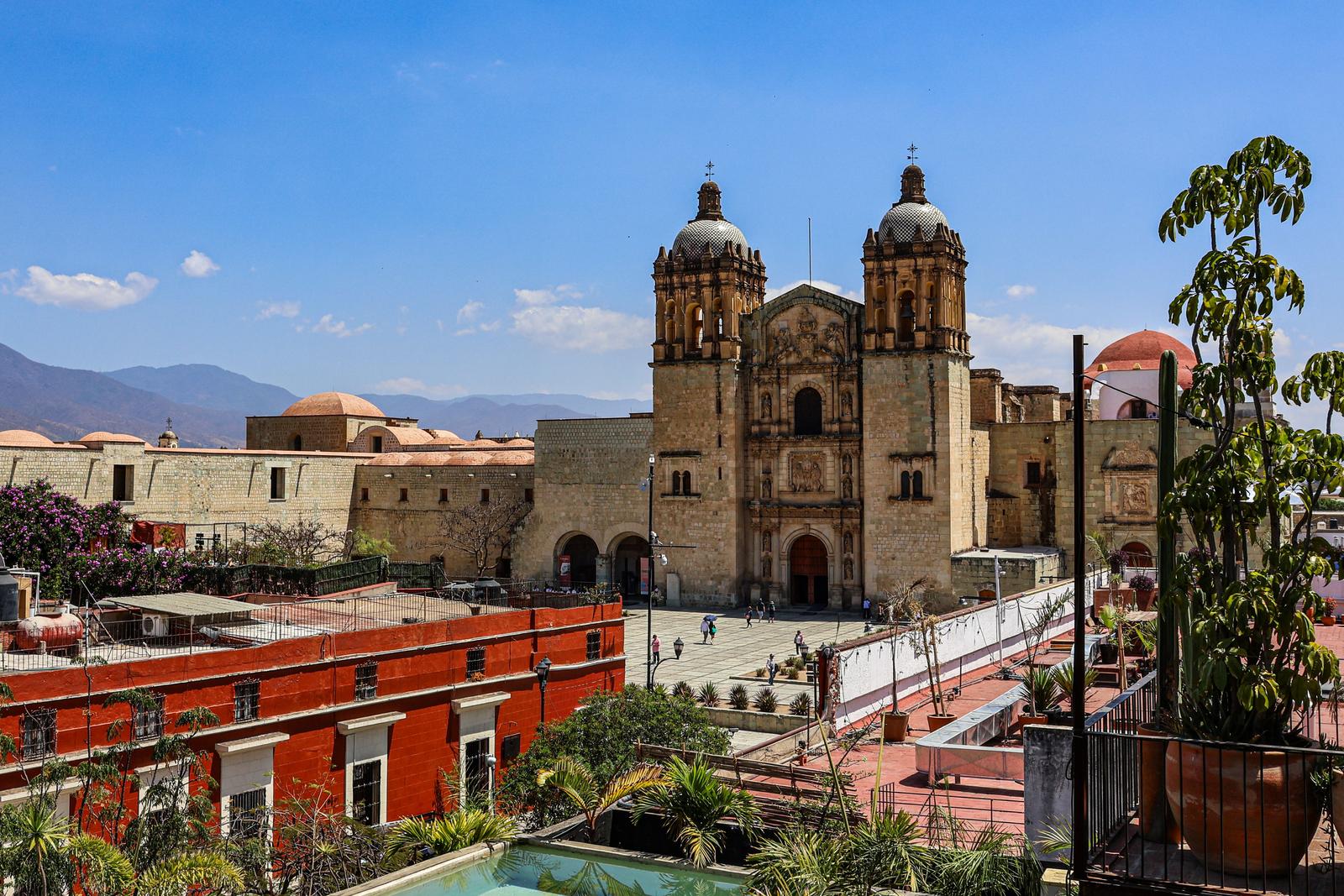
A confident rooftop sweep that celebrates Oaxaca’s textures but fights midday clutter.
Thanks Susan. Your frame reads as travel/architectural work from a terrace, aiming to show the city’s character with the twin-towered church, terracotta roofs and distant mountains. That intent comes through clearly. The layered vantage point is a strength, especially the white promenade guiding the eye toward the plaza where small figures add scale. What story did you want the viewer to feel from this roof—quiet overview of place, or the life happening both on the terrace and in the square?
TECHNICAL EXECUTION ★★★★
The file looks clean and sharp across the frame, with natural colour and no sign of heavy processing. Tonal range is handled well for a bright day; the stonework holds detail and the sky isn’t over‑pushed. There is mild perspective tilt on the church towers (a touch of keystoning) that suggests a moderate wide angle from an elevated position; this is fixable in post. I don’t see distracting noise or artefacts, which points to a low ISO and sensible exposure. To reach five stars, keep verticals perfectly straight and tidy minor distractions with careful cloning so the polish matches the strong capture.
COMPOSITION ★★★
The central church anchors the scene well and the long white wall acts as a subtle leading line into the square. Layering from terrace plants to rooftops to mountains creates depth and a good sense of place. However, the right edge is messy: the green pole and half‑cut potted tree intrude into the sky, and the cropped pool at the bottom feels accidental rather than intentional. Left‑side rooftop clutter also competes with the main subject. A small step left and slightly higher viewpoint would clear the pole, let the white wall drive the eye more assertively, and either feature the pool as a strong foreground shape or exclude it entirely.
LIGHTING ★★★
This is classic midday sun: bright, clear and informative, but short on mood. Contrast is high, giving deep courtyard shadows and a slightly chalky feel to the stone facade. The light doesn’t sculpt the building’s form as much as it could, and the sky reads as a simple blue sheet. Returning at golden hour or blue hour would bring warm side‑light or a glow from interior lamps, adding relief to the masonry and separation from the sky. A polariser at this time of day could help the sky and foliage, but use it gently to avoid uneven blue gradients.
STORY ★★★
The photo communicates where we are and hints at daily life through the small figures in the plaza—solid, descriptive storytelling. It stops short of a moment, though; the people are too small to carry a narrative and the terrace life in the foreground is only suggested by plants and railings. Waiting for a single cyclist, a couple crossing the square, or some activity along the white promenade would have given the frame a heartbeat. Alternatively, including a subtle foreground gesture from the terrace—someone’s hand on a railing or a waiter passing—could link viewer to vantage point and city below.
IMPACT ★★★
It’s a pleasant, publishable postcard of place with clean detail and honest colour. The composition’s cluttered edges and the flat light keep it from being memorable. Stronger edge control and a human moment, or a return in richer light, would raise the image from record to statement. With those refinements this viewpoint could absolutely deliver a standout frame.
CONSTRUCTIVE NEXT STEPS
- Correct perspective and tidy edges: in Lightroom use Transform > Guided Upright to straighten the church verticals, then crop a sliver from the right to remove the pole and clone the small metal posts/wires that poke the sky.
- Commit to the foreground: move 1–2 metres left and slightly higher so the white wall forms a clear diagonal to the church; either frame the pool as a bold bottom‑third shape, or exclude it completely to reduce clutter.
- Chase better light and a moment: return at golden/blue hour, expose −0.3 EV to hold sky detail, and wait for a single passer‑by on the promenade or plaza; use 1/250–1/500 s to keep them crisp against the stone.
- Consider lens choice: a short tele (70–100 mm) will compress layers and simplify the scene from this roof, or use a tilt‑shift to control verticals in‑camera if available.
AI Version 2.12