A strong idea — the clash of eras — let down by timid framing and midday light.
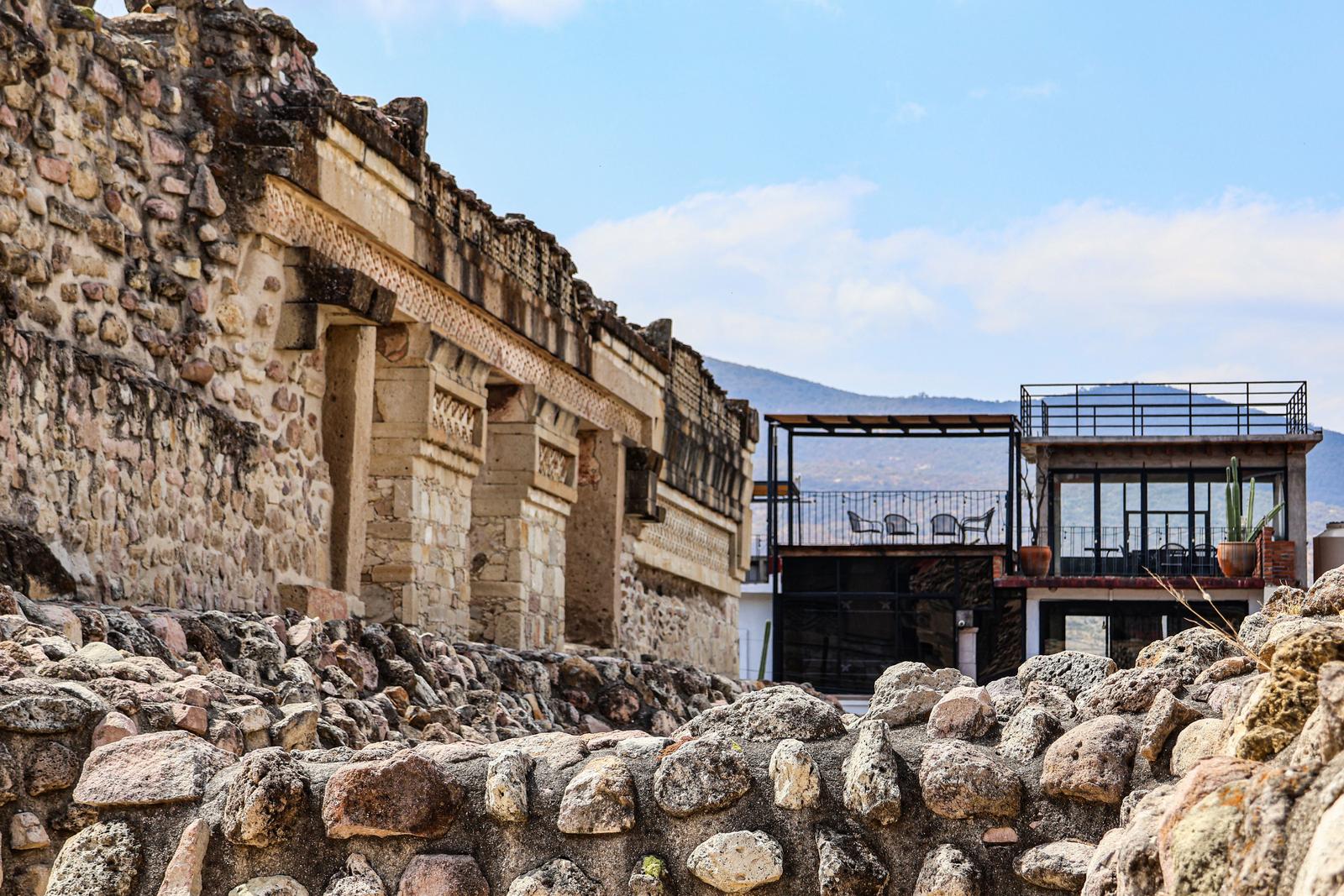
That contrast is the clear heart of this picture, and it’s a good instinct. You’ve placed the weathered ruin on the left against the crisp glass-and-steel building on the right, which immediately communicates “old versus new.” This sits between travel and architectural work, and judging it that way helps: we need clean lines, intentional perspective, and a moment that says something about the place. Right now the execution is descriptive rather than decisive — plenty of texture, but little tension. What would happen if a person appeared on that balcony, or if the light raked across the stone to bring the patterning alive?
TECHNICAL EXECUTION ★★★
Exposure is safe and detail holds across the frame; the sky isn’t clipped and the stone retains texture. Focus looks solid on the main ruin wall, with the foreground rocks a touch soft — fine, but it doesn’t add much. There’s a hint of keystoning and lean on some verticals that could be corrected in post to strengthen the architectural feel. Colour is natural and pleasantly muted, though a polariser would have cut glare off the stones and deepened the sky slightly. To hit five stars here you’d want crisper edge‑to‑edge sharpness, straighter verticals, and more deliberate control of reflections.
COMPOSITION ★★
The concept is clear, but the frame feels crowded and a bit indecisive. The modern building on the right is tight to the edge and partially cropped, which weakens its role as the “new” counterpoint. A large slab of rocks at the bottom eats space without guiding the eye; it’s dead weight rather than a lead-in. The ruin’s repeating friezes do create a natural line into the distance — that’s your strongest compositional asset — but the image would breathe more with either a cleaner gap between the structures or a lower angle that lets the ruin lead directly toward the condo. How would a step to the right and a slight lower viewpoint change the relationship between the two buildings?
LIGHTING ★★★
The light is serviceable: bright, even, midday sun that shows everything but doesn’t shape it. Textures are readable, yet the scene lacks depth because shadows are short and contrast is modest. Early or late light would cast long shadows under those cornices and warm the stone, adding dimensionality and mood. Alternatively, blue hour with interior lights in the modern building would heighten the dialogue between eras. A touch of local contrast on the carved banding could also help the existing light work harder.
STORY ★★
The idea of “ancient versus modern” is present, but there’s no moment to make it land. Empty chairs and an empty ruin read as a catalogue of objects, not a lived place. A person on the balcony, a guide walking through the ruin, or even a flag of laundry or plant shadow would add life and a point of connection. Right now it could be any day, any hour, anywhere with ruins beside development. What small human element could you wait for that would be respectful to the site yet activate the scene?
IMPACT ★★
The juxtaposition is interesting but the photograph doesn’t hold attention long. Cropped edges and flat light blunt the idea’s punch, and the generous foreground rubble dilutes the visual conversation between the two structures. With stronger framing and time-of-day choice this could feel pointed and memorable. Aim for a cleaner, bolder statement where every element earns its place; that’s what would lift it into the “stop and look again” category.
CONSTRUCTIVE NEXT STEPS
- Reframe on location: step a metre or two right and drop your camera height so the ruin’s wall becomes a leading line toward the condo; leave breathing room on the right so the modern building isn’t clipped.
- Return for more intentional light — golden hour for warm side‑light on the carvings, or blue hour when interior lights in the condo create a clear old/new contrast.
- Wait for a respectful human element (someone on the balcony or a site worker walking through the arch) to give the scene a moment and anchor.
- In post: crop 10–15% off the bottom to reduce the dead foreground, apply subtle perspective correction to straighten verticals, and add a gentle local contrast/dodge to the carved frieze; clone the thin stick/weed at lower right.
AI Version 2.12