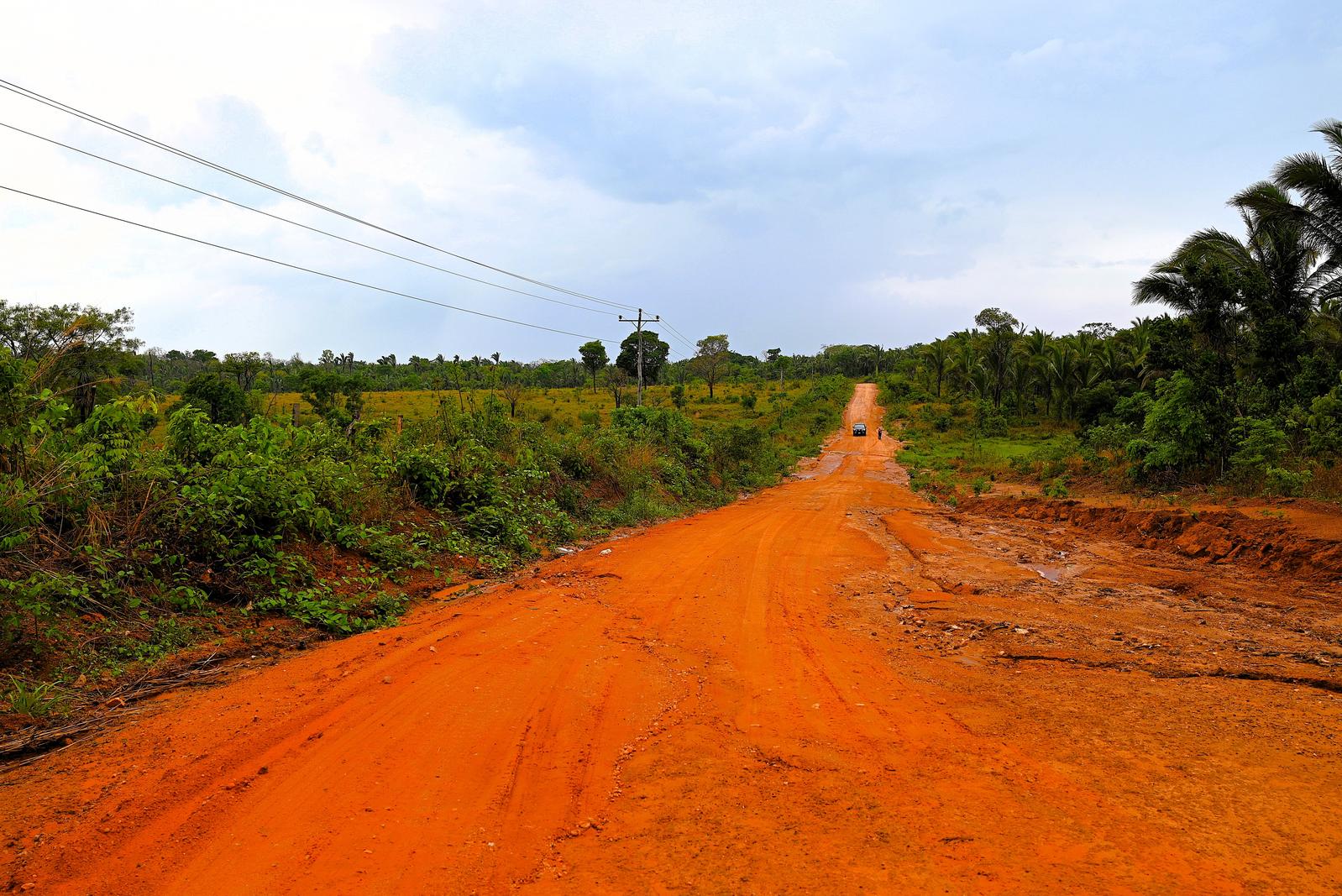
A strong leading line and raw colour carry this scene, but the moment and polish aren’t quite there yet.
You’ve clearly prioritised the red earth and the approaching weather, and the photograph delivers that. The dirt road is the strongest element—it pulls the eye from the bottom frame all the way to the distant vehicle, and the wet ruts add texture that hints at recent rain. This sits between travel and landscape: a sense of place with a wide view. Where it falls short is that the sky isn’t quite “angry” enough to carry mood by itself, and the tiny car gives scale but not story. Did you consider waiting for that vehicle to come closer, or changing to a vertical frame to let the road dominate and the car become a clear anchor?
TECHNICAL EXECUTION ★★★
Exposure is well controlled: the bright sky holds enough detail and the land isn’t blocked up. Focus appears consistent across the frame, and the fine texture in the ruts reads cleanly, suggesting a sensible aperture and steady technique. Colours lean heavy—especially the orange-red soil—which may be faithful to the place but looks a touch pushed in saturation and warmth. If this was boosted in post, it nudges the image toward an overly punchy look and away from the earthy palette that suits this subject. There are no obvious artefacts or noise issues. To reach five stars you’d need more restrained colour work and a crisper, more deliberate tonal separation between road, greenery and sky.
COMPOSITION ★★★
The centred road is a clear, effective spine that gives depth and direction, and the small vehicle provides a useful sense of scale. However, there’s a lot of empty foreground road and a fairly plain top strip of sky; the frame feels stretched vertically without enough payoff in either area. The power lines cutting in from the top-left drag the eye away from the road and don’t add meaning here. A lower viewpoint or a vertical composition would strengthen the leading line and reduce the bland sky. Cropping a little from the top and left would also tighten attention. Five stars would require a more intentional balance of foreground/sky and cleaner edges without those distracting wires.
LIGHTING ★★★
The soft, pre‑storm light renders colour and texture evenly and avoids harsh contrast, which suits the subject. That said, it’s a bit flat; the scene lacks the modelling and micro‑contrast that make landscapes sing. A few minutes earlier or later—when cloud edges break or directional light skims the earth—could have added shape to the ruts and trees. The sky itself doesn’t carry much structure; it reads as a pale wash rather than the brooding weather you describe. Consider using subtle local dodging and burning to build depth in the road and mid‑distance foliage. For a five‑star result, you’d want either more dramatic weather light or a decisive moment that compensates for the flatness.
STORY ★★
This is descriptive rather than narrative. I learn about the place—the red soil, greenery, and a long rural road—but I don’t feel a specific moment. The distant car hints at travel and isolation, yet it’s too small to become a character. The power lines imply human presence but don’t carry meaning. Waiting for that vehicle to crest the rise, or including a person, bike, or animal interacting with the road, would turn this from “a view” into “a moment.” What would have been the one gesture or interaction that said “storm coming” without needing a caption?
IMPACT ★★★
The bold colour of the soil and the strong vanishing point make this pleasant to look at and easy to read. Still, it lands as a competent record rather than a memorable photograph. The flat sky and small human element limit its staying power, and the slightly hot colour temp pushes it toward a postcard feel. With a clearer subject moment or more intentional light, it could become a striking travel image. Aim for either stronger weather drama or a human-scale interaction to elevate it.
CONSTRUCTIVE NEXT STEPS
✓ Revisit the frame as a vertical and lower your viewpoint so the ruts and road texture dominate; keep the horizon around the top third to minimise the dull sky and amplify depth.
✓ Wait for a subject to carry the story—a truck, motorbike, or walker entering the light on the rise; let them occupy roughly 1/10–1/8 of the frame so they read clearly without losing the landscape.
✓ In post, cool the white balance slightly and pull down orange saturation in HSL by 5–10%; then apply gentle local dodging/burning to the road and mid‑distance trees to build depth without HDR look.
✓ If returning, step a few metres right to exclude the power lines, or frame tighter to the road’s edges; failing that, clone the wires in a travel, not journalistic, context to clean the top-left distraction.
AI Version 2.1