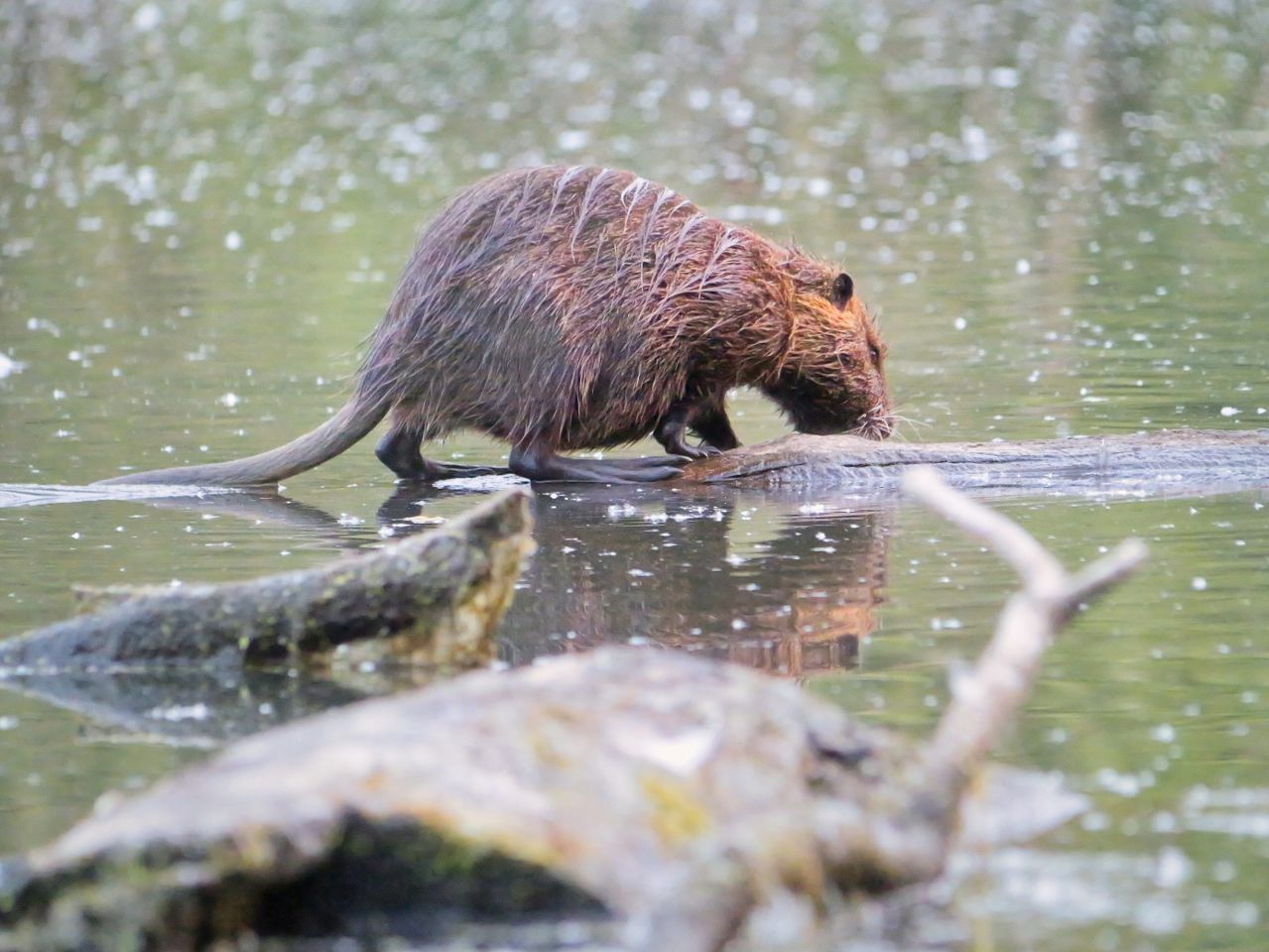
A calm wildlife moment with good habitat context, but the foreground takes more attention than it earns.
The short answer: it’s more distracting than leading. The large, bright, out‑of‑focus log across the bottom third is the first thing my eye hits, and the pale branch on the right keeps pulling me back to it. Your subject — the wet rodent moving along the mid‑frame log — is interesting and well observed, but these foreground elements compete with it rather than guide us in. In wildlife terms this is a behaviour portrait, and the quiet foraging gesture is nice; the scene would breathe better if the foreground were lighter, smaller, or more deliberately shaped. A tighter crop from the bottom (and a touch from the right) helps, but the ideal solution would have been a small shift in position to exclude that nearest log altogether or to use it as a clean, deliberate frame.
TECHNICAL EXECUTION ★★★
Exposure is well controlled with natural, muted colour that suits the damp environment. The subject looks acceptably sharp, though not tack‑sharp at the eye; at full size it feels a touch soft, likely from slight subject movement or AF grabbing the shoulder fur. Noise is kept in check and the water texture holds together nicely. There’s no evidence of heavy processing, which is good. To hit the top tier here you’d want crisper micro‑detail in the face and a clean catchlight — think single‑point AF on the eye and a faster shutter (around 1/800–1/1000s) with Auto‑ISO to keep motion from softening fine fur detail.
COMPOSITION ★★
The animal is placed sensibly along the log, but the bottom foreground log is so large and bright that it dominates the frame. The pale stick on the right mid‑ground points inward and competes for attention, while the subject has limited space to “move into” on the right edge — it feels a bit cramped in the direction of travel. The strongest line here is the animal’s log; if that had been allowed to run clean and unchallenged, the photo would read faster. A crop removing roughly the bottom 15–20% and a sliver off the right improves balance immediately. In the field, a step left or higher vantage would likely have separated the subject from the closest log and simplified the layers.
LIGHTING ★★★
Soft, overcast light is kind to wet fur and water, avoiding harsh hotspots. However it’s quite flat, so the animal lacks a little shape and sparkle; there’s no catchlight to anchor the face. A touch of side light at golden hour would add texture and warmth to the coat and help the subject stand off the background. In post, a restrained local dodge on the eye and muzzle, plus a small contrast lift on the subject only, would add presence without betraying the natural feel. To reach five stars you’d need more directional light that sculpts the form while keeping the water subdued.
STORY ★★★
The behaviour is clear: cautious foraging along a floating log, which gives a sense of place and species habits. The wet coat and low waterline sell the environment well. What’s missing is a stronger moment — a lifted paw, a glance toward camera with a glint in the eye, or a small splash to give tension. Because the head is down and the eye is dim, the emotional connection is modest. How long did you wait there, and could a few more seconds have yielded a head‑lift or change of gesture?
IMPACT ★★
As it stands, the image is pleasant but easy to scroll past because the foreground pulls energy away from the subject and the moment is gentle rather than gripping. Simplifying the frame and landing sharper focus on the eye would raise its presence considerably. A cleaner leading shape in the foreground — or none at all — plus a clearer gesture would make it more memorable. With those refinements this could move from a decent record to a frame that holds attention.
CONSTRUCTIVE NEXT STEPS
- Reframe or crop: remove roughly the lower 15–20% and a small slice from the right to reduce the dominance of the foreground log and give the subject more visual “runway”.
- Prioritise the eye: use single‑point AF on the eye and raise shutter to around 1/800–1/1000s (Auto‑ISO as needed) to ensure crisp facial detail when the animal pauses.
- Field position: a small step left/right or slightly higher viewpoint would likely eliminate the closest log or turn it into a clean, darker shape rather than a bright blob.
- Subtle local edits: gently dodge the eye and muzzle, add a mild clarity/texture boost to the animal only, and clone the bright stick on the right and the few brightest water flecks that steal attention.
AI Version 2.12