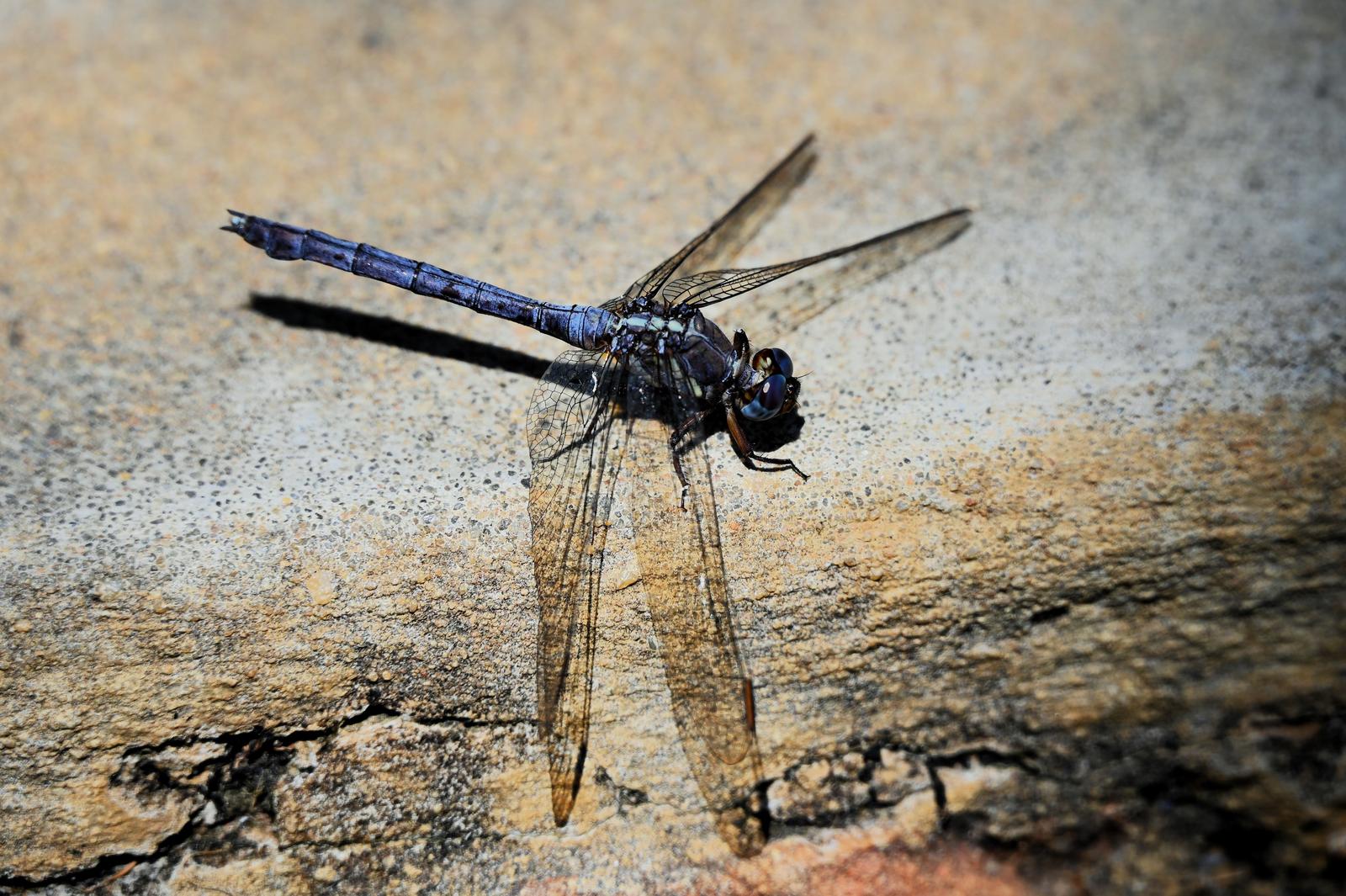
A crisp dragonfly study with gritty texture, but the mood fights your “apocalyptic” goal.
Thanks, PAT. If the aim is an apocalyptic feel, this close-up (macro/wildlife) of a dragonfly on sun‑baked stone has a promising starting point—the cracked rock and the insect’s long shadow hint at heat and desolation. Right now, though, the bright midday light and warm tones read more like a hot afternoon than end‑of‑days. An apocalyptic mood usually leans darker, desaturated, and oppressive, with harder edges or cold colour. What drew you to shoot it in full sun rather than during late light or shade where you could control tone and gloom? With a few choices in camera and in post, you could steer this in that direction.
TECHNICAL EXECUTION ★★★
Focus is decent along the abdomen and thorax, and the wing venation holds good detail. Exposure is serviceable, but the sunlit rock pushes the histogram to the right and flattens the tonal range, which works against the mood you want. I can see some specular glare on the wings and rock that suggests hard, undiffused light; a small diffuser or open shade would have preserved texture. Noise is controlled and there are no obvious artefacts. To reach five stars here you’d want controlled light (diffused or angled), a cleaner micro‑contrast on the eye with a tiny catchlight, and a background that doesn’t compete tonally.
COMPOSITION ★★★
The diagonal placement of the dragonfly works and the cast shadow is a strong secondary element. However, the subject is crowded toward the left edge and the long tail feels a touch pinched—an extra centimetre of breathing room would help. The rock texture is interesting but uniform, so the eye doesn’t rest; the dark fissure bottom‑left tugs attention from the head. Consider either committing to the shadow as a lead (framing wider to include its full length) or going tighter to make the insect fill the frame. A lower angle could also separate the body from the shadow for added depth—did you try dropping to wing level?
LIGHTING ★★
This is harsh midday sun: short, hard shadows and shiny highlights. While hard light can suit a bleak concept, the overall brightness and warm colour cast give a summery feel rather than dread. Side‑light at sunrise/sunset, or diffused flash from above with a dark background, would sculpt the form and let you underexpose the environment for a heavier mood. A subtle rim light would emphasise the outline and wings beautifully. For a five‑star result, aim for deliberate, shaped light that supports the chosen mood instead of fighting it.
STORY ★★
As a natural history record it’s clear—a dragonfly at rest—but the “apocalyptic” idea isn’t landing. There’s no behaviour, motion, or environmental clue beyond hot rock to suggest collapse or threat. Bringing in cracked earth, charred wood, or a shadow that dominates the frame would add narrative tension. Even a slightly lower key treatment with colder tones would change the read immediately. What single element could you add—or remove—to express desolation more clearly?
IMPACT ★★
A competent macro that doesn’t quite stick in the mind. The subject is common, the light is ordinary, and the mood is mixed, so the image is easy to pass over. With stronger atmosphere (cooler palette, deeper shadows) and a more decisive framing of the shadow or environment, this could climb quickly. Originality here will come from mood control and context, not just magnification. Aim to make viewers feel the heat and bleakness the moment they look.
CONSTRUCTIVE NEXT STEPS
- Chase mood in-camera: shoot late or in open shade; underexpose by about −2/3 to −1 stop, and use side light or a small diffused flash to create a rim while keeping the background dark.
- Reframe with intent: give the tail more space on the left and either include the full shadow as a leading shape, or go tighter to let the head and thorax dominate; avoid the dark rock fissure bottom‑left or clone it out.
- Control the backdrop: place the subject over cracked, darker ground or charred wood, or increase subject‑to‑background distance so you can shoot around f/5.6–f/8 for blur without losing key detail.
- Post‑processing for apocalypse: cool the white balance slightly, reduce saturation, add a gentle vignette, and darken the rock with a curves layer while dodging a tiny catchlight in the eye.
AI Version 2.12