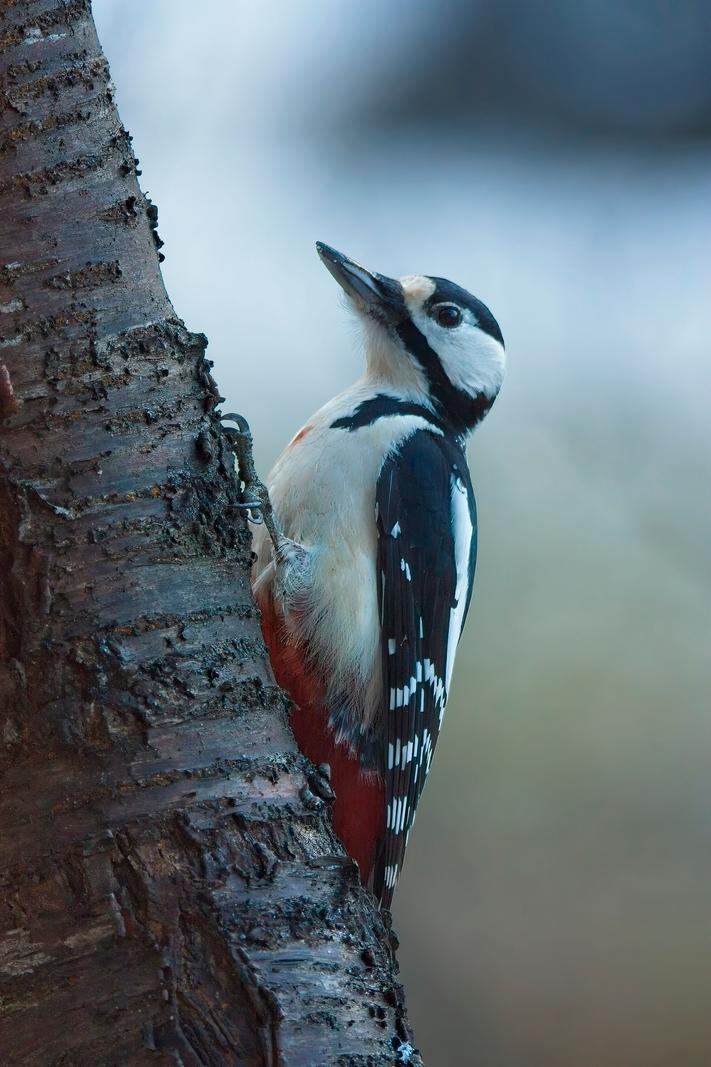
A clean, intimate woodpecker portrait with gentle light and a calm mood.
Thanks for sharing this, Ingel. You’re working in wildlife here, and your frame reads as a respectful portrait rather than an action scene. The sharp eye, rich feather detail and the textured tree trunk on the left are the strongest elements; the neutral, blurred background keeps attention where it should be. To your question: the image is solid as a portrait, but if you were after something more distinctive, you’ll need either a stronger behavioural moment or bolder light. I’ll break down what’s working and where a different approach could lift it. As you read, consider: were you aiming for a pure portrait, or did you intend to show behaviour like drumming or feeding?
TECHNICAL EXECUTION ★★★★
Focus looks nailed on the eye and face, with crisp feather detail and no obvious noise or artefacts—good field craft and steady handling at a likely long focal length. Exposure is well controlled; the white cheek and breast retain texture without obvious clipping, which can be tricky on this species. Colour is natural and not over-saturated, which suits the subject. I do see a slight cool cast in the whites and a tiny softness toward the belly and tail, likely from depth of field fall-off—minor, but it keeps this from perfection. Processing appears restrained; a touch more micro-contrast on the head could add bite without tipping into harshness. To reach five stars, I’d like to see impeccable sharpness across the critical plumage and a touch more sparkle in the eye via a stronger catchlight.
COMPOSITION ★★★★
The vertical format suits the bird’s posture, and the trunk on the left acts as a natural frame that explains the behaviour of clinging. Placing the bird toward the right with open space ahead works, given the slight upward gaze. The background is clean and unobtrusive, which helps the subject stand out. The trunk is visually heavy, though; it competes a little with the bird’s body for attention, and the tail feels close to the bottom edge. A subtle trim from the left (or shooting a half step right in the field) would lighten that mass and centre the attention more firmly on the bird. For a five-star composition, I’d want slightly more breathing room around the tail and beak and a cleaner, lighter slice of trunk.
LIGHTING ★★★★
Soft, overcast light is kind to the whites and reveals texture in the bark and feathers without harsh contrast. There’s a small catchlight, which is important, though it’s subtle—eye contact could pop more with a brighter specular highlight. The colour temperature leans cool, which matches the quiet mood but mutes warmth in the red undertail coverts. This is reliable, flattering light; it just isn’t dramatic. To elevate, consider golden-hour side light for shape, or gentle backlight to rim the bird’s outline and separate it from the background while protecting the whites with slight negative exposure compensation.
STORY ★★★
It’s an honest, calm portrait that shows the species clearly in its habitat. The upward tilt of the head suggests alertness, but we’re not witnessing a distinctive behaviour. There’s no feeding action, drumming, or interaction with a nest hole—moments that would instantly deepen the narrative. As it stands, it’s a sound record of the bird rather than a frame that holds you for its moment. What behaviour were you waiting on—did you see any flashes of wood chips flying or tongue extension that you could time for next time?
IMPACT ★★★
The image is pleasing and competent, the kind many birders would enjoy, but it sits among a large pool of similar woodpecker portraits. The gentle light and clean bokeh make it easy to like, not necessarily hard to forget. A more expressive gesture, dramatic light, or a rarer behaviour would lift it into a category that stops viewers longer. To hit five stars, pair this level of technical control with either peak action (chips flying) or luminous light that adds mood and shape.
CONSTRUCTIVE NEXT STEPS
- Prioritise behaviour: wait for drumming or feeding and use two approaches—1/2000s to freeze flying chips cleanly, or 1/80–1/125s with support to keep the eye sharp while the beak blurs for a sense of motion.
- Refine the frame: in the field, move a half-step right to reduce the visual weight of the trunk and give a touch more room above the beak and below the tail; alternatively, crop a little from the left in post to balance the mass.
- Enhance the eye subtly in post: a small, soft dodge on the catchlight and iris, plus a gentle clarity boost on the head feathers, will guide attention without looking processed; warm the whites by 200–300 K to counter the cool cast.
- Chase sculpting light: work early/late and angle for side/backlight that creates a rim on the bird; use −0.3 to −0.7 EV to protect the white plumage and maintain detail.
AI Version 2.12