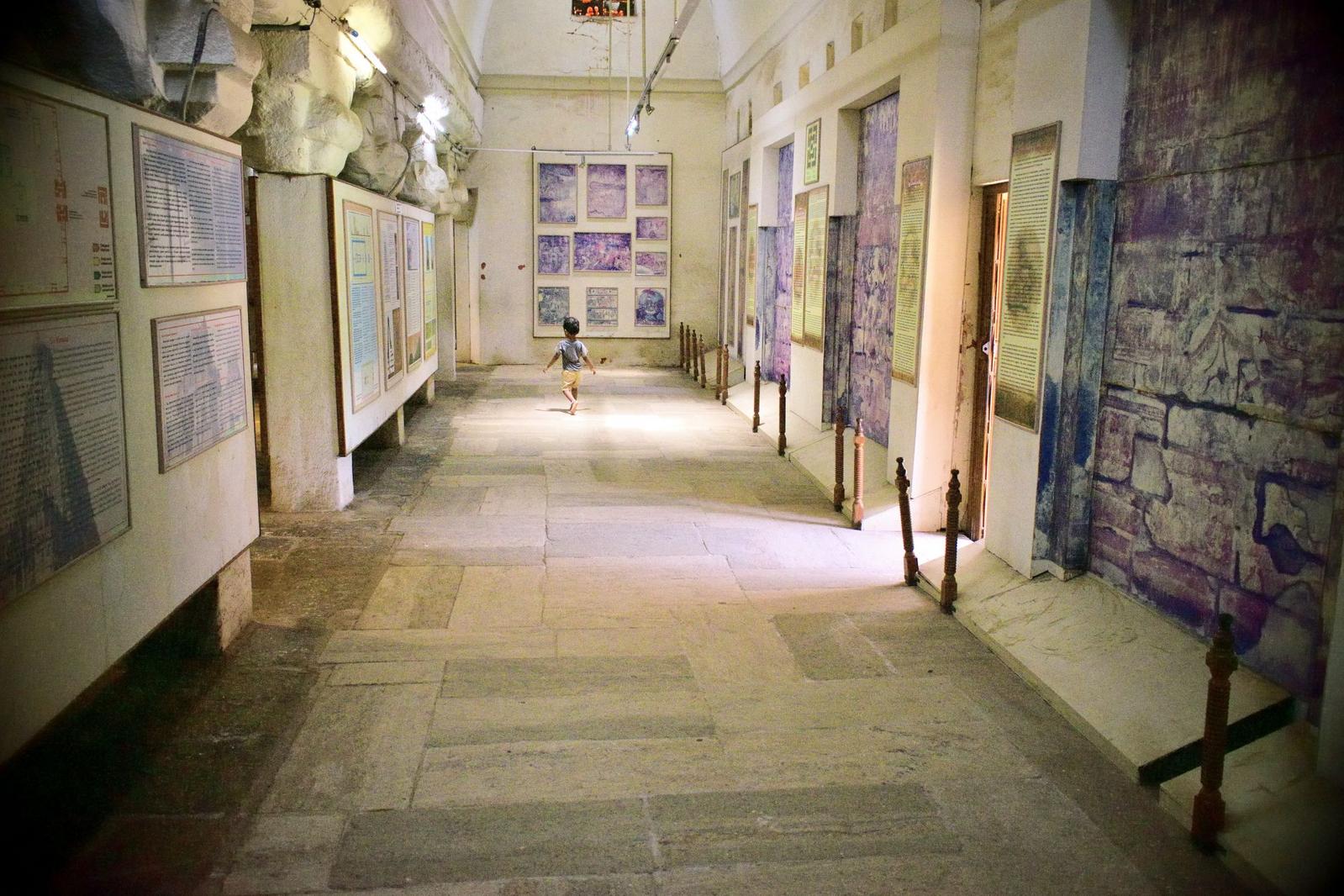
A tender scene with strong lines and a small figure that hints at memory, but the moment keeps its distance.
Rajesh, this sits reasonably well with “Chronicles of memory”: a child wandering a history-lined corridor is a natural metaphor for remembrance and learning. As a travel/documentary interior, the place is clear and the boy at the vanishing point gives scale and a sense of curiosity. For a competition, though, judges will look for a moment that ties “memory” to the subject more directly — a glance up at a panel, a hand reaching to touch, or a gesture that connects the child to the past around him. Right now it reads more as a well‑seen space with a small figure than a decisive moment. Did you consider waiting until he engaged with one of the displays or moving closer so his presence carried more emotional weight?
TECHNICAL EXECUTION ★★★
The exposure is broadly safe and the corridor retains detail throughout, with a pleasing pool of light around the boy. Mixed lighting is the main technical issue: cool fluorescent tubes on the left and warmer spots on the right create inconsistent colour — the purple cast on the right panels feels heavy. The child shows a hint of motion blur, which is fine if intentional, but if you wanted him sharper you’d need roughly 1/160–1/250s in this light. There’s mild shadow noise and a touch of softness towards the edges, likely from a higher ISO and wider aperture indoors. In post, a custom white balance and selective colour correction would unify the scene; local highlight control on the lamps would reduce hotspots.
COMPOSITION ★★★
The central perspective and converging lines guide the eye neatly to the boy — that’s the strongest aspect. However, there’s a lot of empty floor in the bottom third that dilutes the subject’s presence, and the bright window and tubes near the top edge pull the eye away from the centre. A tighter crop from the bottom by about 15–20% and a small cut from the top to remove the window would strengthen focus. Alternatively, getting physically lower and closer would amplify the child against the towering walls, reinforcing the theme of memory and scale. How would the frame feel if you’d waited until he reached the cluster of framed images at the back and placed him slightly off‑centre?
LIGHTING ★★★
Available light gives a gentle spotlight on the floor where the boy walks — a nice touch — but the scene suffers from mixed colour temperatures and several bright sources in frame. The fluorescent tubes on the left create cool highlights and visible glare, while the right wall drifts magenta. This muddles the mood and flattens texture on the stone panels. In a contest print, the colour inconsistency will stand out more than online. A Kelvin WB around 3200–3600K, plus selective HSL to pull down magenta/purple and a subtle burn on the lamps, would produce calmer, more coherent tones.
STORY ★★★
The concept is clear: a young child in a hall of history. It suggests curiosity and the passing of knowledge between generations, which fits “Chronicles of memory.” What’s missing is a specific, telling gesture — he’s mid‑stride and turned away, so we don’t get the spark that makes the narrative personal. If he paused to study a panel, reached out, or looked back, the story would land with far more emotion. Could you anticipate that beat and commit to it, even if it meant waiting an extra minute at the same spot?
IMPACT ★★★
The image is pleasant and quietly thoughtful; the geometry and scale work. It doesn’t quite stop the viewer, mainly because the frame carries small distractions and the human moment is distant. With a cleaner top edge, less foreground, unified colour, and a stronger gesture from the child, this could reach a more memorable level. For a themed contest, polish and timing will decide whether it stands out among similar entries.
CONSTRUCTIVE NEXT STEPS
- Strengthen the moment: wait for engagement — the child looking up at a panel, touching a post, or framed within the back wall of pictures — then shoot from lower and closer to emphasise scale and connection.
- Clean the frame: crop 15–20% from the bottom and a little from the top to remove the small bright window and some tubes; clone small hot spots along the left wall if competition rules allow.
- Unify colour: set a custom WB on location or, in post, use a WB dropper on a neutral stone and selectively reduce magenta/purple on the right panels; add a gentle burn to the lamps and a slight dodge on the child to draw the eye.
- Control motion blur: if you want a crisper step, aim for 1/160–1/250s and raise ISO accordingly; if you prefer a sense of movement, commit to it with 1/30–1/60s and ensure the background stays sharp as an anchor.
AI Version 2.12