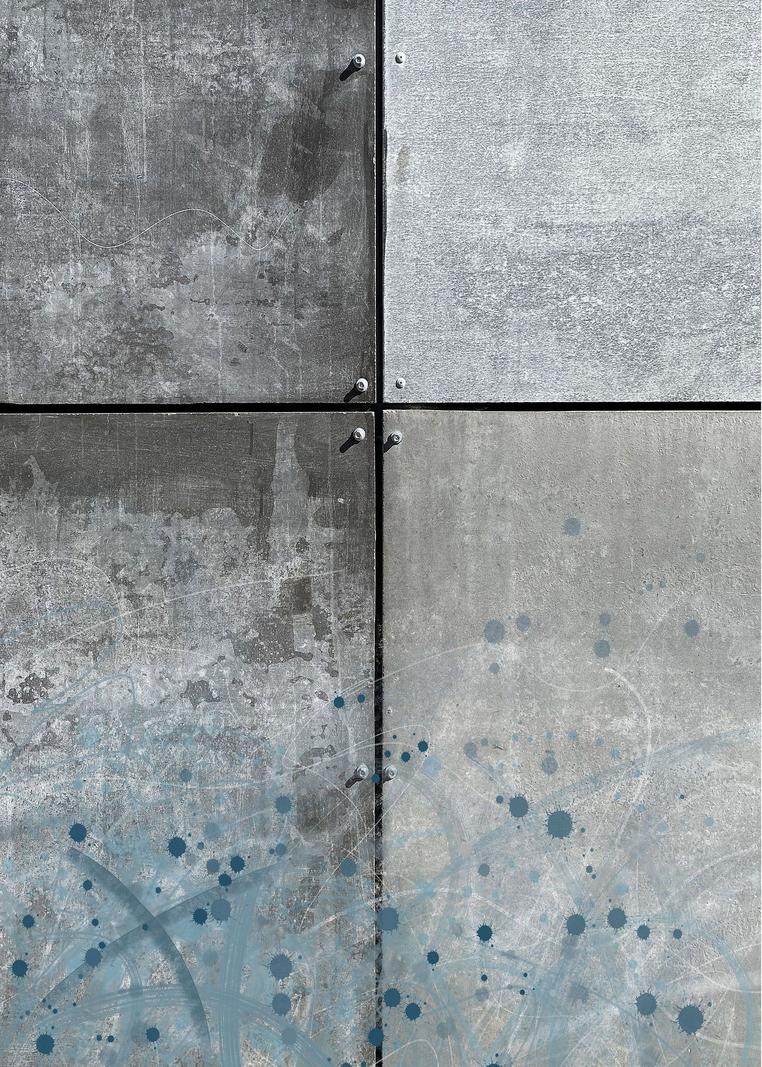
A clean study of concrete geometry with a hint of chaos from the blue paint—strong craft, but light on originality as a single frame.
Thanks for asking directly. Short answer: moderately original. Urban wall details and grid-like panels are a well‑trodden route; what helps your frame is the blue paint spatter creeping in from the bottom, which hints at order versus disruption. This reads as fine‑art/architectural detail. If your aim is a minimalist graphic study, you’re close; if your aim is to say something new, you’ll need either a stronger moment (a shadow, a passing gesture) or more deliberate formal precision to distinguish it from many similar studies. What would you want a viewer to feel beyond noticing textures and bolts?
TECHNICAL EXECUTION ★★★★
Exposure is well controlled: the concrete retains texture across the frame without crushed blacks or clipped highlights. Sharpness looks consistent, suggesting a steady hand or tripod and a perpendicular camera position. Colour is restrained; the muted greys feel natural and the blue splatter isn’t overdone. I see no obvious artefacts or heavy processing. To reach five stars, aim for absolute precision—correct any tiny perspective drift and make sure every screw head and panel edge is tack‑sharp corner to corner, ideally by using base ISO, a sturdy support, and careful micro‑adjustment in post.
COMPOSITION ★★★
The cross where the four panels meet gives a clear structure, and the cluster of bolts near the centre provides a small anchor. The tonal imbalance (darker left panels, lighter right) does add some tension. However, the vertical seam appears a touch off‑centre and the bolts close to the borders feel cramped; this dilutes the graphic strength. The blue splatter is interesting but sits low and dispersed, so it doesn’t counterbalance the top half. Would a square crop with the cross dead‑centre—or, conversely, a bold off‑centre crop that fully commits to asymmetry—better serve your idea?
LIGHTING ★★★
The light is flat and even, which keeps texture readable but doesn’t add much shape or mood. Side‑light at a lower sun angle would carve out the concrete’s grain and the bolt heads, giving the surfaces more bite. As it stands, the scene feels documented rather than sculpted by light. Consider returning when raking light throws subtle shadows from the screws and seams. In post, gentle dodge and burn along the seams could add depth without looking synthetic.
STORY ★★
There’s a hint of concept—industrial order versus random human mark‑making—but it remains abstract and static. No gesture or fleeting moment anchors the idea. A passing shadow, a gloved hand, or a tool laid briefly against the seam could have introduced a human trace and turned this from a texture study into a moment. If your intention is pure form, that’s valid, but then the frame needs near‑mathematical rigour to carry it. What specific story or tension did you want the paint to suggest, and how might you emphasise that within one frame?
IMPACT ★★
It’s tidy and pleasant to look at, but not especially memorable because many photographers explore similar walls, grids and bolts. The blue accents try to add a twist, yet their placement feels tentative. A stronger choice—either a perfectly symmetrical, almost clinical study, or a decisive disruption (light, shadow, or human presence)—would raise the stakes. As a series this could build presence; as a single image it doesn’t quite stick. To hit four or five stars you’ll need either a unique moment or a truly refined formal statement.
CONSTRUCTIVE NEXT STEPS
- Commit to a stance: reframe so the cross sits exactly centre with comfortable margins around the bolts, or go decisively off‑centre; avoid the current “almost” symmetry. A square crop could work well here.
- Return in raking light (early/late) to deepen textures and cast small shadows from the screws; shoot on a tripod at base ISO, f/8–f/11, and fine‑tune with local dodge/burn along the seams for subtle depth.
- If you want originality, wait for a transient element—a passer‑by’s shadow crossing the grid or a hand reaching to a bolt—so there’s a clear moment rather than just a surface.
- Alternatively, pursue a series: collect several panels with different “interruptions” (paint, cracks, repairs) and sequence them to build a narrative of order disturbed; keep tones muted for cohesion.
AI Version 2.12