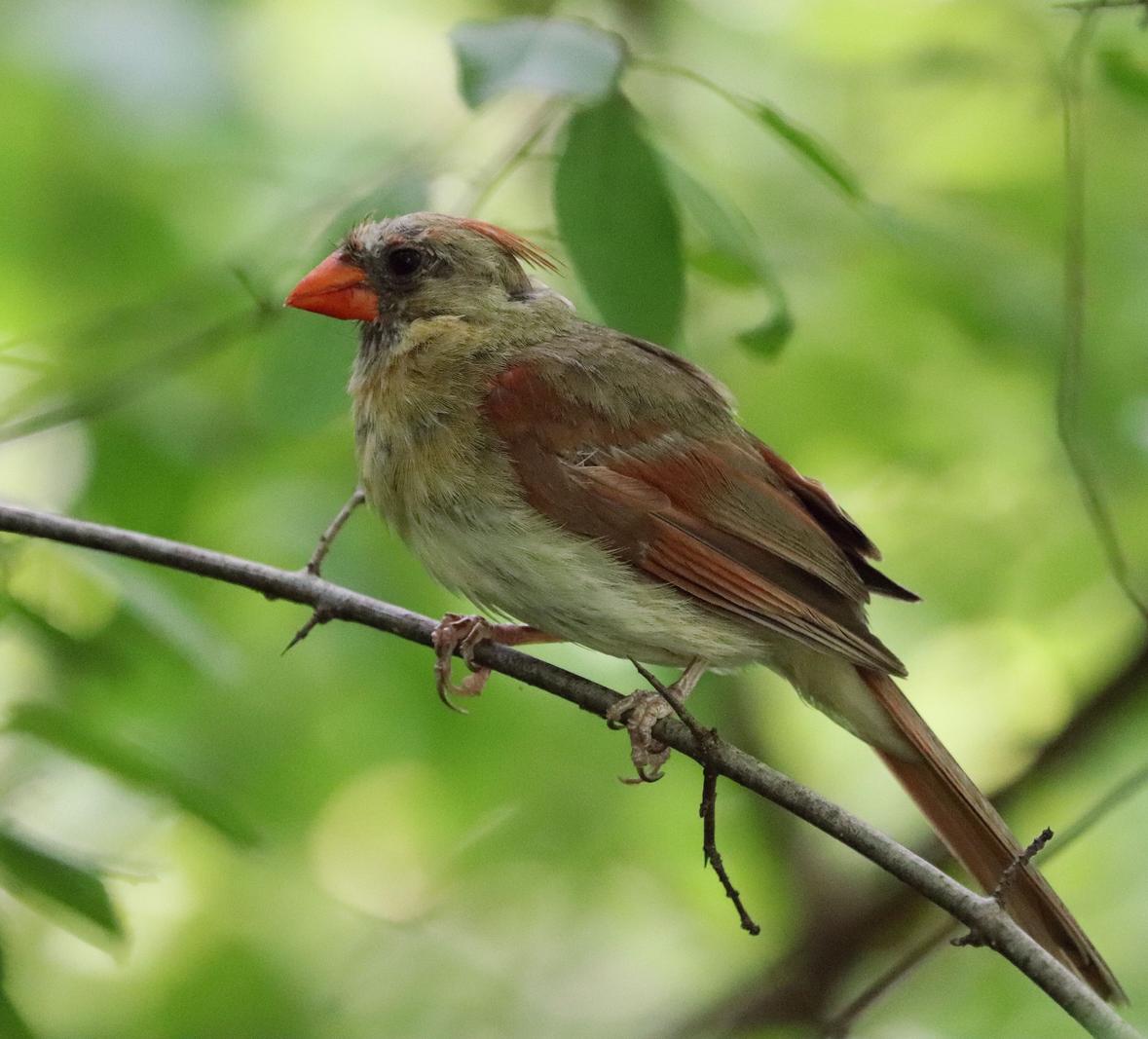
Soft woodland tones and a calm perch create a gentle bird portrait with room to refine focus and impact.
You’ve largely achieved subject isolation through a nicely blurred green background and a clear diagonal perch; this reads as a wildlife portrait. The frame does put the bird first, but the critical focus looks a touch behind the eye, and a couple of bright leaf patches compete for attention. If your intention was to emphasise the bird above everything else, the solution is twofold: nail focus specifically on the eye and simplify what sits around the head. Notice how the small twig beneath the perch and the bright bokeh at the top-left pull the eye away from the beak and crest. How deliberate was your choice of viewpoint—did you try stepping left or right to separate the crest from the leaf hanging above it?
TECHNICAL EXECUTION ★★★
Exposure is well controlled with natural, unsaturated colour and no obvious processing artefacts—good restraint. Detail across the body and wing is decent, though the eye appears slightly soft and lacks a clean catchlight, suggesting AF landed a fraction behind the head. Noise looks fine for the light level, and the background blur is smooth without harsh edges. The shutter speed feels borderline for a small, twitchy subject on a branch; minor movement could explain the softness. For publication-level sharpness on the eye, continuous AF with a single point on the near eye and around 1/800–1/1000s at f/5.6 (ISO as needed) would be safer. A touch of selective sharpening on the head/eye would help, but it can’t fully fix missed focus.
COMPOSITION ★★★
The diagonal perch leads nicely through the frame and the bird’s profile is clean. However, the head is crowded by a leaf above the crest, and the tail meets the right edge, creating a cramped feeling. There’s limited space in the bird’s looking direction (to the left), which reduces breathing room and makes the frame feel slightly back‑weighted. The thin twig under the perch and the bright leaf cluster at top-left tug attention from the face. A looser crop with more room ahead of the beak and fully contained tail would feel more deliberate. Could you have re-framed from a step lower and slightly left to separate the head from background foliage?
LIGHTING ★★★
Soft, open shade keeps colours gentle and avoids harsh contrast—appropriate for this subject. The downside is a flatness around the face; the eye sits in shadow and reads as a dark pool rather than a focal point. A slight change of angle, waiting for the bird to turn toward the light, or catching a tiny glint would lift the expression. The bright hotspot top-left is the only area that feels a touch distracting compared to the rest of the muted background. In post, a subtle radial dodge on the head and a small burn on the brightest background patch would guide the eye where you want it.
STORY ★★
This is a solid species portrait, but the moment itself is quiet and familiar. There’s no visible behaviour—no call, feeding, preen, or interaction—that would elevate it beyond a record shot. The slightly scruffy head feathers hint at character, yet the lack of a catchlight and the subdued pose keep the frame emotionally neutral. Waiting for a head tilt, an open beak, or a quick stretch would add a small but important narrative beat. What behaviour did you observe before and after this frame—was there a moment you passed because of framing or shutter speed?
IMPACT ★★★
The gentle palette and smooth bokeh are pleasing, and anyone who likes birds will enjoy the calm mood. Still, the near‑miss on eye sharpness and the busy touches around the head limit the photograph’s staying power. A cleaner separation, catchlight, and a more open crop toward the gaze would significantly raise presence. As it stands, it’s a nice image with good potential rather than a standout wildlife portrait.
CONSTRUCTIVE NEXT STEPS
- Prioritise the eye: use AF‑C with a single point on the near eye, 1/800–1/1000s, around f/5.6, and shoot short bursts to beat micro‑movement; raise ISO without fear if light is low.
- Reframe for breathing room: give more space in the bird’s looking direction and keep the full tail in frame; step slightly left/right to separate the crest from background leaves.
- Clean the frame in post: clone/heal the thin twig under the perch and subtly darken the bright top‑left hotspot; apply a gentle radial dodge and micro‑contrast on the head/eye only, with noise reduction reserved for the background.
- Wait for a micro‑moment: watch for a head tilt, call, or quick preen; pre‑focus on the perch and anticipate the gesture before you press the shutter.
AI Version 2.12