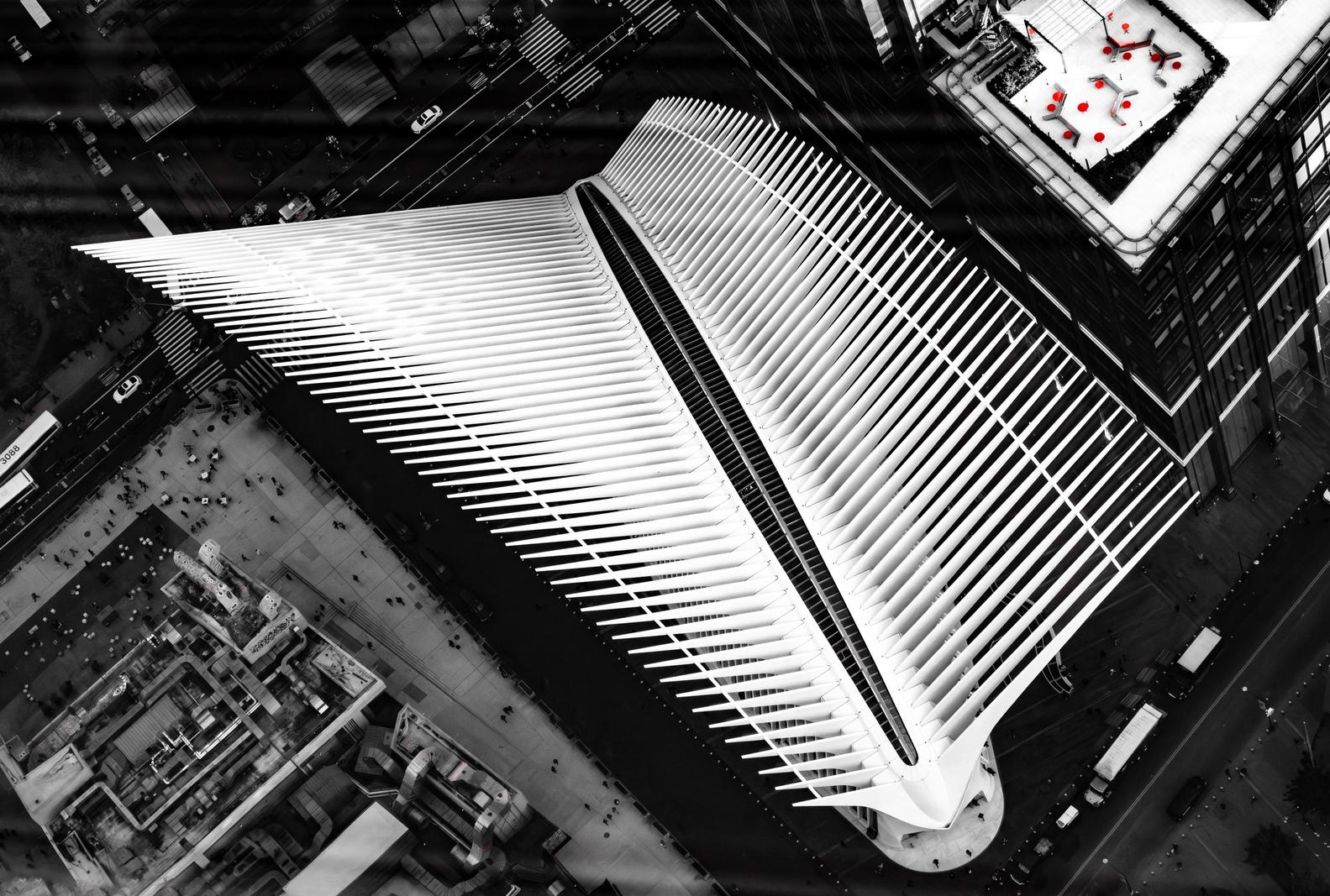
Bold geometry beautifully seen from above, but the selective red weakens the discipline of the frame.
Short answer: the red selective colour is not helping. Your image is a strong piece of architectural photography built on rhythm, symmetry and tone; the splash of red on the rooftop drags the eye away from the spine of the structure and turns a rigorous study into a post‑processing gimmick. What does work very well is the clean, high viewpoint and the way the white ribs carve across the frame on a diagonal; the plaza below provides scale without competing. If your intent is “geometry”, keep the treatment equally disciplined—either a full monochrome conversion or a consistent colour grade across the whole frame.
TECHNICAL EXECUTION ★★
Sharpness and exposure are solid; the ribs hold crisp detail and the blacks don’t block up. However, the selective colour treatment on the rooftop chairs introduces a gimmicky look that undermines the otherwise clean craft. I can also see faint diagonal streaks in the top-left (likely reflections from shooting through glass) which add a patterned haze over the darker areas. These issues cap the technical score despite the good capture. To reach five stars, remove the selective colour, tidy the reflections with careful cloning, and keep processing neutral and consistent.
COMPOSITION ★★★★
The diagonal sweep of the structure is commanding and gives the frame energy. The central seam acts as a strong axis and the repetition of the ribs is satisfying. The main weakness is the rooftop in the top-right: its furniture (especially once coloured) competes for attention, and the small white trucks bottom-right are bright distractions. Cropping slightly from the top-right or rotating a touch so the spine runs precisely corner-to-corner would tighten the idea. Did you want the street context for scale, or would a more abstract crop—removing most of the surrounding city—better serve your goal?
LIGHTING ★★★★
Daylight is even and clean, which suits the graphic intent. Subtle modelling along the ribs creates depth without harsh hotspots, and the dark streets provide contrast that lets the white structure pop. Some areas in the deepest shadows go a touch muddy, and the reflective streaks soften micro-contrast in the top-left quadrant. A gentle curve to lift midtones and a selective burn on the bright vehicles would refine the balance. Returning when low sun rakes across the ribs could add another layer of texture if you want more drama.
STORY ★★★
The image communicates a clear concept: order and rhythm in a complex city. The scattered pedestrians and vehicles give scale and remind us this is public architecture rather than pure abstraction. The selective red suggests a different story—the café roof—competing with your stated intent and diluting the message. Consider whether one small human element placed near the base of the structure would be enough to anchor scale without stealing attention. What emotion or idea about the building did you want the viewer to leave with: serenity, power, or pure pattern?
IMPACT ★★★★
The geometry delivers an immediate hit; it’s a striking viewpoint and the building’s form is showcased confidently. The impact would jump further if the frame were purged of competing cues and processing tricks. As it stands, the red spot becomes the first read for many viewers, then the architecture second. Remove that detour and this becomes a clean, memorable study of urban design. A tighter, colour‑consistent version could be portfolio‑worthy.
CONSTRUCTIVE NEXT STEPS
- Drop the selective colour entirely; go full monochrome (with a gentle warm tone if you like) or keep colour consistent across the whole image via HSL desaturation of reds on the rooftop.
- Crop or retouch the top-right rooftop to remove the café area; alternatively burn it down so the structure remains the brightest element. Also clone/retouch the bright trucks at bottom-right.
- Clean the faint diagonal reflections in the top-left quadrant using the clone/heal tool on a low opacity. Next time, press the lens hood to the glass or use a rubber lens skirt to minimise reflections.
- Consider a small rotation and a slightly tighter crop so the central spine runs precisely corner‑to‑corner, and leave equal breathing room at both tips of the structure.
AI Version 2.12