Calm, warm and tidy — but it needs a stronger subject and moment to compete.
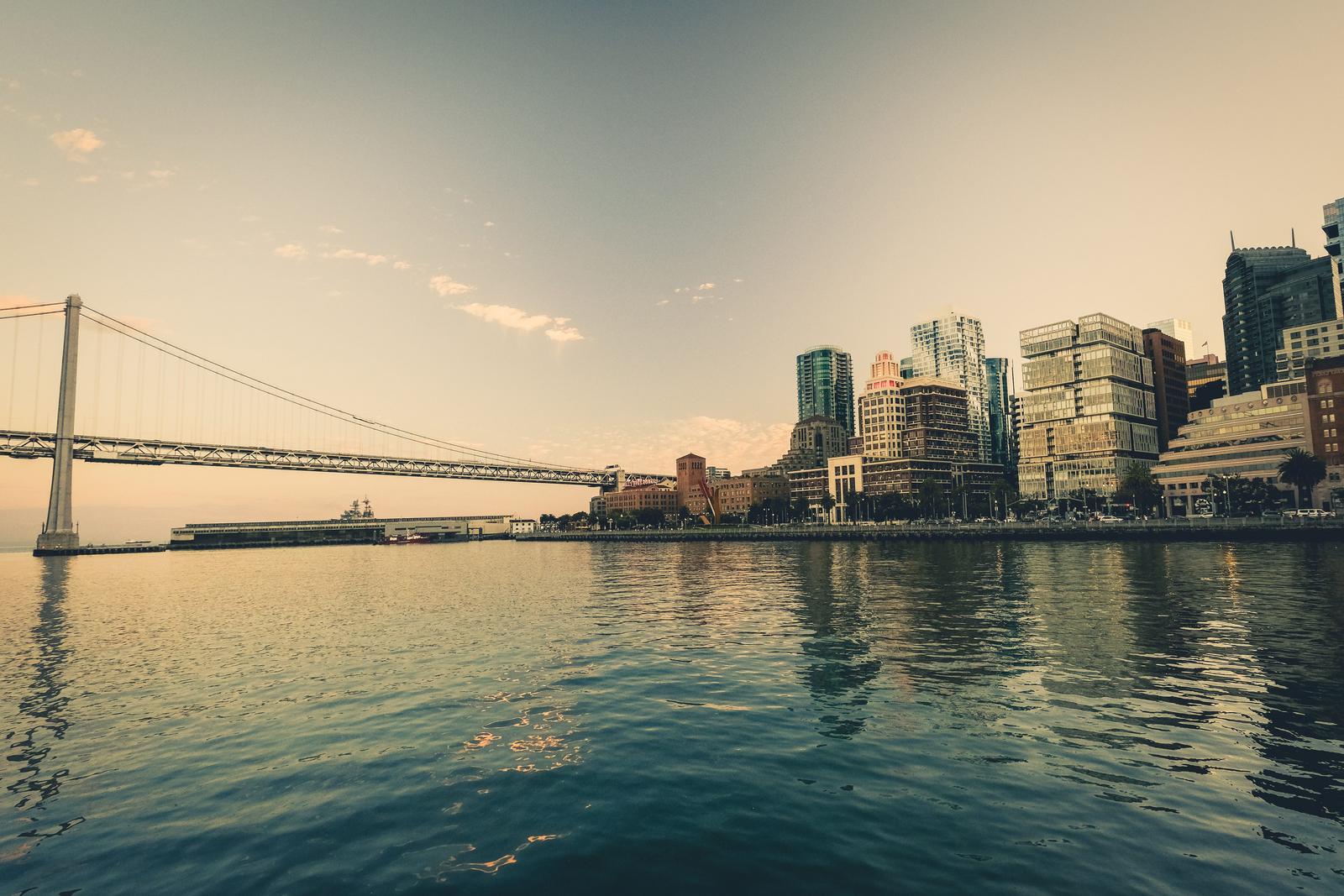
Thanks for sharing this, Sofia. You’ve produced a clean cityscape with gentle golden tones, a straight horizon and the bridge leading neatly into the skyline — a solid base for a competition entry in the travel/architectural space. To place well, judges will look for either a distinctive moment (boat, person, weather) or a compositional decision that feels undeniable. Right now it reads as a pleasant record of place rather than a picture with a centre of gravity. What was your chosen subject — the bridge or the cluster of modern towers — and how could your framing make that choice unmistakable?
TECHNICAL EXECUTION ★★★★
Exposure is well controlled; highlights on the buildings and water are intact and the shadows hold detail. Focus looks consistent across the frame for a wide scene, and there’s no obvious noise or artefacts. The colour treatment leans warm with a slight vintage tint, which suits the mood but risks feeling stylised for competition juries who favour natural rendering. A touch of atmospheric haze softens the distant buildings and bridge steelwork. To reach five stars, neutralise the colour cast slightly and add selective micro‑contrast or a restrained dehaze on the skyline and bridge so the fine structure feels crisp without going crunchy.
COMPOSITION ★★★
The bridge on the left is a strong leading line into the city, but the tower sits very close to the frame edge and feels cramped. There’s a lot of empty water and sky; without a foreground anchor the scene lacks depth and a clear focal point. My eye ping‑pongs between the bridge and the blocky buildings without landing anywhere decisive. A tighter crop from the bottom and a little from the top would concentrate attention and give the skyline more presence. Alternatively, shooting from lower down with a pier post, railing, or moored boat in the foreground would add layering and a stronger path through the frame.
LIGHTING ★★★★
The warm, late‑day light flatters the facades and gives the water a pleasing sheen. It’s soft and even, which keeps the scene calm but also limits drama. Shadows are gentle, so the architecture doesn’t quite pop in three dimensions. If you return at blue hour, city lights and bridge lighting would introduce contrast and colour separation, adding life and depth. Five stars would come from timing that either introduces side‑light with longer shadows, or twilight with lit windows and clean reflections.
STORY ★★
As a travel image it shows where we are, but not what’s happening. There’s no human presence, vessel, or weather event to mark a “when” or “why now.” A ferry crossing the frame, a jogger on the seawall, or morning fog slipping under the bridge would give the picture a reason to exist beyond description. Consider what single element could communicate the rhythm of the place. What fleeting moment would say “this city lives” rather than simply “this city looks like this”?
IMPACT ★★★
It’s pleasant and polished, but this viewpoint is widely photographed, so without a moment or bolder light it’s easy to pass by. The warm grading adds mood, yet the lack of a clear subject keeps it from sticking in the memory. Competitions reward images that either surprise or feel definitive; this sits safely in the middle. With a tighter frame, a foreground anchor, and timed activity or evening lights, it could jump a category. Aim for an image that makes the viewer pause and feel they’re standing there at a particular instant.
CONSTRUCTIVE NEXT STEPS
✓ Refine the frame: crop 10–15% from the bottom and a little from the top; consider trimming the left edge or stepping back next time so the bridge tower isn’t hugging the border.
✓ Return at blue hour with a tripod (ISO 100, f/8–f/11, 1–5 s exposures) to capture bridge and window lights; a small aperture (f/11–16) will give tasteful starbursts on lights.
✓ Add a living element for story — wait for a ferry to pass left‑to‑right under the bridge or include a figure on the waterfront for scale; shoot several frames to place that element cleanly against the water.
✓ Post‑process subtly: cool the white balance a touch, add +10–15 Dehaze or local clarity on the skyline, and gently burn down small bright distractions (e.g., the pale shed near the bridge base and bright highlights on the far‑right waterfront) to keep the eye in the frame.
AI Version 2.1