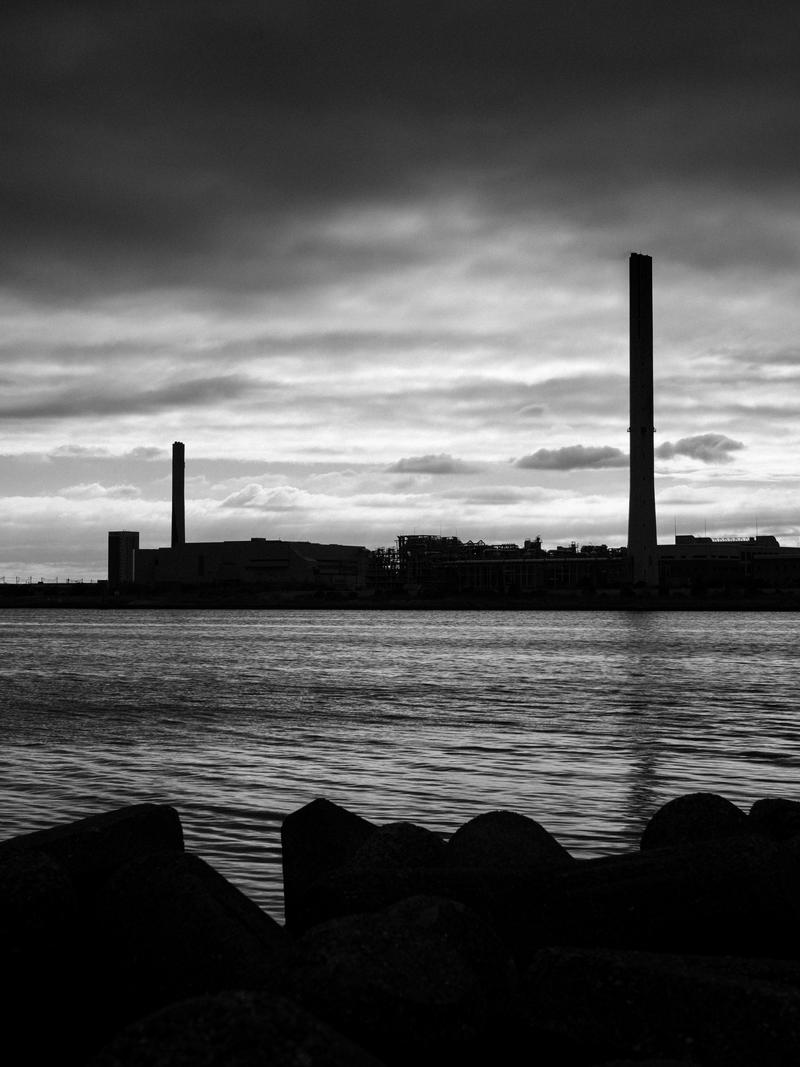
A brooding industrial shoreline with strong graphic shapes and a heavy mood.
Peter, the “darkness/silhouette” idea comes across, mainly through the two chimneys and the deep blacks in the foreground. As a landscape/industrial scene, the mood is bleak and weighty, which suits your theme. That said, the silhouette isn’t as assertive as it could be because the base of the tall chimney merges into the factory mass and the foreground rocks form a big, shapeless block. Tonally the sky sits in a mid‑grey band that doesn’t give the buildings a crisp edge. I’d call it a solid start with room to refine. What feeling of darkness were you aiming for — quiet stillness or something more ominous? Deciding that will help you make bolder choices with framing and contrast.
TECHNICAL EXECUTION ★★★
The exposure handles the bright sky and dark land without clipping highlights, and the water retains texture. The blacks in the foreground are fully crushed, which supports the “in the dark” concept but also reads as a solid blob with no contour; consider whether you want that. Edges on the chimneys look acceptably sharp, and I don’t see distracting noise or artefacts. The tonal range, however, is compressed in the midtones, making the silhouette edges feel a little soft against the sky. A cleaner black point and a slightly brighter white point would give the forms more bite without betraying the mood. To reach five stars you’d need crisper edge contrast and more deliberate control of micro‑contrast in the sky and buildings.
COMPOSITION ★★
The right‑hand chimney is a clear anchor, and its reflection provides a subtle vertical line in the water. But the large mass of dark rocks at the bottom dominates and doesn’t earn its space; they don’t guide the eye, they stop it. The base of the tall chimney merges into the factory structure and horizon, reducing the clarity of the silhouette; a step or two laterally would separate shapes. The horizon sits near the middle, giving the sky and water equal weight without a strong reason. A tighter crop from the bottom (about 20–30%) or a panoramic cut to emphasise the industrial strip would improve balance. For a stronger statement, consider either a vertical framing that features the tall stack and its reflection, or a clean wide frame that eliminates the rocks entirely and celebrates the linear shoreline.
LIGHTING ★★★
The overcast, low‑contrast light supports the sombre theme and avoids fussy detail. There’s a lighter band near the horizon that hints at separation, but it isn’t bright enough to carve the buildings cleanly from the sky. Because the light is so flat, the silhouettes rely entirely on shape, which is why the mergers at the base matter. Waiting for a backlit moment—when a brighter strip opens behind the stacks, or for twilight when the sky lifts slightly—would add definition without abandoning darkness. A touch of local dodging on the horizon and a controlled burn on the top cloud would further shape the frame. Five‑star lighting here would involve either a decisive rim of light or dramatic weather that magnifies the mood while clarifying edges.
STORY ★★★
The image communicates a clear mood: heavy industry facing a quiet body of water under a brooding sky. The idea of “in the dark” is readable, especially through the looming chimney and the near‑black shoreline. What’s missing is a small moment or gesture to give it bite—steam catching light, a gull crossing the frame, or a boat to offer scale. Right now it’s more scene than moment, which limits how long the viewer lingers. Think about whether you want unease or calm—those are different emotional notes that suggest different timing and framing choices. A single dynamic element would lift the narrative considerably.
IMPACT ★★
The mood is consistent, but the frame doesn’t stick because the shapes aren’t clean and the bottom third feels like dead weight. The strongest graphic—the tall chimney—competes with that heavy black foreground and a mid‑toned sky. With tighter framing and more decisive contrast, this could become a bold minimal study of industry against water. As it stands, it’s thoughtful but not memorable. For five‑star impact you’d need a cleaner silhouette, a deliberate format (vertical or panoramic), and a weather or timing choice that adds an unmistakable edge.
CONSTRUCTIVE NEXT STEPS
- Reframe to simplify: step forward or crop off the bottom 20–30% to remove the dark rocks; place the horizon on the lower third and the tall chimney near a third line. Alternatively, try a vertical 4:5 of the right chimney plus its reflection.
- Create separation: on location, move a few metres laterally so both chimneys sit cleanly against sky rather than merging with buildings; aim for a sliver of water/sky around the bases.
- Tonal work: set a true black and white point; locally dodge the thin bright band at the horizon to outline the buildings and burn the top corners to keep eyes in the frame. Add a gentle midtone contrast (Curves or Clarity) to the clouds only.
- Timing for mood: return at blue hour or when backlight breaks the cloud, or wait for steam/smoke or a bird to cross the frame. A 10‑stop ND for a 30–60s exposure would smooth the water and strengthen the starkness of the stacks.
AI Version 2.12