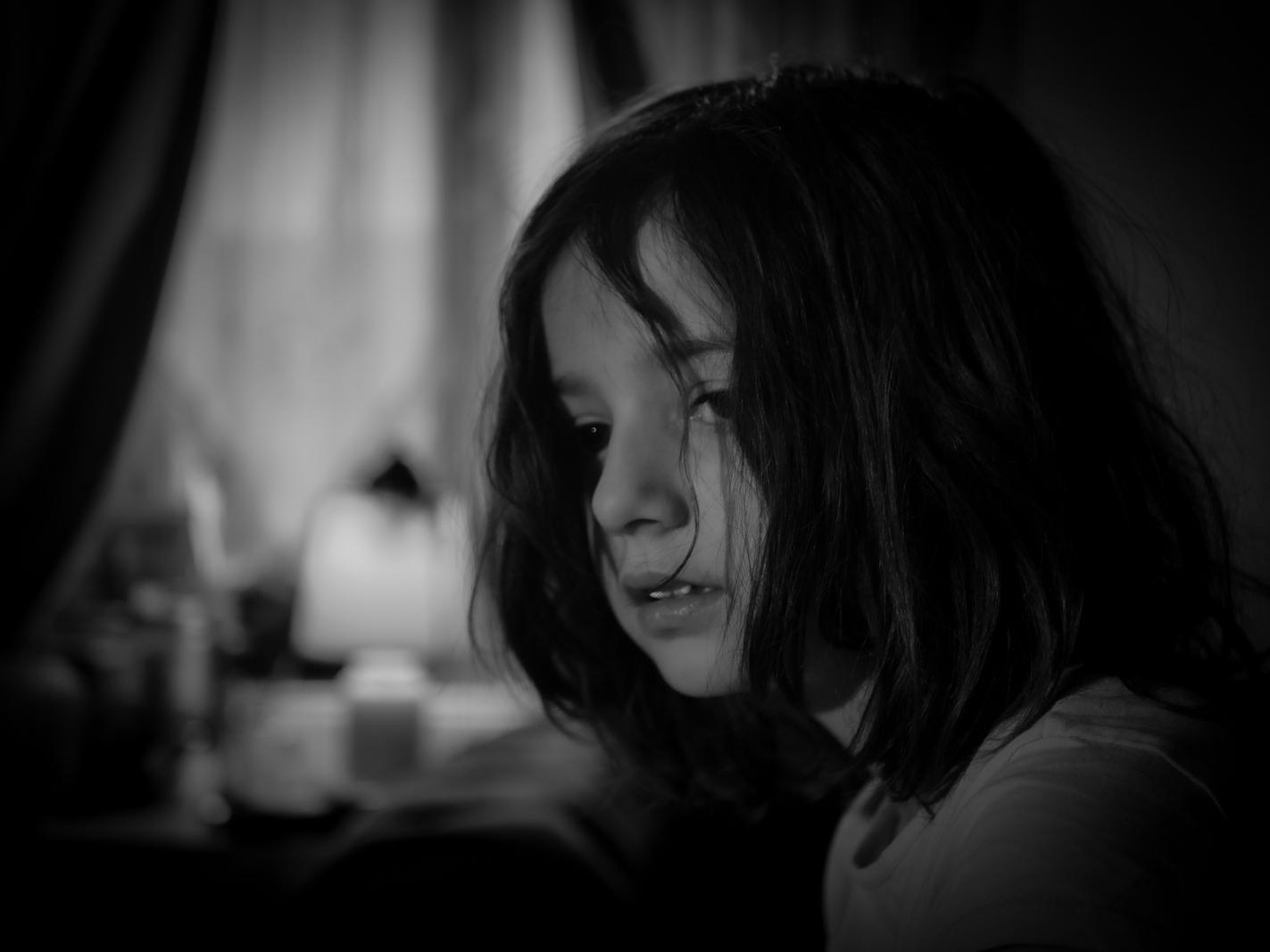
A tender, moody child portrait that lives on the edge between quiet and uneasy.
Photographer said:
Thanks, Twiggy. This is a portrait, and I’ll judge it as such. The frame shows a young child in soft window light, eyes heavy, mouth slightly open, hair falling across the face — a moment that feels real rather than posed. The blurred lamp and objects behind hint at a domestic setting and the black‑and‑white treatment pushes attention toward mood and expression. I’ll break down what’s working and where you can tighten craft to deepen the feeling you’ve found. As you read, ask yourself: what exactly about this moment were you protecting — the expression, the light, or the setting — and did your choices serve that?
TECHNICAL EXECUTION ★★★
The file looks clean and sensitively processed in monochrome — no heavy halos or crude contrast. Focus, however, appears a touch back or slightly missed; the eyes aren’t critically sharp, which weakens connection in a portrait. There’s likely low‑light softness from a slower shutter and the hair crossing the eye emphasises that softness. Tonal range is mostly intact, though the right side of the hair drops into near‑black and loses detail. Aim for a faster shutter (1/125s+), single‑point AF on the nearest eye, and accept a higher ISO rather than trading away sharpness.
COMPOSITION ★★★
The subject sits well to the right, looking into the open space, which suits the mood. The dark curtain on the left creates a natural frame, but the bright lamp shape and blocky object behind the head pull the eye at exactly the wrong place. The crop is slightly tight on the chin and hair, making the head feel crowded while less important background gets room. A small shift left or a step back would have separated the face from the bright shapes and given the head more breathing space. How would this read if the background were cleaner and the negative space deliberately dark rather than busy?
LIGHTING ★★★
The soft window light gives mood and models the cheek nicely. However, the eyes fall into shadow and lack a clear catchlight, which dulls presence. The strong fall‑off on the right side of the hair closes the frame down more than it needs to. A quarter‑turn of the face toward the window or moving the child a foot closer would lift the eyes and keep that gentle shaping. Consider whether you wanted mystery or connection; if it’s connection, the eyes need more light.
STORY ★★★★
There’s a genuine moment here — the tired gaze, parted lips and slightly slumped posture feel honest. The domestic blur in the background supports the sense of a quiet, private scene. Black and white keeps it about feeling rather than décor, which is a good call. The stray hair across the eye adds to the “in the moment” quality, though combined with softness it risks looking accidental rather than intentional. What emotion were you trying to name — fatigue, sadness, calm — and how might a second frame have clarified that?
IMPACT ★★★★
The image lingers because the mood is strong and respectful; it doesn’t feel staged. The softness and background hotspots keep it from being truly unforgettable, but the core is affecting. With crisper eyes and cleaner separation from the background, this would lift a level. The monochrome toning is tasteful and supports the feeling without calling attention to itself. It’s a frame I’d happily see in a small series about quiet moments at home.
CONSTRUCTIVE NEXT STEPS
- Prioritise eye sharpness: use single‑point AF on the nearest eye, 1/125–1/200s shutter, and raise ISO rather than risking motion blur; shoot two or three frames to hedge focus.
- Control the background: either move the subject 1–2 metres from the lamp/objects or reposition yourself so the face sits against a darker, plain area; a slightly longer focal length (e.g., 85–105mm) from farther back will compress and soften clutter.
- Shape the light for catchlights: turn the child’s face a touch toward the window, or bring a small white card opposite the window to lift the eye sockets by about 1/3 stop.
- Post‑processing: burn down the bright lamp and cube behind the head, lightly dodge the eyes and leading cheek, and open the blocked hair shadows just enough to reveal texture; consider cloning one or two hairs that cross the eye if they read as distraction.
AI Version 2.12