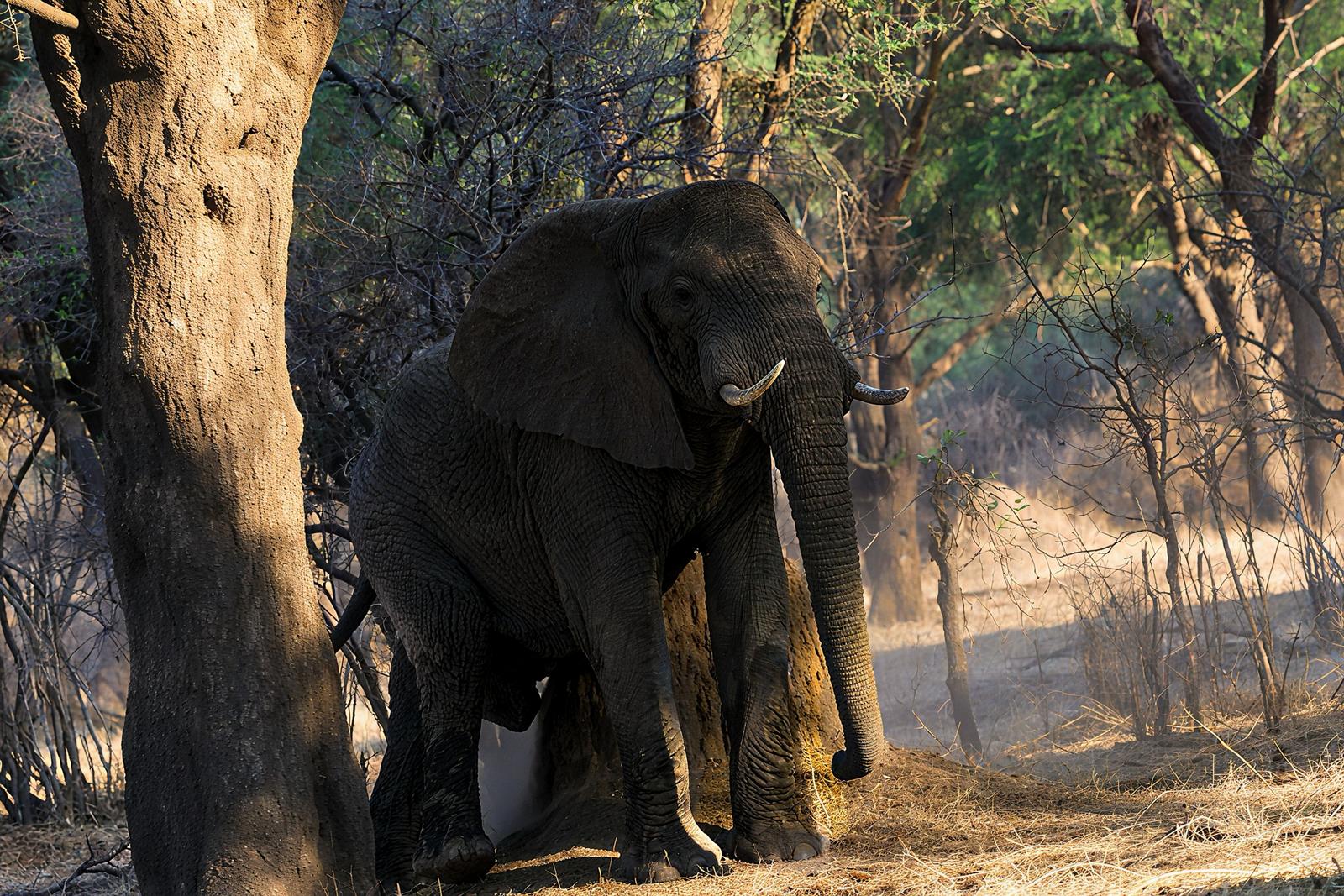
A strong encounter in a textured woodland, but the elephant is getting lost in the shadows.
Short answer: yes, a touch more definition on the elephant would help it separate from the dark trees. You’ve captured a real moment in the bush — the dust around the legs and the lean into the mound suggest behaviour rather than a static portrait, which is great for wildlife. Right now, the animal sits mainly in shade while the background is brighter, so detail in the head and ear gets swallowed. A subtle, local boost in exposure and mid‑tone contrast on the elephant (especially face, ear and tusks) will add presence without breaking the natural feel. Did you have a frame a second earlier or later where a shaft of light grazed the face or the trunk lifted — something that would add a small gesture and a catchlight?
TECHNICAL EXECUTION ★★★
The file looks clean and the colours are restrained, which suits the dry woodland palette. Focus appears solid across the body, though the eye area lacks crisp detail partly because it’s underexposed. The dynamic range is tough: bright, dusty background versus a dark subject, and the exposure leans towards protecting the highlights, leaving the elephant a little murky. There’s no obvious heavy processing or artefacts, which is good. To reach five stars, you’d need clearer eye detail and better tonal separation on the subject — achievable with a small positive exposure compensation at capture or targeted dodging in post.
COMPOSITION ★★★
The elephant is well placed between the tree on the left and the brighter space on the right, and the stance implies interaction with the mound. However, the thick trunk of the tree on the left dominates and crowds the animal, while thin branches around the head merge with the outline. The environment adds context, but it’s bordering on busy, especially where the right tusk meets the tangle of twigs. A tighter crop from the left (losing part of the big tree) would reduce the weight there and bring the viewer closer to the action. From the field, a small step to your right or a lower angle could have separated the head from those dark branches and given a cleaner background.
LIGHTING ★★
The scene is a mix of shade and dappled sun. Most of the elephant, particularly the face and near ear, sits in deep shadow while the background is sunlit, which pulls attention away from the subject. There’s no catchlight in the eye, so the animal feels a touch lifeless despite the good behaviour cue. The warm rim on the trees is lovely, and the dust picks up the light nicely, but the key area — the head — needs light to sing. Waiting for the animal to take one step forward into a patch of light, or repositioning to put the sun at a slight angle behind you, would have lifted this considerably.
STORY ★★★
The lean into the mound and the dust plume suggest scratching or pushing — a believable, natural behaviour. That’s the strongest part of the frame and gives it purpose beyond a simple portrait. The downturned trunk and dark eye mute the sense of character, so the moment feels observed rather than alive. A raised trunk, ear flare, or visible eye highlight would add a clear beat of action. What was happening before and after this frame — did you capture a sequence where the gesture was stronger?
IMPACT ★★
It’s an honest woodland encounter with good textures, but the subject’s low contrast and the heavy left-hand tree reduce the image’s punch. Without a lit eye or a cleaner outline, it’s easy to scroll past. The ingredients are here; they just need better separation and a slightly stronger gesture to land. With improved light on the head and a more decisive moment, this could jump a full tier in presence.
CONSTRUCTIVE NEXT STEPS
✓ In post: mask the elephant and lift exposure by about +0.3 to +0.5 EV, add modest mid‑tone contrast/texture, and gently dodge the eye, tusks and trunk ridge; keep the background untouched to increase separation.
✓ Consider a crop that trims 10–15% from the left to reduce the dominance of the big tree and bring the animal forward in the frame; clean a few bright twig tips around the tusks with the healing tool.
✓ In the field: when a dark subject is in shade against a bright background, dial +2/3 EV and watch the histogram to protect highlights; aim for a catchlight by waiting for a head turn toward the light.
✓ If safe and ethical, shift a few steps right or lower to clear the head from busy branches and use a wider aperture to soften the background, emphasising the behaviour at the mound.
AI Version 2.0