A thoughtful autumn scene, but it reads more like a quick record than a finished photograph.
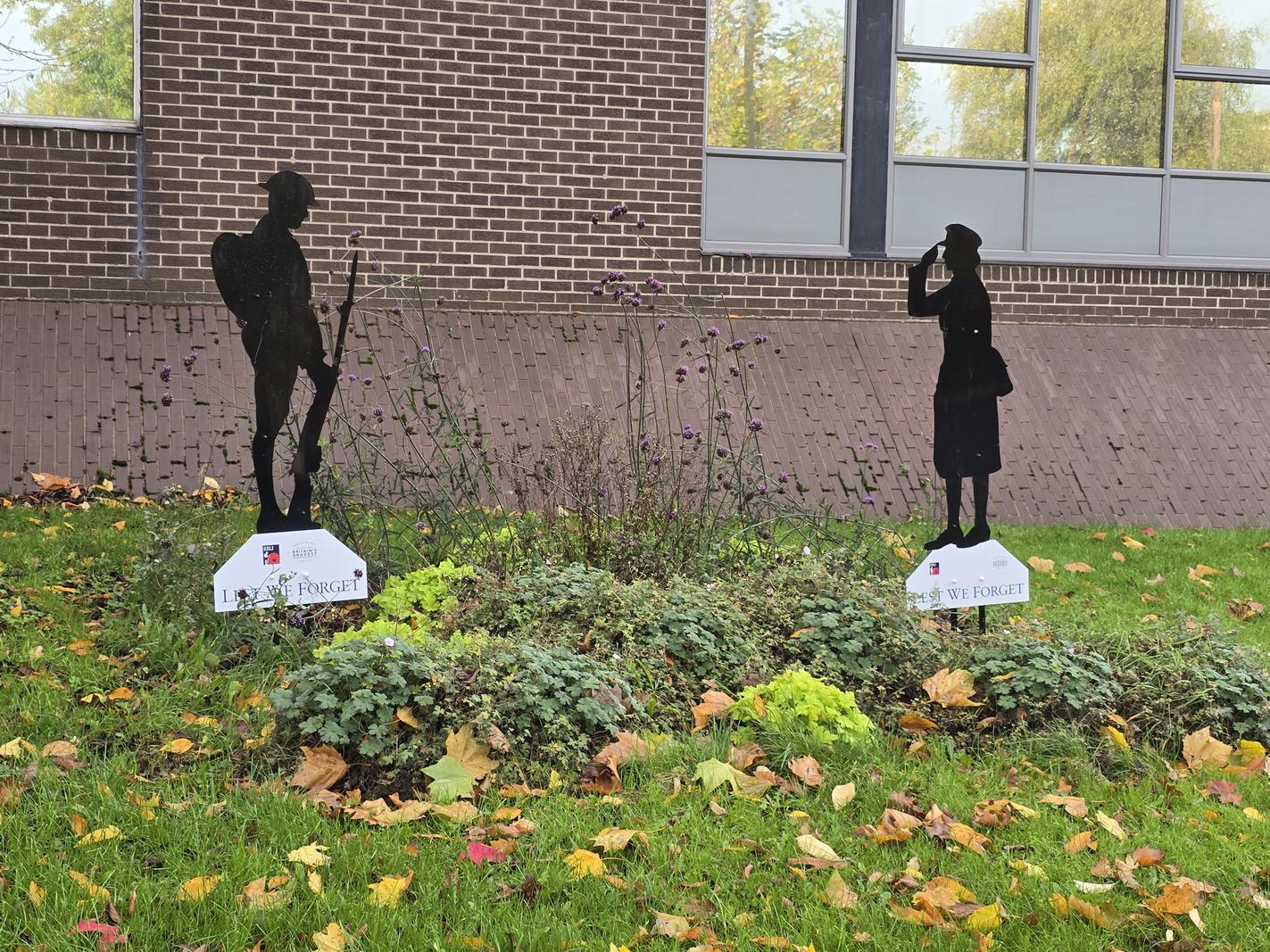
Thanks for sharing, Wendy. You’ve photographed a small remembrance garden with two black silhouettes facing each other across flowers and fallen leaves — a quiet scene that sits between travel and documentary. The strongest element is the seasonal carpet of leaves leading to the memorial; it sets a gentle tone. I’ll focus on how to make this feel less like a snapshot and more like an intentional photo that honours the subject. As you read, ask yourself: were you aiming for a broad scene to show context, or a more intimate moment centred on remembrance?
TECHNICAL EXECUTION ★★★
The file looks clean and evenly exposed; no heavy processing or artefacts distract. Focus is acceptable across the frame and colours are natural for an overcast day. The wide depth of field keeps everything sharp, which is okay but also makes the busy background compete with the silhouettes. It has the feel of a quick handheld capture, not sloppy, just unrefined. To reach five stars, use a wider aperture (around f/2.8–f/4 with a longer focal length) to soften the building and separate the memorial, and be deliberate about camera height and stability.
COMPOSITION ★★
The two silhouettes are placed left and right, but the real visual weight falls on the messy central shrub and the large patch of lawn at the bottom. Window frames slice through both figures’ heads and the white plinths with “Lest We Forget” are too small to read, weakening your message. There’s a lot of space that doesn’t help the story, especially the foreground grass and the bright window area. A tighter, lower viewpoint or a portrait orientation on one figure would create a cleaner, stronger frame. Consider how moving a couple of steps left or right could place the figures against foliage rather than the heavy brick and glazing.
LIGHTING ★★
Flat overcast light keeps contrast low and colours muted; it neither harms nor helps the scene. For a memorial, softer light can work, but here it leaves the silhouettes lifeless against an equally low‑contrast background. Early or late light would add warmth and separation to the edges of the figures and make the leaves glow. Alternatively, shooting when the windows reflect a darker sky or when the ground is wet (subtle reflections) could add dimension. Right now the light feels purely functional.
STORY ★★
The concept is remembrance, but the frame doesn’t emphasise it. Without a readable inscription, a poppy, or a human interaction, we’re left with two cut-outs in a municipal bed. There’s potential tension between the soldier and the saluting figure, yet the busy middle ground dilutes that relationship. Including a person pausing, placing a poppy, or simply framing the “Lest We Forget” text prominently would give viewers something to connect with. What feeling did you want us to leave with—quiet reflection, or a sense of community memory?
IMPACT ★★
It’s a polite record of place, but not a photograph that lingers. The cluttered frame and flat light keep it from being memorable or emotionally strong. With a clearer focal point and a moment or cleaner design, this could gain presence. Aim for a single bold idea in the frame rather than trying to show the entire setting.
CONSTRUCTIVE NEXT STEPS
✓ Move closer and lower: crop out the empty lawn and use a lower viewpoint so the silhouettes sit against foliage or sky, not window frames; try a portrait orientation isolating one figure with the “Lest We Forget” text large and legible.
✓ Soften the background: use a longer focal length (85–135mm) and a wider aperture (f/2.8–f/4) to blur the brick and windows, keeping the memorial as the clear subject.
✓ Wait for a moment: include a person interacting with the memorial (placing a poppy, pausing to reflect) or shoot at golden hour or after rain for warmer light and gentle reflections that add mood.
✓ In post: crop roughly the lower third, reduce saturation of the yellow-green grass/leaves slightly, and heal a few bright leaf hotspots that pull the eye away from the figures.
AI Version 2.1